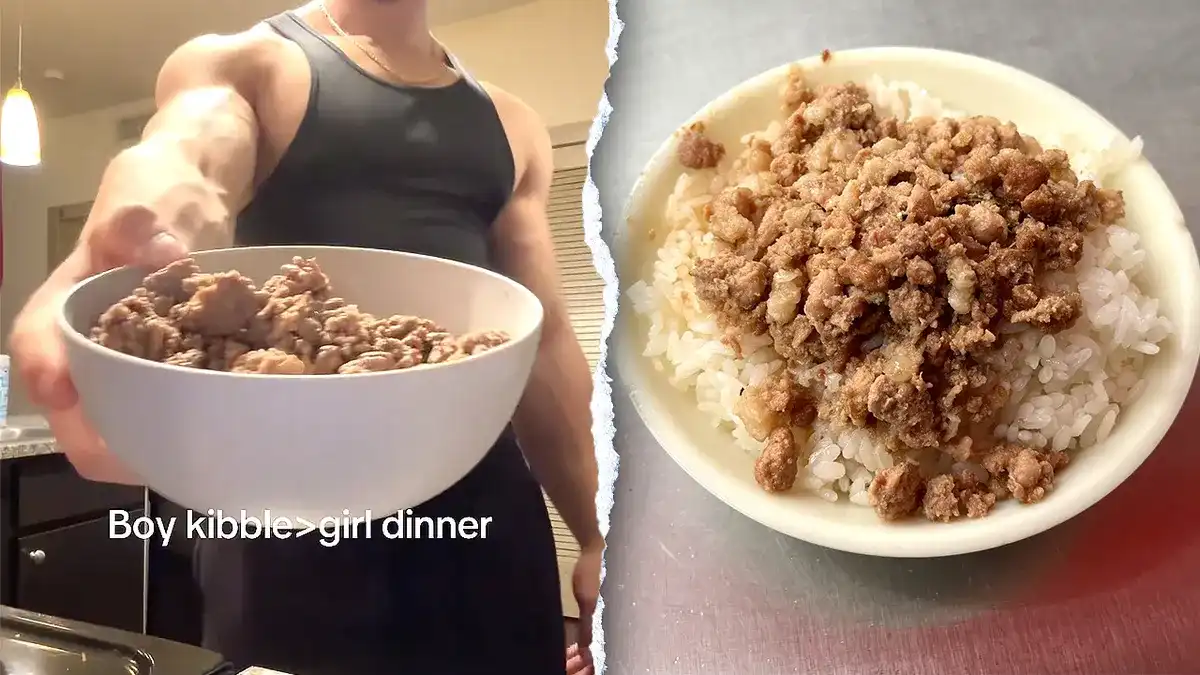
In early 2026, social media users—especially on TikTok—sparked a fresh food trend that’s now dominating feeds, captions, and food conversations online. Called “boy kibble,” this viral meal concept has drawn laughs, criticism, and even curiosity from people who are trying it, remixing it, or simply wondering what it’s all about.
If you’ve seen videos of simple bowls of rice, ground meat, and minimal seasoning and wondered why people are talking about them like a lifestyle, this trend reflects both online humor and deeper themes around masculinity, nutrition habits, and food culture.
What Is ‘Boy Kibble’? A Viral TikTok Simplicity Meal
At its core, boy kibble is a TikTok‑driven food idea built around ultra‑simple, protein‑focused bowls that users joke resemble dog food. It typically consists of minimal ingredients—ground meat (often beef) and rice—served without fuss or fancy presentation.
The name comes from this bowl’s resemblance to dog food “kibble” and the trend being framed as a humorous male counterpart to the earlier “girl dinner” craze, where people showcased whimsical, snack‑style plates made of cheese, crackers, fruit, and other small bites.
In these videos, creators often prepare large batches of cooked rice and meat, portion them into containers, and eat the same basic meal multiple times a week, usually seasoned lightly or not at all.
From Girl Dinner to Boy Kibble: How the Trend Evolved
The “girl dinner” trend—popularized years earlier—celebrated creative, snack‑like meals that were enjoyable and often visually appealing. In contrast, boy kibble is intentionally bland and efficient, embracing simplicity and utility over flavor or presentation.
Where girl dinner was about improvisation and a playful mix of tastes and textures, boy kibble emphasizes practicality: high protein, low prep time, and easy meal prep. Videos portray it as the male reaction to more aesthetic eating trends, with participants intentionally celebrating its plain nature.
Experts and observers note that this contrast highlights broader conversations on gender norms in food culture—and how social media interpret or exaggerate these patterns for humor and engagement.
Typical Ingredients and How to Make Boy Kibble
While there’s no single official recipe, most boy kibble meals include:
Core Ingredients
- Rice – usually white rice cooked in bulk
- Ground meat – often beef, but can be turkey or chicken
- Optional add‑ins – eggs, seasoning, vegetables such as spinach or kale
Many creators prepare a large batch of rice and meat, then divide it into containers for the week, simplifying mealtime planning. Some TikTokers eat the same bowl almost daily, citing convenience and efficiency.
Minimal Preparation:
- Cook rice according to package instructions.
- Brown ground meat in a skillet.
- Mix together or layer in a bowl.
- Season lightly or leave plain.
- Portion into containers for meal prep.
This approach is meant to be quick, inexpensive, and consistent—appealing to people juggling fitness goals, busy schedules, or grocery budget constraints.
Why People Embrace the Trend
The popularity of boy kibble is partly humorous and partly practical. TikTokers who follow or promote the trend often cite several reasons for its appeal:
1. Simplicity and Affordability
Preparing basic rice and ground meat costs less and requires minimal culinary skills, making it a go‑to meal for students, gym enthusiasts, and anyone looking to eat inexpensively.
2. Protein‑Forward Focus
Unlike many social media eating trends that prioritize aesthetics or variety, boy kibble centers on protein‑rich meals that can support fitness goals like muscle gain or weight management.
3. Meal Prep Convenience
Many participants make large batches once and eat leftovers throughout the week, reducing daily cooking time and decision‑making around food.
4. Humor and Irony
A big part of the trend is comedic. Users intentionally lean into how bland and dog food‑like the meal appears, poking fun at food culture and gender stereotypes online.
Reactions and Criticism Online
Not everyone views the trend positively. Some responses highlight broader concerns:
1. Mixed Nutrition Messages
Nutrition experts caution that while a bowl of rice and meat is protein‑heavy, relying solely on such meals without variety could lead to nutrient deficiencies over time. Adding vegetables, whole grains, or other food groups can help balance nutritional needs.
2. Gender Stereotypes in Eating Trends
Some social commentators question the value of labeling meals with gendered terms at all. Critics argue that assigning gender to food habits reinforces unnecessary stereotypes rather than promoting healthy eating.
3. Blurred Line Between Trend and Lifestyle
While many participants treat boy kibble as a joke or a short‑term hack, others use it as a semi‑regular meal plan. This has sparked discussion about whether the trend encourages monotonous eating patterns that could affect long‑term dietary enjoyment or satisfaction.
Nutrition Perspective: Is Boy Kibble Balanced?
From a dietary standpoint, a simple base of rice and protein can be a solid foundation for a meal. However, most nutritionists emphasize that a healthy diet includes variety and balance, such as:
- Complex carbohydrates (e.g., brown rice, quinoa)
- Lean proteins (e.g., turkey, chicken)
- Fiber‑rich vegetables
- Healthy fats (e.g., nuts, olive oil)
Without these, meals like boy kibble might provide calories and protein but lack essential vitamins and minerals. Adding vegetables, legumes, or switching up grains can help ensure broader nutritional benefits.
How to Put a Healthy Spin on Boy Kibble
If you’re curious about the trend but want a more balanced version, consider:
- Using whole grains like brown rice or quinoa
- Adding vegetables such as broccoli, spinach, or bell peppers
- Incorporating healthy fats like avocado or seeds
- Including herbs and spices for flavor without extra calories
These tweaks keep the original’s simplicity but enhance nutrition and variety, making meals more satisfying without losing convenience.
What the Trend Says About Food Culture Today
The rise of boy kibble isn’t just a chuckle‑worthy internet fad. It reflects broader online conversations about:
- How social media reframes simple meals into cultural memes
- The ways gender norms influence food trends
- People seeking convenience, efficiency, and clarity in diets
- The impact of fitness and macro tracking on meal choices
In many ways, boy kibble is a symptom of how Gen Z and internet cultures engage with food, identity, and humor all at once.
Final Thoughts
Boy kibble illustrates how quickly a simple idea can become a viral conversation starter online. Though it may appear plain or even bizarre at first glance, the trend highlights evolving attitudes toward food, masculinity, simplicity, and nutrition in the age of TikTok.
Whether you view it as a practical meal prep hack, an ironic meme, or a conversation about gendered eating habits, boy kibble is undeniably one of the most talked‑about food trends of early 2026. As with any dietary approach, prioritize balance, variety, and your personal health goals when trying any new eating pattern.
Leave a Reply