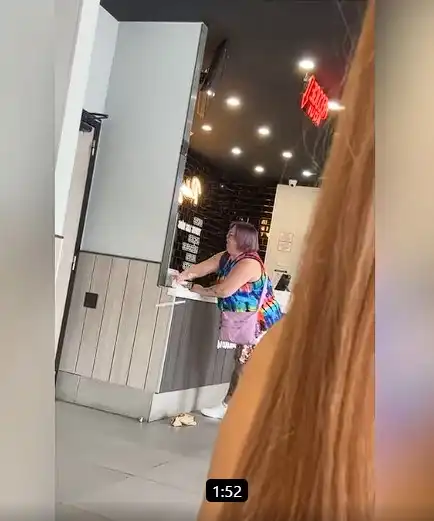
A viral video circulating across social media platforms shows a customer allegedly causing a major disturbance inside a KFC restaurant, leading to widespread online discussion and debate. The clip, often labeled as the “KFC Karen” incident, has been shared across TikTok, X (Twitter), Facebook reposts, and other short-form video platforms.
In the footage, a tense confrontation appears to unfold between a customer and restaurant staff, escalating into a heated and disruptive scene. While the video has gained millions of views and sparked thousands of comments, the full context behind the situation remains unclear.
As with many viral incidents, the lack of verified background information has led to speculation, differing interpretations, and widespread online reactions.
What the Viral Video Shows
The widely shared clip shows a female customer inside a KFC branch engaged in a heated exchange with staff members. Although different reposts vary slightly, the core elements of the video remain similar.
In most versions, viewers see:
- A customer visibly upset and speaking aggressively
- Staff members attempting to respond or calm the situation
- A growing confrontation inside the restaurant
- A tense atmosphere affecting other customers
Some versions suggest the argument may have started due to service delays, incorrect orders, or dissatisfaction with customer service. However, none of these details have been officially confirmed.
The most important limitation is that only short segments of the incident are available online. This means viewers are only seeing a fraction of what actually happened.
Why It Is Called a “Karen” Incident
The term “Karen” is an internet slang expression used to describe individuals perceived as behaving entitled, demanding, or overly aggressive in public service situations.
In this case, the label spread quickly because:
- The confrontation took place in a public restaurant
- The customer appeared highly emotional
- The situation involved staff-customer tension
- Social media users applied the label in commentary and reposts
However, it is important to understand that “Karen” is not a verified identity, diagnosis, or official classification. It is simply an informal internet term used in viral content culture.
The use of such labels often reflects online interpretation rather than confirmed facts.
How the Video Went Viral
The clip gained traction rapidly for several reasons tied to modern social media behavior.
1. Emotional Content Drives Engagement
Videos involving conflict, anger, or public confrontation tend to attract more attention because they trigger strong emotional responses.
2. Short-Form Platforms Amplify Reach
Platforms like TikTok and Instagram Reels prioritize short, engaging clips, making it easy for viral incidents to spread quickly.
3. Reposting Without Context
Many users reshared the clip without background information, increasing curiosity and speculation.
4. Reaction Videos and Commentary
Influencers and users added commentary, memes, and reaction clips, further boosting visibility.
5. Relatable Setting
Fast-food restaurants are familiar environments, making the situation feel more relatable to a wide audience.
These factors combined allowed the video to circulate widely within a short period of time.
Missing Context Behind the Incident
One of the biggest challenges with viral videos like this is the absence of complete context.
In many cases:
- The beginning of the interaction is not recorded
- Audio may be unclear or edited
- Key details leading to escalation are missing
- Only one perspective is visible
Because of these limitations, it is impossible to fully determine:
- What triggered the argument
- Whether misunderstandings were involved
- How the situation was resolved
- What happened before or after the recorded clip
Without official statements or verified reports, interpretations remain speculative.
This is a common issue in viral public incident videos, where viewers often form conclusions based on incomplete information.
Social Media Reaction
The reaction to the video has been divided across platforms.
Some users expressed concern over the behavior shown in the clip, especially toward restaurant staff who are often in high-pressure service environments. Others criticized the customer’s actions, viewing the incident as an example of poor public behavior.
On the other hand, many users approached the video with humor, turning it into memes, jokes, and commentary content.
This mixed reaction is typical in viral “public meltdown” videos, where audiences interpret the same footage in very different ways depending on perspective.
The Pattern of Viral Restaurant Incidents
The KFC video is not an isolated case. It is part of a broader pattern of restaurant-related viral incidents that frequently appear online.
Common examples include:
- Disputes over incorrect or delayed orders
- Emotional confrontations between customers and staff
- Loud arguments in public dining spaces
- Customers recording or being recorded during disputes
- Situations escalating beyond normal customer service interactions
These types of videos often go viral because they combine everyday experiences with unexpected conflict.
Why These Videos Spread So Quickly
Several psychological and technological factors explain why incidents like this gain rapid attention:
Emotional intensity
Strong emotions such as anger or shock increase viewer engagement.
Familiar environments
Fast-food restaurants are common, making the situation relatable.
Algorithm amplification
Social media platforms prioritize content with high engagement rates.
Curiosity gap
Viewers are drawn to incomplete stories and want context.
Easy sharing
Short clips are easy to repost, comment on, and remix.
Together, these factors create a viral cycle that spreads content far beyond its original audience.
Impact on Staff and Businesses
Although viral videos generate attention online, they can have real-world consequences for those involved.
Potential impacts include:
- Increased stress for employees
- Public scrutiny of staff or customers involved
- Reputational effects for the business
- Misinterpretation due to incomplete footage
- Internal reviews or policy evaluations
Many businesses now invest in training programs focused on de-escalation and customer conflict management to reduce the risk of similar incidents escalating.
The Role of Context in Viral Culture
This incident highlights a larger issue in digital culture: context is often lost in viral content.
When only short clips are shared, audiences are left to interpret events without:
- Full timelines
- Audio clarity
- Background information
- Multiple perspectives
As a result, narratives can form quickly based on perception rather than verified facts.
This raises broader questions about how viral media shapes public opinion and how easily isolated moments can define entire stories.
Conclusion
The “KFC Karen” viral video demonstrates how quickly everyday disputes can become global online discussions. While the footage shows a heated and disruptive moment inside a restaurant, the lack of full context means the complete story is still unknown.
As with many viral incidents, social media plays a powerful role in shaping perception before verified details are available. This leads to multiple interpretations of the same event, depending on how the clip is shared and viewed.
Ultimately, the incident reflects a broader trend in digital culture where short-form videos can influence public opinion rapidly—often without the full picture.
Sources
Wikipedia – Internet slang “Karen” definition
https://en.wikipedia.org/wiki/Karen_(slang)
Pew Research Center – Social media and online behavior studies
https://www.pewresearch.org/internet/
JSTOR – Research on viral media and digital engagement
https://www.jstor.org/
Leave a Reply