Category: Film

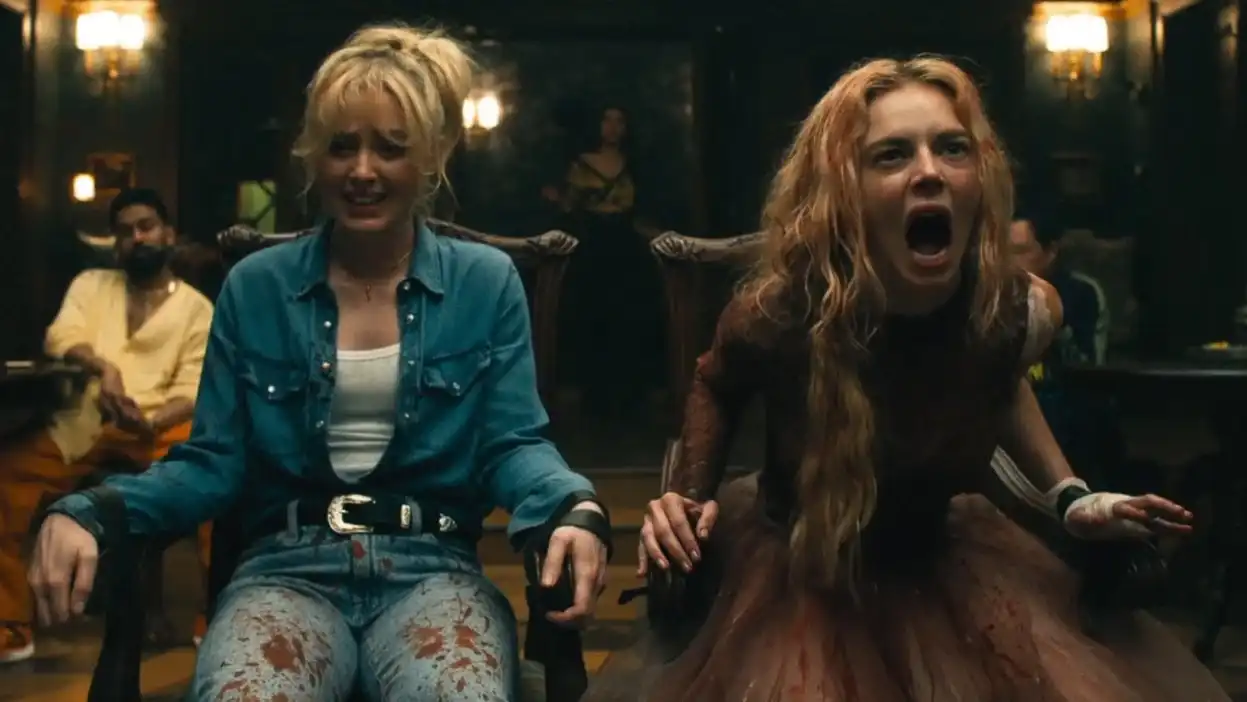
  • Ready or Not 2 Review – The Sequel That Tries Bigger, But Does It Deliver?

    Ready or Not 2 Review – The Sequel That Tries Bigger, But Does It Deliver?

    The original Ready or Not surprised audiences with its clever mix of dark humor, horror, and social satire. It was the kind of movie where you laughed… then immediately questioned why you were laughing at something so chaotic.

    Now, with Ready or Not 2: Here I Come, the film doesn’t just knock on the door — it kicks it down, flips the table, and somehow sets the house on fire again. The question is: does bigger mean better, or just louder?


    A Quick Recap: Why the First Film Worked

    The first film kept things simple: one mansion, one terrifying game of hide-and-seek, and one bride having the worst wedding night in cinematic history.

    It was tense, clever, and just ridiculous enough to make you laugh without losing the horror. Think: “I should not be laughing at this… but here we are.”


    Plot Overview: Bigger Stakes, Bigger Problems

    In Ready or Not 2, everything is expanded — the story, the setting, and yes, the chaos level.

    This time, the film goes beyond one house and dives deeper into the bizarre world behind the deadly traditions. The stakes are higher, the situations are wilder, and at times you might find yourself thinking:

    “Okay… this escalated way too fast.”

    Without spoilers, let’s just say the sequel doesn’t believe in subtlety. If the first movie whispered danger, this one screams it — while throwing in explosions for good measure.


    Performances: Still Carrying the Chaos

    The lead performance once again holds everything together — because let’s be honest, someone has to keep this madness grounded.

    • The protagonist delivers a mix of panic, sarcasm, and survival instincts that feel real… even when everything else feels completely unhinged.
    • Supporting characters? A mixed bag. Some are memorable, others feel like they wandered in from a different (slightly louder) movie.

    There are moments where side characters make such questionable decisions that you might yell at your screen like:
    “Why would you do that?!”

    But hey, it wouldn’t be a horror-comedy without at least one character making absolutely terrible life choices.


    Comedy: More Laughs, More Chaos

    The sequel leans heavily into comedy — sometimes successfully, sometimes… not so much.

    What Works:

    • Physical comedy is stronger this time.
    • Over-the-top situations create genuine laugh-out-loud moments.

    What Doesn’t:

    • Some jokes feel like they tried a bit too hard.
    • A few punchlines land with the energy of “we’ll fix it in post.”

    At its best, the humor feels natural and darkly hilarious. At its worst, it’s like the movie is nudging you saying:
    “Hey… laugh now. That was a joke.”


    Horror Elements: Less Hide-and-Seek, More Run-for-Your-Life

    The original film built tension slowly. The sequel? It skips the warm-up and goes straight into chaos mode.

    Good News:

    • More action, more wild sequences, more “did that just happen?” moments.

    Bad News:

    • Less suspense.
    • Less of that edge-of-your-seat feeling.

    Instead of holding your breath, you’re more likely to say:
    “Well… that was insane.”

    Which is fun—but not always scary.


    Direction and Visuals: Go Big or Go Home (They Chose Both)

    Visually, the sequel is bigger and flashier. More locations, more movement, more cinematic flair.

    It looks great—but sometimes it feels like the film is trying to prove something, like:
    “Look! We have a bigger budget now!”

    And yes, we noticed.


    Themes: Still There… Somewhere Between the Chaos

    The first movie had a clear message about wealth and privilege. The sequel tries to expand on that, but occasionally gets lost in its own madness.

    There are still ideas about power, survival, and consequences—but between all the action, you might find yourself thinking:
    “Wait… what was the message again?”


    Pacing: Fast, Furious, and Slightly Overloaded

    This movie does not slow down. At all.

    • One moment blends into the next.
    • Action keeps stacking on top of action.

    It’s exciting, but also a bit overwhelming—like drinking three cups of coffee and then trying to sit still.

    You won’t be bored… but you might be slightly exhausted.


    What the Sequel Gets Right

    • Bigger scale and more ambitious storytelling
    • Entertaining and chaotic sequences
    • Strong lead performance
    • Plenty of laugh-out-loud moments

    Where It Falls Short

    • Loses some of the original’s sharpness
    • Trades tension for spectacle
    • Some jokes don’t land
    • Side characters lack depth

    Final Verdict: Fun Chaos, But Not Quite Magic

    Ready or Not 2: Here I Come is loud, wild, and undeniably entertaining. It takes risks, pushes boundaries, and delivers moments that will make you laugh, cringe, and say:
    “What did I just watch?”

    But in trying to go bigger, it loses some of the simplicity and cleverness that made the original so special.

    It’s not a bad sequel—it’s just one that tries so hard to impress that it forgets what made people fall in love the first time.


    Should You Watch It?

    • Watch it if: You want chaos, dark humor, and a fun movie night.
    • Skip it if: You loved the original for its tension and clever storytelling.

    Final Rating

    ⭐ 7/10 – Fun, chaotic, but slightly over-the-top sequel

  • SAG Actor Awards 2026: Best and Worst Moments, Including Michael B. Jordan’s Surprising Win

    SAG Actor Awards 2026: Best and Worst Moments, Including Michael B. Jordan’s Surprising Win

    The 2026 Actor Awards — formerly the Screen Actors Guild (SAG) Awards — delivered a night of emotion, surprises, laughs, and a few awkward missteps. Celebrating the best performances in film and television from the past year, the ceremony honored talent, spotlighted rising stars, and gave us unforgettable moments both on and off the stage.

    From Michael B. Jordan’s standout win to touching tributes and cringe‑worthy bits that didn’t land, here’s a deep dive into the best, worst, and most talked‑about moments of the night.


    The Big Surprise: Michael B. Jordan’s Win for Best Actor

    Few moments generated as much buzz as Michael B. Jordan winning Outstanding Performance by a Male Actor in a Leading Role for his work in Sinners.

    Facing tough competitors like Timothée Chalamet and Leonardo DiCaprio, Jordan’s win was unexpected — and quickly became one of the night’s defining highlights.

    Why It Was Such a Moment

    • Jordan’s performance in Sinners — in which he portrays twin brothers in a dramatic narrative — struck a chord with voters and audiences alike, showcasing both emotional depth and versatility.
    • Actress Viola Davis, who announced the award, visibly cheered and celebrated Jordan’s victory, underscoring the joyous energy in the room when his name was called.
    • The win stands as one of Jordan’s most prestigious career milestones, marking his first Actor Award victory — a moment celebrated across social media and industry circles.

    Jordan’s victory wasn’t just about the trophy — it’s also shifting momentum in the ongoing awards season and sparking conversation about diversity and recognition in Hollywood.


    Best Moments from the Ceremony

    1. Michael J. Fox’s Heartwarming Opening Speech

    One of the most poignant highlights of the evening came early when Michael J. Fox delivered a heartfelt opening address full of gratitude and reflection on his career and family.

    His speech received a standing ovation, setting an emotional tone that resonated throughout the night.

    2. Keri Russell’s Surprise Win

    Keri Russell took home Best Female Actor in a Drama Series for The Diplomat, a win many fans didn’t see coming but were thrilled to celebrate.

    Her acceptance was genuine and gracious — a refreshing moment in a night filled with big emotions.

    **3. Amy Madigan’s Beloved Performance Walk

    Veteran actress Amy Madigan won Outstanding Performance by a Female Actor in a Supporting Role for her role in Weapons, complete with a playful physical callback to her character’s memorable “run” from the film as she accepted her award.

    This blend of homage, humor, and nostalgia made her moment a fan favorite.

    4. Seth Rogen’s Tribute to Catherine O’Hara

    The night included a touching tribute to the late Catherine O’Hara, with Seth Rogen offering heartfelt memories and respect onstage.

    These emotional flashes reminded viewers that award shows are about more than prizes — they honor careers, connections, and legacies.

    5. Harrison Ford’s Lifetime Achievement Spotlight

    Receiving a Lifetime Achievement Award, Harrison Ford delivered a humble and reflective speech celebrating storytelling and the longevity of his career, earning respect from fellow actors and fans alike.


    Worst and Awkward Moments That Didn’t Land

    No awards show is perfect — and the 2026 Actor Awards had its fair share of eye‑rolling and awkward moments.

    1. Table Tennis Bit Falls Flat

    Hosted by Kristen Bell, a recurring “table tennis” gag was intended to add humor throughout the night but instead missed its mark, drawing awkward silences and confused reactions from attendees.

    Sometimes, even well‑intentioned bits don’t translate to laughs — and this was one of them.

    2. The Prolonged “Hamnet” Comedy Sketch

    The comedy sketch centered on Hamnet extended longer than expected, with critics calling it forced and out of place in an otherwise smoothly paced show.

    3. Minor On‑Stage Slip by Sterling K. Brown

    Although not a major blunder, Sterling K. Brown had a brief awkward slip while presenting onstage — one of those human moments that got more attention than expected on social media.


    Standout Wins That Defined the Night

    Beyond individual performances, the 2026 Actor Awards celebrated collective achievements:

    1. “Sinners” Dominates the Night

    The film Sinners was one of the night’s big winners — not just for Best Actor, but also for Outstanding Performance by a Cast in a Motion Picture.

    This sweep was significant for the movie’s awards season trajectory and reflective of its broad industry support.

    2. Television Triumphs

    In television categories, hits like Abbott Elementary and The Studio also took home ensemble and individual honors, highlighting the diversity and strength of TV programming in 2025.


    Red Carpet and Fashion Highlights

    As with any awards show, the red carpet was almost a show in itself — and this year was no exception. Celebrities brought glamour, bold style, and unexpected fashion moments, adding color and commentary leading up to the main event.

    From dazzling gowns to classic tuxedos, the night’s best red carpet looks were trending online before the awards even began.


    Reactions From Hollywood and Fans

    Industry reactions — and fan responses — poured in across social platforms immediately after the show:

    • Many fans praised Michael B. Jordan’s win, calling it long overdue and well‑deserved given his career arc and range of work.
    • Social commentary also highlighted the emotional moments from Michael J. Fox and Seth Rogen as some of the night’s most heartfelt.
    • Others laughed at the fashion and awkward bits, sharing memes and clips within minutes of broadcast.

    The mix of seriousness, celebration, and internet buzz is part of what keeps awards shows in the pop culture spotlight year after year.


    Why the 2026 Actor Awards Matter

    For many in the industry, the 2026 ceremony was more than a collection of trophies — it represented a shift in tone, branding, and audience engagement.

    This year’s event marked the first time the awards were held under the new Actor Awards name, reflecting a broader identity shift for the ceremony that Hollywood watchers have followed closely.

    Beyond the name change, wins like Michael B. Jordan’s signal evolving narratives about who gets honored — and why. As Hollywood continues to diversify, these awards help shape conversations about film, representation, and cultural impact.


    Looking Ahead: What This Means for Oscars Season

    The Actor Awards are often seen as a predictor for the Oscars, with winners influencing Academy voting trends. With big wins for Sinners and standout performances from a broad ensemble of talent, momentum is building as the film world turns its sights toward the upcoming Oscars this March.

    While no outcome is final yet, the buzz surrounding Jordan, ensemble films, and breakthrough performances suggests this awards season is far from over — and full of surprises.


    Final Wrap‑Up: Highlights, Lowlights, and Legacy

    The 2026 Actor Awards delivered a mix of:
    Best Moments: Emotional speeches, historic wins, and heartfelt tributes
    Worst Moments: Humor bits that didn’t land and awkward skits
    Standouts: Ensemble cast celebrations and unforgettable acceptance speeches

    And at the center of it all was Michael B. Jordan’s surprising win, which will be talked about for weeks — if not longer — in awards season conversations.

    Overall, the show successfully balanced celebration with entertainment, honoring achievements while giving audiences memorable moments to discuss long into the year.

  • The Naked Gun (2025) Review: Comic Nonsense, Many Smiles, and Slapstick Chaos

    The Naked Gun (2025) Review: Comic Nonsense, Many Smiles, and Slapstick Chaos

    Ah, The Naked Gun. The 2025 reboot/revival/sequel/whatever-you-want-to-call-it is finally here, and it’s reminding audiences why slapstick, pratfalls, and over-the-top police antics are timeless… or at least, timeless-ish. Critics are split, audiences are laughing, and somewhere, Leslie Nielsen’s ghost is probably shaking his head with approval.

    If you’ve ever wondered what it’s like to watch chaos unfold on screen while laughing so hard you almost spill your popcorn, The Naked Gun (2025) is your answer. Critics describe it as “expertly paced” and full of “comic nonsense,” while others acknowledge it as a “movie of many smiles” that doesn’t quite match the original’s brilliance. Regardless, it has been described as one of the most consistent comedies of 2025, and there’s a reason for that: it knows exactly what kind of laughter it wants to deliver.

    In this blog, we’ll explore everything about the 2025 installment — from plot madness to slapstick brilliance, performance highlights, and why you might end up watching it twice just to catch all the subtle jokes buried in plain sight.


    Comic Nonsense? Absolutely.

    If there’s one thing everyone agrees on, it’s that The Naked Gun (2025) is expertly paced. Not like a thriller-paced, edge-of-your-seat kind of expertly paced — no, this is expertly paced nonsense.

    The film is a nonstop rollercoaster of absurdity, featuring chase sequences that defy physics, one-liners so pun-heavy they could make your ears bleed, and sight gags that make you question how anyone in the production survived filming. Critics call it “full of comic nonsense,” which is movie critic shorthand for: bring popcorn, suspend disbelief entirely, and don’t try to follow the logic too closely.

    Every frame is meticulously designed to trigger laughter, groans, and sometimes a combination of both. Even minor characters receive their own micro-storylines, usually involving slipping on wet floors, accidentally setting off alarms, or being launched out of improbable situations.


    Many Smiles… and Some Raised Eyebrows

    Other critics noted that it’s a “movie of many smiles” — and they’re not wrong. Watching this film is like eating a giant bag of candy: sweet, fun, occasionally sticky, and maybe slightly overwhelming if consumed all at once.

    Yes, some purists might sigh that it “fails to match the original’s brilliance,” but let’s be honest: the original came out decades ago, and nostalgia casts a long shadow. Comparing the 2025 version to Leslie Nielsen’s deadpan perfection is a bit unfair, but that doesn’t mean it can’t stand on its own merits — namely, the chaotic energy, relentless jokes, and bold commitment to slapstick comedy.

    Even when jokes flop, they flop with style. There’s a charm in the absurdity, a sort of deliberate over-the-top approach that signals to the audience: we know this is ridiculous, and we’re having a blast. That kind of self-awareness is exactly why so many viewers end up laughing even when a joke teeters on the edge of nonsense.


    The Plot: Sort of There

    Trying to summarize the plot is like trying to explain a dream you barely remember — but here’s the general gist:

    • Frank Drebin (reborn for a new generation) bumbles through police work with all the clumsiness of a man whose primary weapon is his oblivious confidence.
    • Chase sequences abound, featuring exploding cars, runaway shopping carts, and occasional random fireworks.
    • Wordplay runs rampant, from puns to absurdly literal jokes that make you wonder who is responsible for the script and if they’re secretly geniuses.
    • Somehow, everyone survives, against all odds and reason. Somehow, it all makes sense… kind of.

    By the time the credits roll, your brain might feel slightly exhausted, but your cheeks will hurt from smiling — which is the ultimate goal of a Naked Gun movie.


    Why 2025 Needed This Kind of Comedy

    In a cinematic landscape dominated by superhero epics, dystopian franchises, and emotional tear-jerkers, The Naked Gun (2025) is a refreshing reminder that laughter doesn’t always have to be sophisticated.

    The movie thrives on chaos, absurdity, and pure unpredictability. It reminds us that sometimes the best way to escape modern life is to watch a cop slip on a banana peel, misunderstand a villain’s plan, or accidentally trip a security system in a mall.

    Critics’ mixed reviews reflect the challenge of comparing nostalgia with new interpretations: some view it as a worthy continuation of a beloved franchise, others as a pale imitation of the original. Yet there’s something undeniably impressive about a comedy that maintains a consistent commitment to laughter in every frame.


    Strong Performances Make the Madness Work

    One of the biggest strengths of The Naked Gun (2025) is its cast. The new Frank Drebin actor shoulders the challenge of stepping into Nielsen’s oversized shoes with surprising success. While he doesn’t replicate Nielsen’s iconic deadpan, he brings a fresh energy that fits the film’s chaotic tone.

    Supporting actors shine in their respective absurd roles, ensuring that the joke machine keeps running smoothly. From police chiefs to minor background characters, everyone gets at least one moment to steal the spotlight — often by falling, screaming, or accidentally starting a minor disaster.

    The cast’s timing and commitment are key. Slapstick comedy only works when actors fully buy into the ridiculousness, and this ensemble does just that, delivering punchlines and pratfalls with precision and enthusiasm.


    Visuals, Soundtrack, and Cinematic Craft

    Even though it’s a comedy, The Naked Gun (2025) has surprisingly clever visual work. Director insert-director-name (replace with actual) uses camera angles to enhance the absurdity, from perfectly timed slow-motion slips to chaotic pan shots during chase sequences.

    The soundtrack also contributes to the hilarity. Quirky musical cues emphasize each pratfall, chase, and ridiculous scene transition. When a character trips or narrowly avoids disaster, the music accentuates the comedy like a mischievous partner in crime.

    The film’s design is chaotic but deliberate, reflecting its genre: part parody, part homage, part entirely new nonsense. Audiences are invited to look for visual jokes hidden in background signs, fleeting interactions, or even the random placement of objects in a room — and those who notice are rewarded with extra laughs.


    Critics’ Split: Why Opinions Vary

    Critics are divided, and their reviews tell you a lot about what to expect:

    • Positive Reviews: Praised for pacing, comic timing, and sheer audacity. Many noted that even when jokes fall flat, the movie never loses momentum. The energy is infectious, making it one of the most consistent comedies of 2025.
    • Negative Reviews: Some argue that it fails to capture the original’s brilliance, or that certain gags feel forced. Purists may be frustrated by nostalgia comparisons, while casual viewers may occasionally feel overwhelmed by the relentless absurdity.

    Ultimately, the split reflects the challenge of rebooting a beloved classic: pleasing fans of the original while entertaining a new audience requires both reverence and rebellion.


    Why You Should Watch It Anyway

    Here’s the truth: if you’re looking for a thoughtful, quiet drama, this is not your movie. But if you want:

    • Endless laughs,
    • Ridiculous scenarios,
    • Slapstick chaos,
    • Puns that will make you groan in delight,

    …then The Naked Gun (2025) is your perfect Saturday night.

    Even when the jokes don’t land, the film’s charm comes from its sheer audacity. It refuses to take itself seriously, and that willingness to embrace nonsense is rare in today’s cinematic landscape.

  • Casting Rumors: David Thewlis ‘Sick of Talking About’ Potential Harry Potter Return

    Casting Rumors: David Thewlis ‘Sick of Talking About’ Potential Harry Potter Return

    The Harry Potter franchise has remained one of the most beloved and enduring entertainment phenomena over the past two decades, inspiring movies, theme parks, spinoffs, fandom communities, and — most recently — a new HBO TV adaptation slated to premiere in 2027. Among the hottest topics surrounding the reboot is the question of whether original cast members will return. But one actor — David Thewlis, who famously played Professor Remus Lupin — has made it perfectly clear that he’s tired of discussing his potential return. His candid reaction has sparked fresh casting rumors, fan debate, and industry chatter.

    In this post, we dive into what Thewlis said, why he feels that way, how fans are reacting, and what this means for the future of the Harry Potter franchise.


    Who Is David Thewlis and Why His Comments Matter

    David Thewlis, a respected British actor, portrayed Professor Remus Lupin — the compassionate Defense Against the Dark Arts teacher and former member of the Marauders — beginning with Harry Potter and the Prisoner of Azkaban in 2004. He went on to reprise the role in multiple sequels through Deathly Hallows: Part 2. Lupin became a fan favorite due to his empathy, complexity, and tragic backstory.

    With the Harry Potter franchise now expanding under HBO’s new adaptation — a series that will retell each of J.K. Rowling’s seven books across multiple seasons — speculation has been rampant about which original stars might return. However, Thewlis’s recent interview suggests his chapter with Harry’s magical world is firmly closed.


    David Thewlis Is ‘Sick of Talking About It’

    In a recent interview with ScreenTime, David Thewlis expressed clear frustration with being repeatedly asked whether he would reprise his role or participate in the upcoming HBO project. His response was direct and unambiguous:

    “No I wouldn’t want to go back into it, because I’ve had quite enough of that. Sick of talking about it, quite honestly.”

    Although he delivered the comment with a laugh, the underlying sentiment was unmistakable: Thewlis feels tired of constant speculation about Harry Potter and prefers to focus on his current work. At 62 years old, he also pointed out that he feels too old to play Lupin again — a character who was in his 30s during the stories he appeared in.

    Thewlis’s statements go beyond a polite refusal; they reflect genuine fatigue with discussing the franchise and its legacy. That’s understandable given how often actors from iconic series are asked the same questions long after their roles have ended.


    The HBO Harry Potter Adaptation and Casting Rumors

    The HBO reboot has generated immense excitement since its announcement. Unlike the original films, which condensed multiple book plots, the TV series will adapt each book season by season, offering deeper character exploration and fresher storytelling opportunities.

    Already, casting news has begun to surface:

    • Dominic McLaughlin will portray Harry Potter.
    • Arabella Stanton and Alastair Stout have been cast as Hermione Granger and Ron Weasley, respectively.
    • Veteran actors such as John Lithgow as Dumbledore have also joined the project.

    Despite this excitement, fans have been eager to hear whether any original cast members might make cameo appearances or reprise roles reminiscent of their iconic portrayals. But Thewlis, with his candid comments, has firmly shut down that possibility — at least where Lupin is concerned.

    Interestingly, not all original stars have ruled out involvement. For example, Warwick Davis was reported to be returning in some capacity earlier in the casting process, underscoring that not every fan favorite has made definitive statements — but Thewlis’s reaction highlights a clear divide in how actors are approaching the new project.


    Why Thewlis May Feel This Way

    There are several reasons entertainment observers believe Thewlis is distancing himself from Harry Potter talk:

    1. Repeated Questions Over the Years

    For decades, media interviews have circled back to his time in the wizarding world, making it difficult for Thewlis to move the conversation forward. His comment that he’s “sick of talking about it” reflects the frustration many actors feel when a single role overshadows their broader career.

    2. Character Age vs. Actor Age

    Remus Lupin was only supposed to be in his early to mid‑30s when introduced in Prisoner of Azkaban. Now, at 62, Thewlis feels the age difference makes a return unrealistic — and he’s publicly acknowledged that mismatch.

    3. Professional Growth Beyond the Franchise

    Thewlis has built a diverse career in TV and film outside of Harry Potter. For instance, he’s promoting his role in the second season of The Artful Dodger on Disney+ — clearly indicating he has moved on from the wizarding world professionally.


    Fan Reactions and Industry Buzz

    Fans across social media have responded to Thewlis’s comments with a mix of disappointment and understanding. Some express sadness that Lupin won’t return, while others respect Thewlis’s desire to pursue new creative challenges. On fan forums, discussions range from nostalgia for the original movies to excitement for the HBO adaptation’s fresh cast — even without Thewlis’s involvement.

    Industry watchers have noted that as the Harry Potter universe grows, not every original cast member will return — and that may be a positive thing. Fresh faces allow the new series to establish its own identity while honoring the magical world J.K. Rowling created.


    What This Means for the Franchise

    David Thewlis’s refusal to discuss a return doesn’t diminish the Harry Potter universe’s cultural footprint — it simply signals a shift in how legacy talent is engaging with ongoing expansions of the story. Whereas some original cast members may welcome nostalgia and cameos, others like Thewlis choose to let their time in the franchise remain a treasured part of the past.

    For fans, this means embracing the HBO series on its own terms: a fresh yet faithful retelling with a new generation of actors stepping into world‑building roles. Casting rumors will continue, and speculation may evolve — but the creative focus is clearly on what’s next, not what’s behind.


    Final Thoughts

    David Thewlis’s honest reaction to casting rumors has sparked conversation across the entertainment world. While some fans may be disappointed that Lupin is unlikely to return, his candid comments highlight the complexities actors face when iconic roles define their public image for decades.

    Ultimately, Thewlis’s stance underscores a broader truth about franchises: nostalgia has value, but so does artistic evolution. As the Harry Potter universe continues to grow with the HBO adaptation and beyond, fans can celebrate both the legacy of the original films and the fresh possibilities that lie ahead.

  • That Night at the Oscars: When Ryan Gosling’s Laugh Spoke Volumes

    That Night at the Oscars: When Ryan Gosling’s Laugh Spoke Volumes

    In the annals of Academy Awards history, few moments are as surreal, unforgettable, or widely replayed as the Best Picture mix-up at the the 2017 Oscars. La La Land was mistakenly announced as the winner — only for the error to be corrected minutes later, revealing Moonlight as the actual winner.

    Amid the shock, one image stood out: Ryan Gosling, seated among the La La Land cast, visibly trying—and failing—to suppress laughter. Why did he react that way? What was going through his mind? And how has that reaction since become part of the mythology of that night?

    Let’s rewind, revisit, and reflect.


    Setting the Stage: Oscars 2017, La La Land, and Moonlight

    The 89th Academy Awards took place on February 26, 2017, at the Dolby Theatre in Hollywood, hosted by Jimmy Kimmel. Wikipedia The year was already notable: La La Land, the modern musical with Ryan Gosling and Emma Stone, had tied the all-time record for Oscar nominations (14) and was considered a strong favorite for many major awards. Wikipedia+2Wikipedia+2 Meanwhile, Moonlight, a smaller, deeply human drama, had earned serious critical acclaim and was in strong Oscar conversations as well. Wikipedia+2Wikipedia+2

    That night, La La Land won six Oscars overall, including Best Director, Best Actress, Best Original Score, Best Original Song, Best Cinematography, and Best Production Design. Wikipedia+2Wikipedia+2 But the biggest prize, Best Picture, was initially and mistakenly called as La La Land — an error that would become one of the most talked-about moments in awards show history. Wikipedia+4Pitchfork+4Wikipedia+4

    When presenters Warren Beatty and Faye Dunaway opened the envelope and declared La La Land the winner, confusion rippled through the audience. But soon, as acceptance speeches began, crew members rushed the stage. It became evident that the wrong envelope had been given, and in short order, the producers of La La Land were told the real winner was Moonlight. Wikipedia+2Pitchfork+2

    Jordan Horowitz, one of the La La Land producers, famously intervened mid-speech: “I’m sorry, there’s been a mistake.” He then held up the correct card that read Moonlight. Wikipedia+2Pitchfork+2 The audience, stunned, watched as Moonlight’s team hurriedly mounted the stage to accept their award. WIRED+2Wikipedia+2

    The sequence of events was chaotic, emotional, and dramatic — a perfect storm of human error, high stakes, and televised spectacle. And in the eye of that storm sat Ryan Gosling, trying to process it all.


    Ryan Gosling’s Reaction: Why He Laughed

    Photos and video from the moment show Gosling with a mixture of disbelief and confusion. Mid-gag, he’s seen covering his mouth, trying to compose himself, while others around him seem stunned, anxious, or speechless. That reaction quickly became a viral image, sparking memes, commentary, and curiosity.

    Over time, Gosling offered his own explanation for that laughter — and it wasn’t mockery or smug triumph. According to interviews, what he experienced was a swirl of panic, relief, and raw emotional release.

    As he told The Guardian and others:

    “I was watching people start to have this panicked reaction in the crowd… guys were coming on with headsets and I felt like someone had been hurt.” The Guardian+1
    “I thought there was some kind of medical situation, and I had this worst-case scenario playing out in my head.” The Guardian+1
    “And then I just heard Moonlight won and I was so relieved that I started laughing.” The Guardian+2Variety+2

    In other words: in the span of seconds, he shifted from fear (something was gravely wrong) to relief (no one was hurt, and the real winner was being acknowledged). That emotional pivot triggered the laughter.

    He also insisted he had no ill will toward the night’s outcome, saying:

    “Truthfully, I was also so thrilled that Moonlight won. It’s such a groundbreaking film… I’m so happy for them that they were being recognized.” The Guardian+1

    Even in that moment of bewilderment, Gosling’s reaction carried a level of respect, humility, and emotional authenticity.


    The Layers Behind That Laugh

    Gosling’s laughter resonated so powerfully in part because it felt human. In a room full of polished celebrities and high production values, here was someone visibly unraveling — uncertain, emotional, vulnerable. That contrast made the moment hauntingly real.

    Let’s unpack what makes that reaction especially potent:

    1. Relief Amid Uncertainty

    In a high-stakes situation like the Oscars, where expectations run high and reputations are on the line, anything abnormal can feel catastrophic. For Gosling, the sudden scramble (crew rushing, presenters confused) looked like an emergency. When he realized it was a procedural mess, not a collision or medical crisis, the release was visceral.

    2. Empathy for the Moment

    Everyone in that room — from the La La Land team to the presenters and the Moonlight creatives — was under intense pressure. Gosling’s laugh, rather than insinuating triumph, signaled recognition of how overwhelming and absurd the moment was for everyone.

    3. Acknowledgment of What Should Be

    Gosling’s reaction also subtly reflects his understanding: Moonlight deserved the award. His delight for their win, expressed in interviews, suggests his laughter was not gloating but genuine emotional release — in part because things ended more fairly than they had begun. The Guardian+1

    4. Vulnerability in Performance

    Actors, especially ones as practiced and poised as Gosling, are adept at masking raw emotion. That night, though, the curtain briefly slipped. It reaffirmed that even celebrity images can fracture under pressure — and sometimes the authentic reaction is the one people remember the most.


    How That Moment Redefined a Night

    The La La Land/Moonlight mix-up was already destined for Oscar lore. But Gosling’s laugh became a visual anchor — a reminder that for all the glamour, humans were at the center of this spectacle.

    That moment has been revisited in retrospectives, awards show memes, Instagram posts, and pop culture essays. It’s also often used as shorthand to show how unpredictable live TV, high emotion, and human error can collide.

    That said, Gosling’s reaction didn’t overshadow the real story — Moonlight’s win, or the conversation about representation, storytelling, and recognition in Hollywood. If anything, his laughter humanizes the event, reminding us that even stars grapple with confusion, embarrassment, and release.


    Why That Laugh Still Matters

    Several years later, the image of Gosling suppressing laughter remains so striking because it captures so much:

    • A moment of emotional truth: Rather than a rehearsed reaction, it feels spontaneous and unguarded.
    • Contrast to the polished veneer: Awards shows are meticulously produced. This was a flaw — and it became the most unfiltered moment of the night.
    • A reminder of what awards can’t contain: No matter how tightly scripted, events with humans in them can unravel.
    • Legacy and conversation starter: The fallibility of the Oscars, the gravity of recognition, and the humanity of artists are all underscored in that laughter.

    Behind the Scenes: Errors, Accountability, and Aftermath

    To understand fully why the mistake happened, and how the actors and Academy handled it, it helps to revisit the circumstances.

    The root cause: the presenters were handed the wrong envelope — they opened Emma Stone’s Best Actress winner card instead of the Best Picture card. The Guardian+5Pitchfork+5WIRED+5 That error triggered confusion, hesitation from Warren Beatty (who paused significantly before calling La La Land), and ultimately chaos. Wikipedia+5Wikipedia+5WIRED+5

    When it became clear something was wrong, the La La Land team had already begun giving acceptance speeches. Oscar crew members and production staff rushed the stage, took the envelopes, and the error was corrected. Wikipedia+3Wikipedia+3WIRED+3 Jordan Horowitz’s assertion — “there’s been a mistake” — and his on-camera reveal of the correct card have become defining moments of the mishap. Wikipedia+2WIRED+2

    PricewaterhouseCoopers (PwC), the accounting firm responsible for tallying Oscars results and handling the envelopes, issued an apology. Their partners involved — Brian Cullinan and Martha Ruiz — were barred from involvement in future Oscars ceremonies. Wikipedia+3Pitchfork+3WIRED+3

    In the wake of the incident, many called for stricter protocols, redundancies in presentation, and public awareness of how small missteps can cascade into large spectacle. The Academy and production teams largely took the fall, and the night is often cited as a cautionary tale in live television production.


    A Lasting Legacy: Laughs, Awards, and Memory

    Years later, when people reference the “night La La Land almost won Best Picture,” often the first mental image isn’t the award card or the speeches — it’s Gosling’s smile, his hands covering his face, the tension in his composure. That laugh encapsulates disbelief, restlessness, and humanity all at once.

    What we can take away:

    • Spectacle and humanity intertwine. No matter the glitz, real emotions can dismantle perfect facades.
    • Acknowledgment of truth matters. In a night of confusion, the right film was eventually honored — and that rescue matters.
    • Sometimes authenticity is in the small moments. Big awards, big speeches — but the moments people remember often come in between.

    So yes — Ryan Gosling’s laughter was more than a reaction in that instant. It became a symbol: of pressure, of the fragility of performance, and of how the best stories sometimes emerge in the unplanned breaks.

  • The Home Run Ball Heist at LoanDepot Park – Entitlement in Full Swing

    The Home Run Ball Heist at LoanDepot Park – Entitlement in Full Swing

    Oh, sweet readers, you are not going to believe what happened at LoanDepot Park recently. It was supposed to be a perfectly normal day of baseball, snacks, and family fun, but instead, the stands became a stage for pure, unfiltered entitlement. Picture this: a little boy celebrating his birthday, a father ready to make it special, a home run soaring into the crowd—and then, a woman who seemed to think the universe owed her the ball more than it owed the birthday boy.

    Yes, darling, I am talking about Cheryl Richardson-Wagner, who has now been forever immortalized online as the “Phillies Karen.” This story is both infuriating and hysterical, so buckle up.

    (TMZ)


    The Moment Before Chaos

    September 5, 2025, was set to be a delightful day for Lincoln Feltwell. Birthday hat perched just right, snacks ready, and a dad whose reflexes rival a professional athlete, Lincoln was prepared for the thrill of live baseball. Harrison Bader, Phillies centerfielder extraordinaire, delivered a home run that sailed through the air like it had been scripted by Hollywood.

    Drew Feltwell, ever alert and impressively quick, caught the ball and immediately handed it to Lincoln. The stands erupted with applause, laughter, and excited shouts. Lincoln’s eyes shone like the ball itself; for a seven-year-old, this was a moment of pure joy. A birthday memory to last a lifetime.

    But as the universe would have it, nothing stays perfect for long when entitlement enters the picture.


    Enter the Woman: Audacity on Full Display

    Enter Cheryl Richardson-Wagner, striding up to the father and son like she owned the place. With no subtlety, she declared, “That’s my ball! Give it to me!” and proceeded to loudly insist that the home run was rightfully hers. She demanded, shouted, and gestured as if Drew and Lincoln had committed a crime against humanity by catching a baseball in the stands.

    Now, let me pause here and say this: if you were watching, you would have seen the crowd collectively wince. Eyebrows raised, phones raised, and some very audible sighs as this woman’s entitlement unfolded in real-time. It was the perfect storm of audacity, dramatic flair, and social impropriety—an actual live performance that no one had bought tickets for.

    Drew, showing both wisdom and patience, calmly tried to defuse the situation. He explained it was his son’s birthday and that the ball had landed in their hands by chance. But Richardson-Wagner refused to relent, repeating insistently, “I caught that ball! Hand it over!”

    Yes, my darlings, she actually claimed she had “caught” a ball that Drew physically had in his hands. The audacity, the drama, the sheer performative entitlement—it was peak Karen behavior, and the stadium became an instant theater of human absurdity.

    (TMZ)


    Social Media Reacts: Viral Meltdown

    As expected, in today’s world, nothing stays in the stands. Within minutes, someone captured video footage of the confrontation and uploaded it online. The internet did what it does best: exploded. TikTok, Instagram, Twitter, and Facebook feeds filled with clips of Richardson-Wagner’s over-the-top entitlement.

    Fans weren’t shy about expressing their disapproval. Comments ranged from incredulous disbelief to outright mockery. Memes began circulating almost instantly, and hashtags like #PhilliesKaren and #HomeRunDrama trended across platforms. The woman’s insistence that the ball was hers became shorthand for entitled behavior everywhere.

    Even ESPN’s SportsCenter couldn’t resist covering the story on their segment “So This Happened.” Hosts Nicole Briscoe and Michael Eaves discussed the absurdity of the situation while also praising Drew for his calm handling of a volatile moment. Michael Eaves aptly summarized what everyone watching was thinking: “Awesome, make her feel terrible.”

    The incident proved to be a textbook example of how live events, entitlement, and social media collide to create viral content.


    A Silver Lining: Harrison Bader Saves the Day

    Just when you might think the story is all chaos and frustration, a hero appears. Harrison Bader, whose home run set this entire saga in motion, personally met Lincoln Feltwell after the game and gifted him a signed bat. While it wasn’t the ball that had been stolen, it was a thoughtful gesture that restored some joy to what had been a fraught situation.

    Bader’s action reminds us that athletes can influence not only the game but also the experience of their fans. His generosity turned a viral meltdown into a heartwarming moment, highlighting that a little humanity can go a long way—even in the face of pure absurdity.


    Lessons for All of Us

    Let’s be honest, there’s a lot we can learn from this spectacle:

    1. Entitlement Has a Cost – Richardson-Wagner will forever be remembered online, not for her finesse or charm, but for demanding a child’s birthday gift. Social media never forgets.
    2. Composure Wins – Drew remained calm, prioritized his son’s safety, and avoided escalating a potentially dangerous confrontation. Patience and composure are underrated skills, my dears.
    3. Heroes Come in Many Forms – Bader may not have solved the entire entitlement problem in the world, but he restored balance and reminded us all what it means to act with kindness.
    4. Viral Moments are Instant – In the age of social media, public behavior is scrutinized and amplified. One loud, entitled demand can make someone famous—or infamous—overnight.

    From a comedic perspective, the entire incident is a goldmine. You have suspense, drama, humor, conflict, and eventual resolution. It’s like reality television and a sports broadcast had a chaotic, wonderful lovechild.


    Fan Reactions: Entertainment at Its Finest

    Fans in the stadium quickly became part of the entertainment. Some cheered Drew and Lincoln, others booed the entitled woman, and almost everyone whipped out their phones to document the chaos. It’s not often that you get to see human absurdity play out live, and this was a full-on, unedited performance.

    Online, the reactions were no less dramatic. Memes poking fun at Richardson-Wagner appeared everywhere. Fans imagined her as a Shakespearean villain, a queen of entitlement, and even as the main antagonist in a soap opera. The comedic potential was endless, and honestly, it was pure joy to witness from a safe distance.

    (TMZ)


    The Birthday Boy’s Perspective

    Lincoln Feltwell, the true hero of the story, handled the ordeal with the resilience only a child can muster. While his birthday moment was momentarily interrupted, he still got to keep the excitement of catching a home run and later received a signed bat from Bader.

    From a comedic lens, there’s something poetic about a child remaining blissfully unaware of the viral scandal surrounding him, while the adult world debates entitlement, social norms, and public behavior. Lincoln got the fun, the experience, and the memories—without a single care about the chaos unfolding around him.


    Wrapping It Up: Karen Receives the “Worsty Award”

    Let’s be real: Cheryl Richardson-Wagner deserves recognition. Not for her charm, grace, or sportsmanship, but for her unwavering commitment to entitlement. She’s officially awarded the “Worsty Award” for public audacity, a distinction she earned through sheer persistence and dramatic flair.

    Meanwhile, Drew, Lincoln, the crowd, and Harrison Bader remind us that calm, kindness, and quick thinking triumph over selfishness every time. Richardson-Wagner’s behavior may have gone viral, but it also serves as a cautionary tale: entitlement is memorable, but in the wrong way.

    So, if you’re taking notes on life, remember: protect the little humans, stay calm under pressure, and always, always let kindness win. And maybe, just maybe, keep your entitlement in check, lest you become the next viral sensation for all the wrong reasons.


    Citation

    1. TMZ Sports – “SportsCenter Hosts Discuss Phillies-Marlins Karen Who Took Home Run Ball” – tmz.com
    2. ESPN SportsCenter – Segment: “So This Happened” – Coverage of the Phillies-Marlins ball incident and fan reactions.
    3. CBS Miami – “Viral Clash Over Home Run Ball at Marlins-Phillies Game Ends With Young Fan Getting Surprise Gifts” – cbsnews.com
  • Karen’s Corner: Where Celebs, Snacks, and Style All Get a Stern Talking-To

    Listen up, because I’ve got a bone to pick with… well, just about everyone. Welcome to Karen’s Corner — the one-stop shop where celebrity gossip gets roasted, food trends get a reality check, films get a finger-wagging, music gets side-eyed, and fashion gets told to pull itself together.

    This isn’t some polite little blog where I smile and nod. Oh no, dear. This is where we take the steaming pile of pop culture nonsense that people pretend to “live for” and give it the loving slap it needs. Think of me as your well-meaning but perpetually unimpressed aunt who wears leopard print, has a coupon for everything, and isn’t afraid to ask for the manager.

    Celebrity Gossip: Stop Pretending You’re Relatable

    Oh, celebrities. These shiny, overpaid drama llamas who expect us to believe they’re “just like us” because they eat pizza once a year. I saw one “exclusive” interview the other day where a certain pop princess claimed she loves grocery shopping “because it keeps her grounded.”

    Darling, if “keeping grounded” means taking a personal assistant, a private security guard, and a Netflix documentary crew to buy gluten-free organic kale, then yes, very relatable. I too enjoy grounding myself by ordering DoorDash and arguing with customer service about cold fries.

    Let’s not forget the celebrity apology letters. My word, the fake humility is so thick you could spread it on toast. “I’m sorry if my actions may have offended anyone” is just rich. No, sweetie, you’re sorry your PR team told you your TikTok sponsorship deal was about to vanish faster than a low-fat doughnut at a PTA meeting.

    And don’t get me started on the “surprise” paparazzi photos of stars in sweatpants at the farmer’s market. Yes, Brenda, we totally believe you didn’t plan that little photo op. I wear sweatpants too, but mine don’t cost $900 or require a stylist named Skyler.

    Food Trends: Not Everything Needs to Be Deconstructed

    The culinary world has officially lost its mind. Remember when a burger was just… a burger? Now we have to eat things that look like science experiments from an alien planet.

    Take “deconstructed desserts” for example. Oh yes, because I love paying $18 to eat a pile of crumbs, a smear of chocolate paste, and a lone raspberry rolling around on the plate like it’s lost the will to live.

    And the portion sizes! I went to a “tasting menu” last week, which is fancy talk for “we’re going to charge you $150 for enough food to feed a Barbie doll.”

    Then there’s the avocado toast craze. I’m sorry, but if I wanted to spend $14 on a slice of bread, I’d rather just hand my money directly to the guy at the bakery while eating the loaf in my car.

    Also, why does everything need to be activated now? Activated almonds, activated charcoal, activated cashews. Are my regular almonds just… lazy? Were they sitting around unemployed before someone decided to soak them overnight and triple the price?

    Film: Please, Not Another Reboot

    Oh Hollywood, bless your unoriginal little hearts. Remember when movies had new ideas? Apparently those days are dead and buried because now every film is either a sequel, a prequel, or a reboot of a reboot of a remake of a reboot.

    I saw they’re making another live-action Disney remake. Because clearly, what the world needed was a grittier, darker version of “Bambi” where his mom gets shot in slow motion. I’m expecting next year we’ll get “Frozen: The Geriatric Years” where Elsa sings about arthritis and bad knees.

    And superhero movies — my goodness. There are now so many Marvel films that I need a family tree, a map, and a PhD to understand the plot. “This one takes place between the events of Captain America 4.5 and Spider-Man: Multiverse of Mild Inconveniences.” Oh, fantastic, let me just clear my weekend to catch up on 27 other films before I can watch this one.

    Also, can we talk about the method actors? Apparently “method acting” now means acting like an absolute nightmare on set and blaming it on your “process.” You’re not “immersed in the role,” Chad, you’re just being a jerk.

    Music: Maybe I Don’t Want to Feel Empowered Right Now

    Music these days is either so auto-tuned it sounds like Siri trying to flirt, or it’s some moody indie folk song that makes me feel like I should be staring out a rainy window thinking about my ex from 1998.

    Pop stars keep telling us their new single is “deeply personal” — and then the lyrics are just “yeah, yeah, baby, yeah” repeated 37 times over a bass drop. Oh yes, I can feel the pain and artistic integrity radiating through my Bluetooth speaker.

    And don’t get me started on music videos. I saw one last week where the artist was wearing a diamond-covered hazmat suit while dancing in front of flaming shopping carts. And people called it “groundbreaking.” I call it “Saturday night at Walmart if the power goes out.”

    Also, why is every concert now $400 just for a seat in the parking lot? And don’t tell me it’s because “the production value is incredible” — I don’t need pyrotechnics, a hologram of your childhood dog, or a backup dancer dressed as a giant avocado. Just sing the song and don’t pretend to forget the lyrics halfway through for dramatic effect.

    Fashion: Apparently, Pants Are Optional Now

    Fashion today feels like it’s being designed by people who lost a bet. I can’t keep up with these trends. One minute it’s “clean girl aesthetic,” the next it’s “feral raccoon who lives under a bridge.”

    I saw a runway show recently where the model was wearing a plastic bag as a skirt, mismatched socks, and what appeared to be a hat made out of recycled yogurt cups. And the audience clapped like they’d just witnessed the birth of the Mona Lisa.

    And can someone explain to me why “low-rise jeans” are back? We fought hard to get rid of those. They were responsible for 80% of visible underwear incidents in the early 2000s, and now they’re trying to make a comeback like a bad ex-boyfriend.

    Also, the whole “no pants” trend? No. Absolutely not. I am not walking into Target wearing a bodysuit and pretending it’s an “outfit.” If I can’t bend over without causing a scandal, it’s not clothing — it’s a cry for help.

    And don’t think I haven’t noticed that “vintage” now means “clothes that look like they were stolen from your grandmother’s attic and cost $300.” Sweetheart, I can get that same look by raiding my own laundry hamper.

    Everyone Needs to Calm Down

    Here’s the thing — I poke fun because I care. Somewhere under the sarcasm, I genuinely love this ridiculous, over-the-top circus we call pop culture. But I’ll keep calling it out when it gets too full of itself.

    Celebrities will continue to think they’re relatable, chefs will keep serving meals that belong in a dollhouse, Hollywood will crank out remakes like they’re on clearance, music will swing between soulless and overly soulful, and fashion will keep inventing ways for people to pay too much to look like they got dressed in the dark.

    And I’ll be right here, ready to roll my eyes, sharpen my wit, and — when necessary — ask for the manager. Because someone has to keep this madness in check, and it might as well be me.

  • I’ve Seen More Drama in a Supermarket Aisle Than in This Film

    I’ve Seen More Drama in a Supermarket Aisle Than in This Film

    Honestly, the things they’re calling “cinema” these days. Back in my day, a movie was an event! You’d get dressed up, maybe put on a dab of rouge, and go to the picture house to see something with a beginning, a middle, and an end. Something that made sense! But this new film, “Whispers of a Withered Leaf”… don’t even get me started. My niece, bless her heart, dragged me to see it. “It’s a profound exploration of human ennui and the silent ache of existence,” she said. All I saw was a two-and-a-half-hour film about a woman staring out a window, a man walking down a street, and a whole lot of silence that was only broken by the sound of my own internal groaning.

    I’m telling you, I’ve seen more drama unfold while trying to find a decent ripe avocado at the local grocery store. Just last week, a woman in the produce section, a perfectly nice-looking woman, mind you, got into a full-blown verbal spat with the manager because the last carton of blueberries was slightly smushed. Now that’s a story with stakes! There was yelling, there was pointing, there was a whole audience of us with our shopping carts, just captivated by the raw emotion of it all. It was a masterpiece of human conflict, all because of a single carton of bruised berries. You don’t get that in these new films. Oh no.

    In “Whispers of a Withered Leaf,” the most dramatic moment was when the main character, a woman named Elara who apparently “communicates through her quiet observation of the world,” spilled a cup of tea. That was it. She spilled the tea. And for a solid ten minutes, the camera just focused on the puddle of liquid seeping into the wooden floorboards, as if this was some grand metaphor for the slow decay of her soul. Decay of her soul? I was more concerned with the decay of my backside from sitting on that hard seat for so long.

    And the dialogue! Or, I should say, the lack thereof. It was all so… sparse. The characters would just stare at each other for minutes on end. I kept waiting for them to say something. Anything! “Hello”? “How are you”? “Can you pass the butter, dear?” Nope. Just… staring. I turned to my niece and whispered, “Are they supposed to be telepathic? Or did they just forget their lines?” She shushed me and said, “The silence is the dialogue, Aunt Mildred. It’s about what’s unsaid.” Oh, well, I have plenty of unsaid things I’d like to say to the director, believe me. I’d start with, “Where’s the plot, darling?” and work my way up from there.

    My mind kept wandering. I started thinking about the time I got stuck behind a woman in the express lane at the supermarket with thirty-seven items. Thirty-seven! The sign clearly says ten items or less. Now, that was a tense situation. The person behind me was huffing, the cashier was nervously scanning a can of beans, and I was just standing there, gripping the handle of my cart with all my might, trying not to lose my temper. The drama was palpable! That film could have been made entirely about the moral dilemma of whether or not to confront the thirty-seven-item woman, and it would have been ten times more compelling.

    And don’t even get me started on the ending of “Whispers.” The woman, Elara, finally gets up from the window and walks outside. The film ends with her looking at a single, withered leaf on the pavement. And then… credits. Just like that. The whole audience was silent, and not in a thoughtful way. It was a “What in the blazes did I just sit through?” kind of silence. The silent ache of existence, my foot! My feet were aching from sitting still for so long, and my mind was aching from the lack of anything remotely interesting happening.

    The supermarket, on the other hand, is a treasure trove of dramatic endings. You’ve got the woman who finally finds her favorite brand of coffee after they’ve been out of stock for a week, and her face lights up with pure, unadulterated joy. You’ve got the mother who finally wrangles her screaming toddler back into the cart, a look of weary victory on her face. And then, of course, you’ve got the check-out clerk who finally gets to take their lunch break, the quiet sigh of relief a dramatic climax in itself.

    I asked my niece, “What was the point of it all? What did she want? What was she even doing?” And she said, “That’s the point, Aunt Mildred. She wasn’t doing anything. It’s about finding meaning in the nothingness.” I looked at her, truly perplexed. Finding meaning in nothingness? The only thing I found meaning in during that film was the slow march of the second hand on my watch.

    I could make a better movie out of the drama in the baking aisle alone. The fierce competition for the last bag of all-purpose flour during a snowstorm? The old man who has a system for picking out the best yeast packets? The unspoken rivalry between two women who both want to get their hands on the last box of store-brand sugar cookies? It’s all there! The human condition, laid bare on a linoleum floor.

    The whole thing just makes me so frustrated. These filmmakers, with their artsy camera angles and their silent protagonists, they’re missing the point. Life isn’t about staring out windows and spilling tea. Life is about the small, dramatic moments that make up our days. The triumph of finding a parking spot close to the door. The tragedy of dropping an entire jar of pickles in the middle of aisle six. The suspense of trying to get the lid off a stubborn jar of spaghetti sauce. That’s the real drama!

    The film critics are all raving about “Whispers,” calling it a masterpiece. “A poignant masterpiece of minimalist cinema,” one said. Minimalist? The film was so minimalist, the actors didn’t even bother to act. They just stood there. My niece said it was an “anti-film.” Well, if that’s the case, then I’ve got a whole collection of anti-films at home! They’re called “my laundry folding,” “my dishwashing,” and “the silent moments I spend trying to remember where I put my car keys.” They’re all about what’s unsaid, and they’re all just as boring.

    So, to the director of “Whispers of a Withered Leaf” and all the other filmmakers like him, I say this: Go to a supermarket. Go stand by the checkout lanes on a busy Saturday afternoon. Watch the people. Watch their faces. Watch the little conflicts and the tiny victories. See the real drama unfold. And then, maybe, just maybe, you’ll be able to make a film that actually has a pulse. A film that actually says something. Because I’m telling you, I’ve seen more action in the dairy section than in your entire cinematic “masterpiece.” And until you learn that, I’ll be over here, finding all the entertainment I need in the day-to-day chaos of grocery shopping. Now, if you’ll excuse me, I think I need to go see if they’ve finally restocked my favorite brand of coffee. That’s a drama I can get behind.

  • Hollywood, Sweetie, We Need to Talk About This ‘Masterpiece’

    Hollywood, Sweetie, We Need to Talk About This ‘Masterpiece’

    Hollywood, sweetie, we need to talk. Because lately, every time I settle down for a nice evening at the cinema – or, more likely these days, squint at my television screen – I’m left wondering what in the good Lord’s name has happened to actual movies. It seems like every “masterpiece” is either a superhero extravaganza with more explosions than plot, a grimdark reboot of something that was perfectly fine to begin with, or a “cinematic universe” installment that requires me to watch 17 other films and 3 spin-off series just to understand what’s going on. Honestly, it’s exhausting, and frankly, I’m starting to think they’ve forgotten how to tell a good story.

    Let’s get this out of the way: the sheer, relentless, mind-numbing dominance of superhero movies. Now, I appreciate a good hero as much as the next person, but does every single film have to involve spandex, CGI beams shooting into the sky, and an existential threat to the entire planet? It’s repetitive, it’s formulaic, and it’s become so utterly saturated that I can barely tell the difference between one caped crusader and the next. They all have the same brooding backstory, the same city-leveling climax, and the same thinly veiled promise of more sequels. It’s not storytelling; it’s an assembly line. This superhero fatigue is real, and it’s draining the life out of original cinema.

    And the special effects! Oh, the dazzling, overwhelming, utterly distracting special effects. It’s as if filmmakers have forgotten that a compelling narrative and well-developed characters are far more impactful than a thousand pixelated explosions. Every scene is crammed with so much CGI that it looks like a video game cutscene. Where’s the artistry? The practical effects that made you believe what you were seeing, rather than just admiring the computer programmer’s skill? It’s a sensory overload that often leaves me feeling more fatigued than entertained. The reliance on excessive CGI in films has made movies less grounded and more fantastical in a way that often feels meaningless.

    Then there’s the endless parade of reboots and remakes. Has Hollywood run out of ideas? Seriously. Do we really need another version of that film from 20 years ago, or that classic from 50 years ago? More often than not, these rehashes simply diminish the original, slapping on a new coat of paint (usually CGI) and calling it fresh. They strip away the charm, the nuance, and the very reasons why we loved the original in the first place, all in a desperate attempt to capitalize on existing intellectual property. It’s a creative bankruptcy, plain and simple. It’s not about making a great new film; it’s about selling tickets based on nostalgia. And frankly, my nostalgia isn’t for sale if you’re just going to desecrate my cherished memories. The constant stream of unnecessary film remakes is a testament to Hollywood’s risk aversion.

    And the darker, grittier “takes” on beloved stories! Everything has to be “deconstructed,” “realistic,” and utterly devoid of any joy or whimsy. Remember when fairy tales had happy endings? Now, they’re all about trauma and psychological torment. It’s as if filmmakers are afraid to embrace anything that isn’t steeped in misery, believing that only darkness can be “serious” or “adult.” Sometimes, darling, a little light is needed. A little hope. Not every story needs to be a meditation on the bleakness of the human condition. The trend of grimdark reboots drains the fun out of classic narratives.

    Let’s discuss the absolute glut of content on streaming platforms. While it’s lovely to have so many options at my fingertips, it feels like quantity has completely eclipsed quality. Every platform is desperate to produce “original content” to keep subscribers, leading to a deluge of mediocre films that would never have seen the light of day in a traditional theatrical release. They’re churned out quickly, often with less attention to detail, and then disappear into the digital ether, forgotten as quickly as they appeared. It’s a content farm, not a creative hub, and it devalues the very idea of a cinematic experience. The impact of streaming on film quality is undeniable, and often, not in a good way.

    And the pacing! Good heavens, the pacing. Every scene is edited with the frenetic energy of a caffeinated squirrel. There’s no time to breathe, no time to let a moment sink in, no time for characters to simply exist on screen. It’s a constant barrage of quick cuts, jump scares, and rapid-fire dialogue, as if they’re terrified of losing the audience’s attention for even a second. It’s exhausting, and it often sacrifices emotional depth for superficial excitement. A good film allows for quiet moments, for contemplation, for the audience to connect with what’s happening. Modern films seem determined to prevent any such connection. This fast-paced film editing can be detrimental to storytelling.

    Then there’s the issue of originality. Or, rather, the lack thereof. It feels like every successful film immediately spawns a dozen imitators, all chasing the same trend until it’s utterly beaten into the ground. Where are the bold, unique voices? The stories we haven’t seen a hundred times before? It’s a sad state of affairs when studios are more comfortable investing hundreds of millions in a guaranteed sequel than taking a chance on a truly original screenplay. This decline of original screenplays is Hollywood’s greatest sin.

    And the casting! It’s either the same five actors recycled in every big-budget production, or a parade of “influencers” who can’t act their way out of a paper bag but have a massive social media following. Where are the nuanced performances? The actors who disappear into their roles rather than just playing themselves? It feels like star power and marketability have superseded actual talent.

    The “cinematic universes” are another source of my constant eye-rolling. It’s no longer enough for a film to be a standalone story. Oh no, it must be part of a grander tapestry, with intricate lore, interconnected storylines, and endless setup for future installments. It’s less about the film you’re watching and more about the marketing for the films to come. It’s like reading a single chapter of a book and being told you need to buy the entire 12-volume encyclopedia to understand it. It’s greedy, it’s confusing, and it ultimately detracts from the individual film’s integrity. We’re experiencing severe franchise fatigue.

    Perhaps I’m just old-fashioned, but I remember a time when movies were an event. When they transported you to another world, made you laugh, made you cry, or made you think. They weren’t just two-hour commercials for the next installment. They had beginnings, middles, and satisfying ends. They weren’t afraid to take risks, to explore complex themes, or to simply tell a human story without needing a giant robot or a multiverse portal.

    So, the next time you’re contemplating watching one of these supposed “masterpieces,” take a moment. Ask yourself: Is this genuinely good filmmaking, or is it just spectacle and noise? Is it telling a compelling story, or just setting up the next corporate cash cow? My hope is that one day, Hollywood will remember the true magic of cinema, and once again prioritize art over algorithms, and storytelling over senseless explosions. Until then, you can find me re-watching a classic. Because honestly, darling, sometimes the old ways are simply better. The current state of modern cinema leaves much to be desired.

    profile picture
  • The Aural Assault and Visual Vexation: Film and Music in the Modern Age at “The Manager’s Desk”

    The Aural Assault and Visual Vexation: Film and Music in the Modern Age at “The Manager’s Desk”

    Right, now, where were we? Ah yes, the state of modern entertainment. And let me tell you, it’s a sorry state indeed. It’s not “entertainment,” it’s an aural assault and a visual vexation! My heavens, I sometimes think they’re trying to give us all a headache. The noise, the flashing lights, the sheer lack of anything resembling a cohesive story or a proper melody. It’s all just… too much. Far too much!

    Used to be, you could enjoy a nice film or listen to a pleasant tune without feeling like your eardrums were being attacked by angry bees. Now? It’s a constant barrage of cacophony and chaos. And the messages! What messages are they sending to these young people? It’s a disgrace, I tell you. A pure, unadulterated disgrace!

    The Cinematic Calamity: Explosions Over Empathy

    Let’s start with the movies. Oh, the movies! It’s all about “special effects” now, isn’t it? Explosions, CGI monsters, superheroes flying around, smashing things to bits like overgrown toddlers in a toy store. You can’t even follow the plot half the time, what with all the noise and the shaky cameras. And they never seem to actually end! They just set up for the next one, like a never-ending saga of pointless destruction. It’s exhausting!

    I want a good plot, engaging characters you can actually care about, and a clear narrative that makes sense from beginning to end. Like “Casablanca” or “Gone with the Wind”! You could follow those stories. You felt something for the people in them. Now, it’s just a cacophony of loud noises and flashing images designed to distract you from the fact that the story makes absolutely no sense. And the action scenes go on forever! How many times can one car flip over before it gets boring? Apparently, an infinite number, if Hollywood has anything to say about it.

    And the language! Good heavens, do they teach them no manners in these Hollywood schools? Every other word is a curse word. It’s not clever, it’s just crude. My grandmother would have washed their mouths out with soap, and she was a saint! It’s like they’re trying to be edgy, but they just come across as uneducated. And the excessive violence! Heads exploding, blood spurting everywhere. It’s just gratuitous. Is this what passes for entertainment now? It’s sickening. It’s not just a movie; it’s a moral degradation, I tell you.

    And the remakes! Why do they keep remaking classics? “Oh, we’re going to put a modern spin on ‘Mary Poppins’ or ‘The Wizard of Oz’.” No! Stop! Some things are perfect as they are. You don’t need to add grit or make them “darker.” Leave the innocent things alone! It’s just a lack of original ideas, isn’t it? They’ve run out of stories to tell, so they just rehash the old ones, but worse. And usually with more explosions and more swearing. It’s insulting to the originals, and frankly, insulting to our intelligence.

    And these “documentaries” that pop up on those streaming services. Half of them are just sensationalized drivel, full of speculative theories and shaky cameras. And the other half are about some scandal involving celebrities who probably just made it up for attention anyway. Where are the good, educational documentaries about nature, or history, or how things actually work? My goodness, the youth today could learn a thing or two from a good documentary about the lifecycle of a butterfly, not some exposé on who cheated on whom. It’s all just cheap thrills and manufactured outrage.

    The Musical Meltdown: A Plea for Melody

    And the music! Oh, dear Lord, the music. It’s not music, it’s just noise. Bang bang crash, mumble mumble mumble. You can’t understand a single word they’re singing, and even if you could, it’s probably about something utterly nonsensical or, worse, something utterly inappropriate. Where are the melodies? Where are the instruments you can actually hear? No, it’s all synthesizers and autotune. It sounds like a robot trying to sing in a tin can!

    I saw one of these “rappers” on the television the other day, and he was just shouting into the microphone about… I don’t even know what. Nonsense words! And dressed like a hooligan! My generation had Frank Sinatra, Dean Martin, Ella Fitzgerald. That was music. Music you could dance to, music you could sing along to, music that didn’t make you want to plug your ears with cotton wool. It had rhythm, it had soul, and it had a melody you could hum. This modern “music” just gives me a headache and makes me want to tell them to turn it down!

    And these concerts! They’re not concerts, they’re spectacles. Blaring lights, smoke machines, and ear-splitting volume. You can barely hear the singer over the bass, and half the time they’re just prancing around anyway, not actually singing. And the tickets! They cost an arm and a leg! For what? To stand in a crowd of sweaty teenagers and pretend you’re having a good time while your eardrums slowly disintegrate? No thank you. I’d rather listen to a nice vinyl record at home, with a cup of tea and my knitting. That’s real music appreciation.

    And don’t get me started on the lyrics. Good heavens, the lyrics! They’re either utterly nonsensical, or they’re so vulgar they make you blush. And the constant repetition! They take one phrase and repeat it a hundred times, as if that makes it clever. It just makes it irritating. Where’s the poetry? Where’s the storytelling? Where’s the subtle wit that made you smile? It’s all just blunt force trauma to the ears. And these kids today with their “headphones” glued to their ears, blasting that racket. No wonder they can’t hear anything. They’re deafening themselves! It’s a tragedy, really. A very preventable tragedy.

    And the “music videos”! Oh, the utter absurdity. Half-naked people prancing about, flashing lights, bizarre concepts that make no sense whatsoever. It’s just another vehicle for exhibitionism, isn’t it? It has nothing to do with the actual music. It’s a desperate attempt to grab attention, and frankly, it’s just tiresome. It’s not art; it’s a circus. And not even a good circus, like the ones with elephants and trapeze artists. More like a very confused street performer with bad taste.

    The Necessity of My Critique: Because Someone Has To Turn Down the Volume

    The entire entertainment industry is just one giant, bloated mess of self-importance and superficiality. It’s a constant reminder that for all their wealth and fame, many of these people seem utterly devoid of genuine artistic merit or meaningful contribution to society. Beyond selling fizzy drinks or shilling ridiculous fashion lines, what are they actually doing? It’s all so tiresome, so frivolous, so… unnecessary. And yet, we’re bombarded with it every single day. Someone, please, make it stop. I yearn for a time when music was soulful and movies were stories, not just visual noise. It’s a sad state of affairs, indeed. A very sad state of affairs.

    So, here at The Manager’s Desk, we will continue to dissect this pandemonium. We will question the choices, lament the decline, and demand a return to something resembling quality and common sense. Because if we don’t, who will? Will we just let them bombard our senses with cacophony and chaos until we’re all deaf and dazed? Not on my watch!

    Join me. Read my critiques. Share your own exasperations in the comments (but keep it civil, no shouting, unless it’s absolutely warranted). Together, we can at least make a respectable fuss. Maybe, just maybe, if enough of us make enough noise, someone, somewhere, will finally listen. Someone will step up and manage this global circus. Until then, you can find me right here, at “The Manager’s Desk,” preparing my next perfectly reasonable, totally warranted, and entirely necessary complaint. Now, if you’ll excuse me, I think I heard the neighbor’s dog barking at a squirrel again. Honestly, the nerve! And it sounds like they’re playing that awful “mumble rap” music. Good heavens!