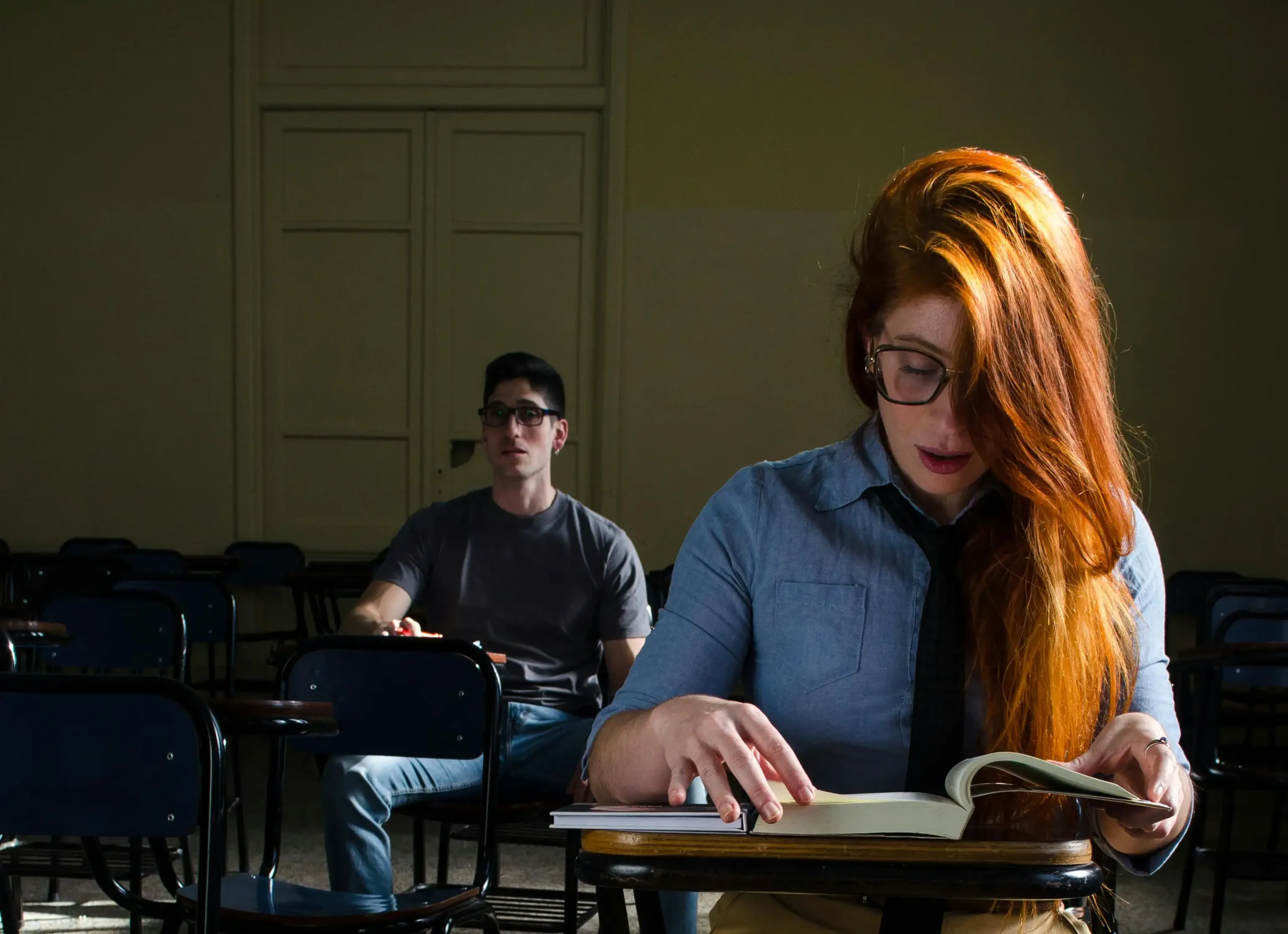
I used to believe I was special in a way most kids weren’t. Not because I was the smartest in class or the most talented, but because my mother told me something I carried with pride for years—I looked like a celebrity. At first, it sounded harmless, even sweet. Every child wants to feel unique in their parents’ eyes. But what I didn’t realize back then was how deeply that one belief would shape my confidence, my personality, and eventually, my biggest moment of embarrassment in school.
It all started when I was very young, probably around six or seven years old. My mother had this habit of comparing me to different celebrities whenever we watched television together. Whenever a beautiful actress appeared on screen, she would pause, smile, and say, “That’s you when you grow up.” At first, I thought she meant I would become famous someday. But as I got older, I realized she meant something else. She wasn’t saying I would become a celebrity. She was saying I already looked like one.
One actress in particular became the center of everything. I don’t even remember how it started, but my mother became obsessed with saying I looked like her. She would point at magazine covers, advertisements, even random social media posts and say, “That’s my daughter. People just don’t know it yet.” At family gatherings, she would proudly show my pictures to relatives and say I had the same face as this celebrity. And because I was a child, I believed her without question.
It became part of my identity.
When people asked me what I wanted to be when I grew up, I didn’t just say “doctor” or “teacher.” I would confidently say, “I already look like a celebrity.” I would say it with a straight face, as if it were a fact everyone should know. My mother never corrected me. In fact, she encouraged it. She would fix my hair in front of the mirror and say things like, “You just need a little more confidence. Celebrities always know they’re special.”
At home, I practiced poses in front of mirrors. I studied angles of my face, trying to find what my mother saw. I started believing that maybe I was just waiting for the world to notice me. I didn’t think of it as arrogance. It felt like destiny.
But things started to change when I entered school.
At first, no one questioned my confidence. Kids are curious, not cruel in the beginning. When I told my classmates that I looked like a celebrity, they would ask which one. I would proudly say the name my mother always mentioned. Some would nod politely. Some would laugh softly. But I didn’t understand what that laughter meant yet.
The turning point came in grade school when we had a class activity involving drawing and portraits. Our teacher asked us to draw someone we admired. Most students drew teachers, parents, or fictional characters. I, of course, drew the celebrity my mother always compared me to—and I even added myself beside her, smiling, like we were twins.
When I showed my drawing to the class, I expected admiration. Instead, there was silence for a moment, followed by quiet snickering. I remember one boy leaning over and whispering, “That doesn’t even look like her.”
Another girl raised her hand and said something I still remember clearly.
“She doesn’t look like that celebrity at all.”
I felt heat rise to my face immediately, but I forced a smile. I told them they were wrong. I told them my mother said so, so it must be true. But deep down, something uncomfortable started to grow inside me for the first time.
Still, I didn’t fully let go of the belief. Because at home, nothing changed. My mother still called me her “little celebrity twin.” She still compared me to actresses on TV. She still told me I would grow into a face people would recognize. So I trusted her more than I trusted my classmates.
That belief followed me into middle school, where things became more complicated. Kids at that age start noticing differences more clearly. They become more honest, sometimes too honest. I remember one lunch break when I confidently told a group of classmates again that I looked like a celebrity. This time, they didn’t just laugh softly.
They laughed loudly.
One of them pulled out a phone and searched the celebrity’s picture, then looked at me and back at the screen repeatedly. “No offense,” she said, still laughing, “but you don’t look anything like her.”
That moment should have been my wake-up call. But instead, I did something worse. I got defensive. I told them they didn’t understand facial structure. I said I was just younger, that I hadn’t “grown into it yet.” They laughed even harder.
From that day, I became “the girl who thinks she looks like a celebrity.”
And that nickname stuck.
At first, I pretended not to care. But children remember everything, even when they pretend to ignore it. I started noticing the way people smiled when I spoke. I started noticing how they exchanged glances when I brought it up. Slowly, I stopped talking about it in school. But at home, I never questioned it.
My mother never once suggested she might be wrong. In her mind, she wasn’t lying—she was protecting my confidence. She would say things like, “People just don’t see it yet. One day, they will.” And I held onto that promise like it was something real.
Everything came crashing down in high school.
By then, everyone had phones, social media, and access to instant reality checks. One day during a break, a group of classmates started discussing celebrities who looked alike. Somehow, the conversation shifted, and someone brought up the actress my mother always compared me to.
That’s when everything changed.
One of my classmates suddenly turned to me and said, “You always say you look like her, right?”
I hesitated but nodded.
Then she smiled in a way I didn’t like. “Prove it.”
She pulled out her phone, opened the camera, and held it up next to a photo of the actress. “Let’s compare.”
The whole group gathered around.
My heart started beating faster. I tried to laugh it off, but my hands were already shaking slightly. They placed the two images side by side—my face on one side, the celebrity’s on the other.
And the silence that followed was worse than laughter.
Someone finally spoke.
“You don’t look like her at all.”
Another added, “Not even close.”
Then came the worst part—one girl said, “Who told you that?”
And I answered honestly without thinking.
“My mom.”
There was a pause.
Then they laughed. Not cruelly at first, but in disbelief. Like they couldn’t decide whether to laugh or feel sorry for me. That moment felt like something inside me collapsed quietly. Not loudly. Not dramatically. Just… permanently.
I went home that day and didn’t say anything. My mother greeted me like normal, asking how school was. I almost told her what happened. Almost asked her why she said those things. But I didn’t. Because I realized something important in that moment.
She wasn’t trying to deceive me.
She believed it too.
That made it even more confusing.
For days, I avoided mirrors. I stopped talking about celebrities entirely. I started noticing my own face differently, not through admiration, but through comparison. For the first time, I saw myself without my mother’s words shaping my perception.
And I realized I didn’t look like a celebrity.
I just looked like me.
It took time to process that truth. At first, it felt like losing something. Like a childhood dream had been taken away. But slowly, it became something else. Relief.
Because I didn’t have to live up to a fantasy anymore.
I didn’t have to explain myself.
I didn’t have to defend a comparison that was never real in the first place.
Years later, I understand my mother better. She wasn’t trying to lie to me out of harm. She was trying to make me feel special in a world that can be very harsh to children who are still discovering themselves. But what she didn’t realize was that confidence built on illusion eventually meets reality.
And when it does, it can hurt more than the truth ever would.
Now, when I look back at that version of myself—the girl who confidently told everyone she looked like a celebrity—I don’t feel embarrassed anymore. I feel gentle toward her. Because she wasn’t arrogant. She was just a child repeating what she was told by someone she trusted completely.
And maybe that’s the real story.
Not that I believed a lie.
But that I grew out of it, and into myself.
Leave a Reply