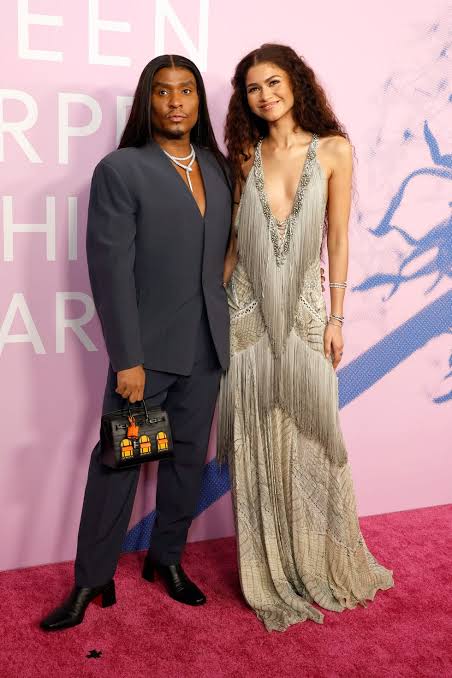
There was a time when a major entertainment moment could exist for a few hours before the public had fully formed an opinion about it. Now, that window is almost nonexistent. A celebrity appears on a red carpet, a trailer drops, an awards-show speech gets emotional, or a surprising photograph catches someone’s attention, and within minutes the internet has transformed the moment into a conversation. One person posts a reaction, another turns it into a joke, someone else creates a meme, and suddenly millions of people are participating in the same cultural moment from completely different corners of the internet. Entertainment is no longer simply something audiences watch. It is something they immediately discuss, remix, criticize, defend and turn into content of their own.
The 2026 entertainment calendar has provided plenty of examples of just how quickly that cycle can move. At the Emmys, for example, a short red-carpet interaction involving Zendaya, Law Roach and Odessa A’zion became the subject of online speculation almost immediately. The clip was interpreted by some viewers as evidence of tension, only for Roach to later say that there was no conflict and that they had simply been laughing. The important part is not whether the original interpretation was correct. It is how quickly a few seconds of footage became a much larger story. A tiny moment was separated from the larger event, replayed, analyzed and discussed until the internet had effectively created a second entertainment story around it.
That is the strange power of modern fandom. People are no longer waiting for entertainment publications to tell them what mattered. They are deciding for themselves in real time. A red-carpet photo can inspire fashion commentary before the ceremony begins. A celebrity’s facial expression can become a reaction GIF before the broadcast reaches its final commercial break. A line from a movie trailer can become a meme template. A song from a film can suddenly become the soundtrack to thousands of unrelated videos. The audience has become part of the distribution system, and every person with a phone can potentially add another layer to the story.
TikTok has become especially important to this process. Vogue Business’s September 2026 trend reporting describes TikTok as a platform that has helped turn songs into hits, create micro-trends and establish shared phrases and cultural references among its huge user base. That means an entertainment moment does not necessarily remain attached to the movie, television show, celebrity or event that created it. Once users begin remixing it, the original context can become almost secondary. A sound becomes a trend. A facial expression becomes a reaction. A line becomes a caption. A scene becomes an inside joke.
The result is an endless feedback loop. The entertainment industry creates the original moment, the audience reacts to it, creators turn those reactions into new content, and the new content generates another wave of reactions. Then entertainment outlets report on the viral conversation, which sends even more people back to the original clip. The internet essentially becomes a giant echo chamber that keeps producing new versions of the same moment.
Awards shows demonstrate this particularly well. The ceremony may be designed around winners, performances and speeches, but online audiences often create an entirely different hierarchy of what matters. One unexpected reaction shot can compete for attention with an award announcement. One unusual outfit can become the subject of thousands of posts. One interaction between celebrities can generate more discussion than an entire acceptance speech. Vogue’s reporting on the 2026 awards season found that major stars could generate substantial visibility and online conversation simply by appearing in high-profile fashion moments, illustrating how celebrity reach and social engagement can extend far beyond whether someone actually wins an award.
The 2026 Met Gala offered an even larger illustration of this phenomenon. Vogue reported 1.696 billion global video views across its channels and platforms around the event, along with 108 million global social engagements. Its livestream also reached 196 million views. Those numbers show that a major entertainment and fashion event no longer has a single audience sitting in front of a television or waiting for photographs to appear in a magazine the next morning. There are audiences watching livestreams, creating reaction videos, sharing screenshots, debating outfits, making memes and following conversations across multiple platforms simultaneously.
And that participation can completely change the lifespan of a story. Something that might once have been a five-minute entertainment-news segment can now survive for days because users keep finding new ways to talk about it. Someone notices a detail that everyone else missed. Someone creates a parody. Someone posts an opposing opinion. Another person responds to that opinion. A creator summarizes the entire argument in a 30-second video. Then another creator disagrees with the summary. Suddenly, the original entertainment moment has become a debate about the debate.
This is where the title “Everyone Has An Opinion And Nobody Is Logging Off” starts to feel less like an exaggeration and more like a description of the modern entertainment cycle. The internet rewards participation, and entertainment provides an almost unlimited supply of things to participate in. There is always another trailer, another casting announcement, another relationship rumor, another red-carpet appearance, another awards show, another celebrity post and another controversy waiting around the corner.
Even ordinary celebrity activity can become news because the audience is watching social media behavior itself. A like, comment, follow, unfollow or unusual photograph can become the starting point for speculation. Sometimes the celebrity has not actually said anything at all. The internet fills in the silence. A recent viral example involving a celebrity social-media interaction showed how quickly a minor digital action could become a meme conversation, with users building jokes and theories around an interaction that had originally been much less significant.
There is also a commercial side to all of this. The conversation surrounding entertainment is valuable because attention has become measurable. Brands, studios, streaming services and fashion houses can see how quickly a celebrity appearance or cultural moment travels online. The modern superfan economy increasingly depends on this ability to transform enthusiasm into engagement, with social platforms creating communities, inside jokes and shared lore around major stars and fandoms. A person does not necessarily need to buy a ticket or watch an entire program to participate in its cultural impact. They can contribute simply by reposting a clip, commenting on a photograph or using a trending sound.
But there is another side to the constant conversation: the speed makes context difficult. The faster people react, the less time there is to understand what actually happened. A few seconds of video can become a complete narrative before anyone involved has explained the situation. A joke can be mistaken for a serious statement. An awkward-looking photograph can become evidence of a feud that does not exist. By the time clarification arrives, the original interpretation may already have traveled far beyond the correction.
That is precisely what happened with the viral Emmys interaction involving Law Roach and Odessa A’zion. The online conversation moved toward rumors of tension, while Roach later rejected that interpretation and said there was no shade involved. The episode is a useful reminder that virality and accuracy are not the same thing. The internet is extremely efficient at spreading something interesting; it is not automatically efficient at determining whether the interpretation attached to that thing is correct.
Still, the reaction culture is not entirely negative. It can make entertainment feel more communal. Fans who live thousands of miles apart can experience the same joke at the same time. A movie scene can create a shared language. A fashion moment can introduce people to a designer they had never seen before. A television finale can become a worldwide conversation within minutes. The audience is no longer passive, and that participation can make entertainment feel bigger than the original piece of content.
The difference is that the conversation never really ends. There is always another opinion waiting underneath the previous one. The joke becomes a reaction to the joke. The reaction becomes a meme. The meme becomes a trend. The trend becomes a news story. Then people react to the news story. The entertainment cycle keeps moving because the internet has removed the traditional stopping point.
That may be the defining feature of entertainment culture now: the show is only the beginning. The real event happens afterward, across comment sections, group chats, TikTok feeds, Instagram posts, X timelines, fan accounts and thousands of individual conversations. Everyone gets a microphone, everyone has an interpretation and everyone can add another sentence to the story.
And tomorrow, there will be something new to argue about.
References
- Vogue Business — The Vogue Business TikTok Trend Tracker
- Vogue — The 2026 Met Gala by the Numbers
- Vogue — Who Won Awards Season on Social Media?
- Vogue — Inside the Superfan Economy
- People — Law Roach Squashes Rumors After Viral Emmys Moment
- Hollywood Life — Celebrity Appearances Can Move Social Media Buzz
Source: CertifiedKaren.com — Everyone Has An Opinion And Nobody Is Logging Off
Leave a Reply