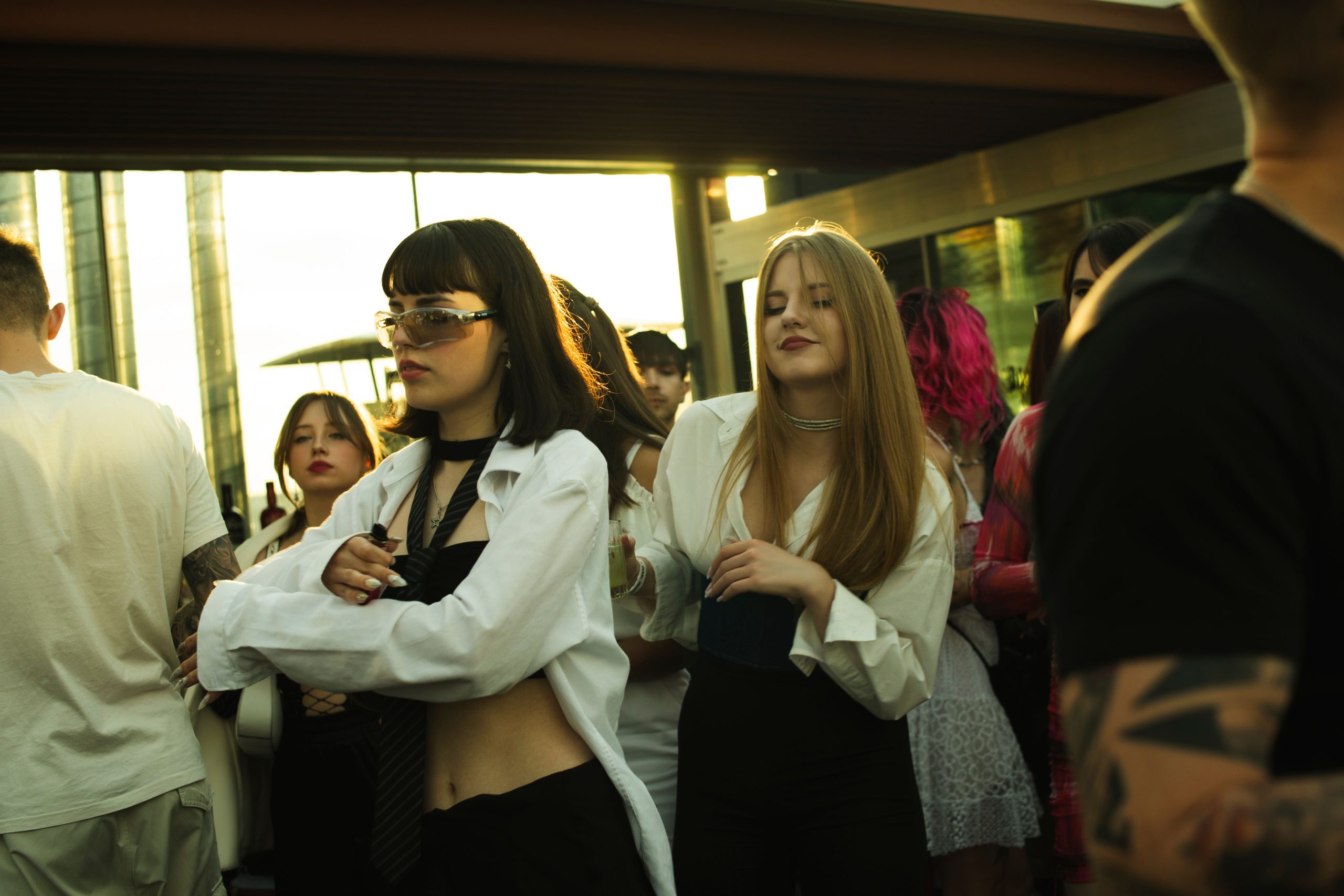
I have a question about Fashion Week, and I would appreciate an explanation from someone who knows what is happening.
Is this a fashion show, or have I accidentally walked into a very expensive costume party?
Because every time I see photographs from major fashion events, I find myself staring at the screen with more questions than answers. One model is wearing a dress that looks like an enormous flower arrangement. Another is walking down the runway in something resembling a futuristic birdcage. Someone else appears to have wrapped themselves in several layers of fabric, attached an unusual structure to their shoulders, and decided that ordinary clothing is no longer an option.
And everyone is applauding.
The designers look proud. The photographers are taking hundreds of pictures. Fashion critics are discussing silhouettes, textures, artistic expression, and the future of modern style.
Meanwhile, I am wondering whether the model can sit down.
Welcome to Fashion Week, where clothing becomes art, accessories develop their own personalities, and a simple jacket can apparently require a philosophical explanation.
Now, before anyone accuses me of having no appreciation for fashion, let me make something clear. I love beautiful clothing. I appreciate creativity, craftsmanship, elegant tailoring, unusual materials, and designers who have the courage to experiment. Fashion can be an extraordinary form of artistic expression.
But sometimes I look at a runway creation and wonder whether the designer started with a perfectly normal outfit, became distracted, and decided to add everything they could find in the studio.
And somehow, that is called a collection.
Fashion Week: Where Ordinary Rules Go on Vacation
Fashion Week is one of the most important events in the fashion industry. Major fashion capitals such as Paris, Milan, London, and New York host shows where designers present new collections to buyers, journalists, celebrities, industry professionals, and fashion enthusiasts.
These events help shape conversations about upcoming fashion trends, silhouettes, colors, fabrics, and creative directions.
For designers, the runway is an opportunity to present their vision. Some collections focus on wearable clothing, while others explore experimental concepts that challenge traditional ideas about fashion.
That is understandable.
The runway is not always intended to show what people will wear to the grocery store on Saturday morning. It can be a creative space where designers test ideas, experiment with proportions, and present clothing as an artistic statement.
But sometimes, I wish someone would provide a small translation guide.
For example:
Designer description: A bold exploration of contemporary identity through sculptural forms.
What I see: A person wearing a very large shoulder decoration.
Designer description: An experimental interpretation of movement and organic structure.
What I see: A dress that appears to have been attacked by a collection of decorative curtains.
Perhaps I simply need more education.
Or perhaps some outfits are genuinely difficult to understand without a background explanation.
Either way, I would like a program explaining what I am looking at before the show begins.
Avant-Garde Fashion: When Clothing Becomes a Work of Art
Avant-garde fashion is known for challenging conventional ideas about clothing. It often involves unusual shapes, unexpected materials, exaggerated proportions, and designs that push the boundaries of traditional style.
Rather than simply creating garments that people can wear every day, avant-garde designers may use the runway to explore ideas, challenge expectations, or communicate a particular artistic concept.
Some designs are extraordinary.
A dress can become a sculptural masterpiece. A jacket can transform the shape of the body. Unexpected materials can be used to create textures and forms that would never appear in ordinary clothing.
There is genuine skill involved in making these creations.
But let us be honest. Some runway looks are so unusual that I cannot imagine where anyone would wear them.
Would you wear that to dinner? A wedding? A business meeting? A family gathering?
Imagine arriving at your friend’s birthday party wearing a garment that looks like a giant architectural structure.
Your friend opens the door.
“Oh, hello! I see you dressed casually.”
I would like to know whether these outfits come with an instruction manual.
And if a garment requires two assistants to help someone get through a doorway, perhaps the designer should consider a slightly smaller version.
Avant-garde fashion can be exciting precisely because it challenges expectations. But viewers are also allowed to question whether a design is beautiful, practical, wearable, or simply an interesting experiment.
Not every artistic creation needs to become an everyday outfit.
And not every everyday outfit needs to look like a science-fiction installation.
Runway Looks That Make You Ask, “Where Would You Actually Wear That?”
One of the most entertaining things about fashion shows is imagining how runway clothing would work in ordinary life.
The models walk confidently down the runway, looking perfectly composed in garments that appear to have been designed for a different planet.
Then I start thinking about practical matters.
How would someone sit in that dress? Could they get into a car? Would they be able to walk through a crowded restaurant without knocking over three chairs?
And what happens when it rains?
I understand that runway fashion is not always designed for convenience. A designer may want to make a visual statement rather than create a garment suitable for a daily commute.
Still, I would appreciate a little consideration for the person wearing the outfit.
Some runway creations have enormous sleeves that could cover an entire dining table. Others feature dramatic trains that require careful handling. There are exaggerated shoulders, unusual headpieces, sculptural skirts, and footwear that makes me question whether the model has signed a special safety agreement.
Imagine trying to climb stairs in some of these shoes.
I would not make it past the first step.
Meanwhile, the model glides across the runway as though gravity is merely a suggestion.
I admire the confidence. I really do.
But I would also like to know whether there is a comfortable pair of shoes waiting backstage.
When the Accessories Become Bigger Than the Outfit
Fashion accessories are supposed to complete a look. A beautiful handbag, a striking necklace, or an elegant pair of shoes can transform an outfit.
But at Fashion Week, accessories sometimes appear to have ambitions of their own.
There are enormous hats, dramatic headpieces, unusual handbags, oversized jewelry, and footwear that looks more like a construction project than something designed for walking.
At some point, I stop looking at the clothing and start wondering whether the accessory department has taken over the entire collection.
Why is the handbag shaped like a piece of furniture?
Why are the earrings large enough to require their own security arrangements?
And what exactly is happening with those shoes?
Some designers intentionally exaggerate accessories to create a dramatic visual effect. They may use unusual proportions, textures, and shapes to reinforce the theme of a collection.
That can be interesting.
However, when an accessory becomes the main character, the rest of the outfit can disappear.
A good fashion look often depends on balance. One dramatic element can make a statement, while simpler pieces allow it to stand out. But if everything is competing for attention, the overall result can feel chaotic.
It is like inviting ten people to speak at the same time and expecting the audience to understand the conversation.
I would suggest choosing a main attraction.
The outfit, the shoes, or the handbag.
Not all three demanding their own spotlight.
The Designer’s Explanation Is Sometimes More Complicated Than the Outfit
One of my favorite parts of modern fashion coverage is reading the descriptions that accompany unusual runway creations.
A designer presents an outfit, and the accompanying explanation reveals that it represents a journey through time, the relationship between humanity and nature, the changing definition of identity, or the tension between tradition and modern society.
That sounds fascinating.
But sometimes I look at the actual garment and wonder whether we are discussing the same thing.
The dress appears to be made from several pieces of fabric attached in unexpected places. The shoulders are enormous. The skirt is shaped like a building. There is a decorative object on the model’s head that I cannot identify.
Then I read the description again.
Oh, it represents freedom.
Well, wonderful.
I was going to say it looked like a very expensive curtain, but I appreciate the deeper meaning.
In fairness, fashion designers often draw inspiration from history, architecture, art, nature, politics, culture, and personal experiences. A collection may have a thoughtful concept behind it, and the clothes can communicate ideas that are not immediately obvious to everyone.
Fashion is a visual language, and not every viewer will interpret it in the same way.
But that does not mean the audience must automatically love every creation.
A design can have an interesting concept and still not appeal to someone visually. A garment can be technically impressive while looking uncomfortable or impractical.
We can respect the idea without pretending that we would happily wear it to brunch.
Fashion Trends: Who Decides What We Are Supposed to Wear?
Fashion Week is often associated with the trends that eventually appear in stores and everyday wardrobes.
Designers introduce new colors, silhouettes, materials, patterns, and styling ideas. Fashion editors and industry professionals discuss the collections, while retailers consider which elements might appeal to customers.
Some runway ideas eventually become recognizable trends.
Others remain part of the creative world of high fashion.
That is one of the interesting things about the fashion industry. A dramatic runway design might inspire a more wearable version that appears months later in stores. An unusual color combination may influence seasonal collections. A particular silhouette might become popular after being interpreted by several designers.
But I do have a question.
Who exactly decides that we are all supposed to wear something?
One season, everyone is encouraged to embrace oversized clothing. The next season, fitted silhouettes are suddenly everywhere. One year, a particular color is declared essential. The following year, it appears to have committed a fashion crime.
Are we expected to update our wardrobes every time someone announces a new trend?
Because I would like to speak to the person responsible for this.
Some of us have perfectly good clothes hanging in our closets. We have jackets that still fit, shoes that are comfortable, and dresses that have survived several seasons without needing a dramatic redesign.
Must we replace everything because a runway has decided that a different shape is fashionable?
I think not.
Trends can be fun, but personal style should not require a complete wardrobe renovation every few months.
Wear what you enjoy. Choose what suits your lifestyle. And please, do not purchase a pair of uncomfortable shoes simply because a fashion magazine has declared them essential.
Your feet deserve better.
The Models Make Everything Look Effortless
Another thing I find fascinating about Fashion Week is the models.
They walk down the runway in outfits that appear to have been designed to challenge the laws of physics, and somehow they make everything look effortless.
The model walks forward with a confident expression. The garment moves perfectly. The shoes remain in place. The enormous accessory does not fall off.
Not a single sign of panic.
I, on the other hand, would probably trip over the first unusual piece of fabric.
There is a tremendous amount of skill involved in runway modeling. Models must understand the pace, posture, presentation, and overall mood of the show. They also need to work with garments that may be difficult to move in or require a particular way of walking.
The runway is a performance.
And the models are professionals.
Still, I sometimes wonder what happens backstage.
Does someone have to help them put on these elaborate creations? Are there special instructions for walking in oversized footwear? Does a designer provide a warning about turning too quickly?
I imagine there are assistants standing nearby with emergency sewing kits, safety pins, and enough patience to manage a small army.
Fashion Week is clearly not for the faint-hearted.
Fashion Shows Are Expensive Productions, Not Just Clothing Displays
A major fashion show involves far more than sending models down a runway.
There may be elaborate sets, lighting arrangements, music, choreography, seating plans, guest lists, backstage teams, hair and makeup professionals, photographers, and extensive production planning.
The venue itself can become part of the presentation.
Some designers choose historic buildings, unusual locations, or dramatic architectural spaces. Others create custom environments that reinforce the theme of the collection.
The result can be spectacular.
Fashion shows are designed to create an experience. They are not simply presentations of garments on hangers. They bring together clothing, performance, music, visual design, and atmosphere.
That is why some runway shows feel more like theatrical productions than traditional fashion presentations.
And I can appreciate that.
However, sometimes the production is so elaborate that I wonder whether the clothes are getting enough attention.
There are dramatic lights, unusual stages, loud music, elaborate decorations, and models walking through an environment that looks like a futuristic film set.
Then I look at the outfit.
It appears to be a collection of fabric attached to a very large structure.
Was that the design, or did I miss the actual clothing?
Perhaps I need to focus.
Can We Appreciate Fashion Without Understanding Every Outfit?
I think one of the most amusing things about Fashion Week is the pressure to have an opinion about everything.
If a designer presents a traditional, elegant collection, people discuss the craftsmanship and timeless appeal.
If a designer presents something unusual, everyone begins analyzing its artistic meaning.
Both conversations are valid.
But sometimes it feels as though viewers are expected to admire every runway creation simply because it appeared at a prestigious fashion event.
I disagree.
Fashion is subjective. People have different tastes, preferences, and ideas about what makes clothing attractive. Some love experimental designs. Others prefer classic elegance. Some enjoy dramatic styling, while others appreciate simple garments that fit beautifully.
There is room for all of it.
You can admire the craftsmanship without liking the final look. You can appreciate the creativity while questioning the proportions. You can understand the concept and still decide that you would never wear it.
That is perfectly acceptable.
A runway show is a creative presentation, not a compulsory examination in which everyone must give the same answer.
And if I look at an outfit and think it resembles a very expensive costume, I should be allowed to say so.
Respectfully, of course.
I am not trying to start an international fashion incident.
What Happens When Runway Fashion Reaches Real Life?
The interesting part comes when runway trends begin appearing in everyday fashion.
A dramatic design might be simplified into a wearable dress. An unusual silhouette may inspire a jacket sold in regular clothing stores. A bold color combination may become popular in seasonal collections.
Fashion moves between creative experimentation and everyday style.
Designers, retailers, stylists, and consumers all contribute to that process.
But not every runway trend needs to be copied exactly.
The most useful way to approach fashion trends is to take inspiration rather than follow every detail. Perhaps you like the color of a runway outfit but prefer a simpler silhouette. Maybe you enjoy an oversized jacket but would rather wear it with comfortable trousers. You might appreciate a dramatic accessory but choose a smaller version that works with your everyday wardrobe.
That is how personal style develops.
You do not need to wear an entire runway collection to participate in fashion.
You can take one idea, adapt it to your preferences, and make it your own.
And please remember that clothing should fit your life.
If you spend most of your day walking, working, driving, or running errands, you may want something that allows you to move comfortably.
There is no shame in choosing sensible shoes.
In fact, I would like to nominate comfortable footwear for its own major fashion award.
Final Thoughts: Is This Fashion Week or a Costume Party?
I genuinely appreciate the creativity behind Fashion Week. Designers take risks, explore new ideas, and challenge the way people think about clothing. Runway shows give talented artists a platform to experiment, and some of the most unusual designs can influence fashion in ways that are not immediately obvious.
Fashion would be rather boring if everyone followed the same rules.
But I still have questions.
Why does every outfit need to look like a sculpture? Why are some accessories larger than the person wearing them? And how many people are required to help someone get into a dress that appears to have its own architectural framework?
I may never understand every runway creation, and that is perfectly fine.
I will continue appreciating beautiful tailoring, interesting fabrics, elegant silhouettes, and the occasional outrageous design that makes me laugh.
I will also continue wearing clothes that allow me to sit down, walk comfortably, and enter a restaurant without requiring assistance from the entire staff.
So, to the designers, stylists, and fashion professionals preparing for the next Fashion Week, I offer one small suggestion.
Keep being creative. Keep experimenting. Keep challenging expectations.
But perhaps include one outfit in the collection that ordinary people can wear without needing a detailed explanation and a team of assistants.
Because I have a closet full of perfectly good clothes, a limited budget, and absolutely no intention of dressing like a decorative building.
Now, if you’ll excuse me, I need to check whether my favorite jacket is still fashionable.
I bought it last year, and I would hate to discover that it has been declared architecturally incorrect.
Leave a Reply