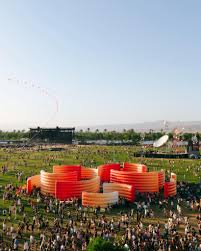
At the Coachella Valley Music and Arts Festival, outrage in 2026 has stopped feeling like an exception—it has become part of the expected rhythm. What used to signal a genuine cultural rupture now arrives on schedule: a moment happens, reaction splits, discourse escalates, and within hours, the cycle resets. The predictability itself is what defines it now.
The pattern is familiar. A performance clip circulates, a styling choice gets amplified, or a celebrity moment enters the feed. Almost immediately, interpretation divides into opposing directions. Some audiences read it as innovation or expression, while others frame it as inconsistency, excess, or misalignment with expectations. The arguments begin before context even fully settles.
What has changed is not the presence of disagreement, but its timing. Outrage no longer builds slowly through sustained analysis or editorial framing. Instead, it triggers instantly through short-form content, where emotional response is prioritized over depth. The result is a compressed cycle where reaction, escalation, and fatigue all happen within a single news window.
At Coachella specifically, this cycle intensifies because of density. Multiple high-visibility moments occur in rapid succession, each one capable of generating its own micro-debate. Instead of one central controversy, there are overlapping ones—fashion, performance, behavior, guest appearances—all competing for attention simultaneously.
The predictability comes from repetition. Audiences have seen the pattern so many times that they can anticipate the structure of the response even before it fully forms. A moment appears, commentary splits, memes emerge, criticism sharpens, humor diffuses tension, and attention moves on. The emotional arc is no longer surprising; it is procedural.
Algorithms reinforce this structure by amplifying engagement at every stage. Strong reactions—whether supportive or critical—are prioritized equally, which ensures that disagreement is not only inevitable but highly visible. This visibility creates the impression of constant conflict, even when the actual duration of attention is short.
Another factor is saturation. In an environment where cultural moments arrive continuously, audiences develop reflexive responses. Not every event can be deeply processed, so reaction becomes automatic. Outrage, in this sense, is less about sustained conviction and more about immediate participation in a shared attention system.
Even resolution is rare. Most arguments don’t end—they fade. As new content replaces old discourse, unresolved debates simply lose visibility rather than reaching conclusion. This creates the sense that “everyone is arguing again,” when in reality, it is a rotating set of overlapping conversations that never fully close.
Ultimately, what makes outrage predictable is not its intensity, but its structure. In 2026, it follows a familiar loop: exposure, division, amplification, fatigue. And at events like Coachella, that loop runs faster than ever—so fast that arguing itself has become part of the background noise.
Leave a Reply