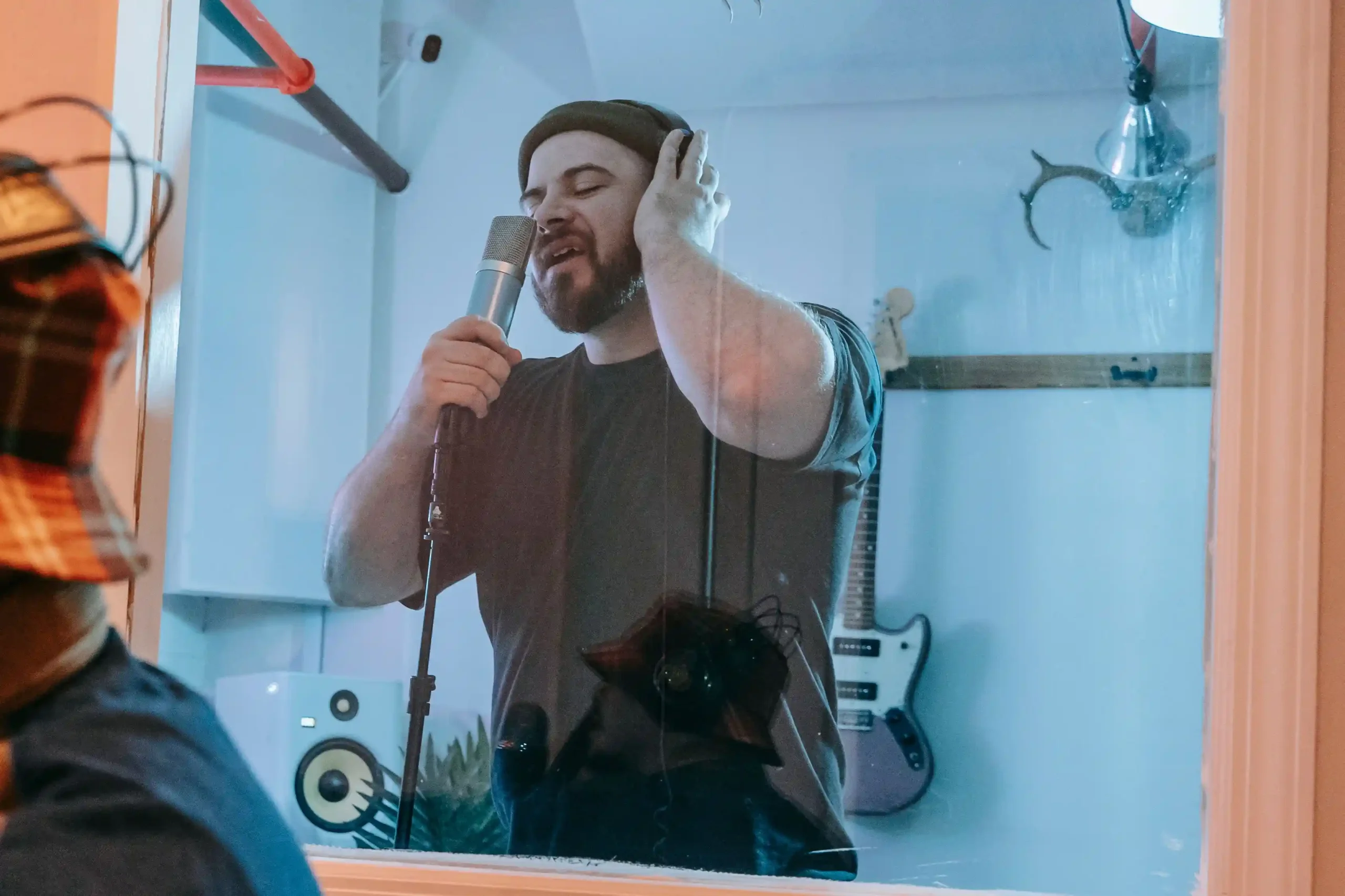
There are certain songs that begin with enormous promise. The beat arrives. The bass kicks in. The production sounds expensive. There is a mysterious little sound in the background that makes you think something important is about to happen. Then the singer starts, and for the next three minutes, you sit there waiting.
Waiting for what?
A chorus with a point. A memorable lyric. A story. Perhaps even a sentence that does not sound like it was written during a meeting where everyone was afraid to disagree.
And then, suddenly, the song is over.
Three minutes have passed. Maybe three minutes and seventeen seconds if we are being particularly generous. You look at the screen. You look around the room. You question your life choices.
“Was that it?”
Apparently, yes.
Welcome to the increasingly confusing world of modern pop music, where a song can have a spectacular beat, an impressive music video, millions of streams and a chorus that will remain stuck in your head for nine business days, yet somehow say absolutely nothing.
Now, before anyone starts calling the manager, let me make something perfectly clear. I am not against catchy music. I enjoy a good beat. I appreciate clever production. I understand that not every song needs to be a Shakespearean tragedy set to piano.
But if you are going to give me three minutes of my life, I would like something in return.
A thought would be nice.
When the Beat Is Doing All the Work
The biggest problem with some modern songs is that the production has become more interesting than the actual song.
You can hear the producers working overtime. There are layers of percussion, electronic effects, dramatic drops, distorted vocals, background harmonies and enough bass to make the furniture move.
Meanwhile, the lyrics are sitting in the corner holding a paper plate.
The song begins with a fantastic instrumental. You immediately think, “Oh, this is going somewhere.”
Then comes the first verse.
The singer tells us they are feeling something.
They don’t explain what.
They mention a person.
We don’t know who.
There is some reference to a night, a city, a feeling, a memory or possibly a text message.
And then comes the chorus, which repeats the same five or six words approximately seventeen times.
By the second chorus, you have memorized the lyrics despite having absolutely no idea what the song is about.
That is an impressive achievement.
For the songwriter, perhaps not so much.
Catchy Does Not Automatically Mean Good
Now, I understand why these songs become popular.
Humans like repetition. We like rhythms. We like sounds that are easy to remember. A simple chorus can become incredibly addictive, and there is nothing wrong with that.
The problem comes when the catchy element is the only element.
There is a difference between a simple song and an empty song.
Some of the greatest pop songs in history have had incredibly straightforward lyrics. You do not need twelve metaphors and a philosophy degree to write something memorable. Sometimes one honest sentence can say more than an entire album of vague emotional statements.
The best pop songs often give us something we can recognize. Heartbreak. Jealousy. Happiness. Anger. Desire. Nostalgia. Loneliness. Even silliness.
But every now and then, a song comes along that appears to be about absolutely nothing.
It has an attitude.
It has a vibe.
It has a color palette.
It probably has a very expensive music video.
But what is it actually saying?
That, dear reader, remains classified information.
“Back in My Day, Songs Had a Story”
I know what you’re thinking.
“Here she goes.”
Yes.
Back in my day, songs had stories.
People met. People fell in love. People broke up. Somebody made a terrible decision. Somebody regretted it. Somebody got in a car and drove away dramatically while looking out the window.
We understood the assignment.
Even when the lyrics were ridiculous, they usually had some sort of narrative.
You knew who hurt whom.
You knew who was leaving.
You knew who was cheating.
You knew somebody’s mother was disappointed.
Nowadays, sometimes the story is simply: “I am attractive, the party is expensive, and everyone wants me.”
Fine.
Congratulations.
Would you like a certificate?
There is nothing wrong with confidence, but if the entire song consists of the singer repeatedly reminding us that they are desirable, wealthy, fashionable and surrounded by attractive people, eventually I start wondering whether they are trying to convince me or themselves.
The Mysterious Art of Saying Nothing
There is a special skill involved in writing lyrics that sound meaningful without actually saying anything.
This is an art form.
You take a few emotional words. Add a location. Throw in something about midnight. Mention someone’s eyes. Add the word “forever.” Perhaps include “tonight” several times.
Congratulations.
You have written a modern pop song.
“I’ve been running through the city tonight.”
Okay.
“Thinking about the way you looked at me.”
Wonderful.
“Nothing can ever be the same.”
Why?
“I don’t know where we’re going.”
Neither do I, sweetheart.
“And I just want to feel alive.”
There it is.
The emotional climax.
We have arrived nowhere.
The problem isn’t that these phrases are necessarily bad. The problem is that they are so universal that they could belong to almost any song.
Replace the singer. Replace the beat. Replace the title.
Nobody notices.
That is when you know something is missing.
The Three-Minute Mystery
The strange thing about modern songs is that they are often incredibly short.
Three minutes used to feel like plenty of time to tell a story.
Now three minutes can feel like an elevator ride.
You press play.
The intro starts.
The singer enters.
There is a chorus.
A beat drops.
The chorus happens again.
There is a bridge that may or may not actually be a bridge.
The chorus returns.
Then silence.
You stare at your phone.
“Wait. What happened?”
Nothing happened.
And yet somehow you have listened to it four times because the melody is stuck in your head.
This is the genius and the curse of modern music.
The song doesn’t need to tell you anything if it can make you remember it.
When the Chorus Becomes the Entire Song
The chorus is supposed to be the part you remember.
That is perfectly reasonable.
But some songs have taken this idea and run directly into the wall with it.
You get a catchy phrase.
Then you hear it again.
Then again.
Then the singer changes one word.
Then it comes back.
Again.
And again.
At this point, I am no longer listening to a song. I am participating in a workplace training exercise designed to test my patience.
There is a fine line between repetition that creates a hook and repetition that feels like someone forgot to write the second half of the song.
A good chorus makes you want to sing along.
A bad chorus makes you wonder whether the songwriter was told they had five minutes left before lunch.
The Rise of the “Vibe” Song
Perhaps this is where we have to accept that music has changed.
Not every song is designed to tell a story anymore.
Some songs are designed to create a mood.
They are background music for getting ready, driving, going to the gym, sitting in a trendy restaurant, making a TikTok video or staring dramatically out of a car window.
The lyrics don’t necessarily need to carry the song.
The atmosphere does.
And honestly, that can work.
There is something satisfying about music that simply sounds good.
But even a “vibe” song can have personality.
Give me a clever line.
Give me an unexpected phrase.
Give me something that makes me stop what I’m doing and say, “Oh, that’s actually good.”
Do not give me three minutes of expensive production wrapped around a sentence that could have been generated by a motivational poster.
Why We Still Listen Anyway
Here’s the embarrassing part.
After all this complaining, we still listen.
We add the song to our playlists.
We play it while cleaning.
We sing the chorus in the car.
We pretend we aren’t listening when it comes on in public, then quietly mouth every word.
Why?
Because catchy music works.
There is something deeply satisfying about a melody that gets into your brain and refuses to leave.
And sometimes, perhaps, we don’t need every song to change our lives.
Sometimes we just want something fun.
Not every meal needs to be gourmet. Sometimes you want a burger.
Not every movie needs to win an Oscar. Sometimes you want explosions.
And apparently, not every song needs to have a coherent message.
Sometimes we want to dance around the kitchen while singing lyrics we barely understand.
I accept this.
Reluctantly.
The Real Problem Isn’t Simple Lyrics
The real problem isn’t simplicity.
It is laziness.
A simple lyric can be brilliant when it is specific, honest or clever.
Think about how powerful a short sentence can become when it captures a feeling everyone understands.
The difference is intention.
A songwriter who knows exactly what they want to say can make a simple lyric unforgettable.
A songwriter who doesn’t know what they want to say can hide behind production.
And sometimes, you can hear the difference.
The beat gets louder.
The effects become bigger.
The vocals become more dramatic.
Everything is happening except the actual writing.
That is when I become suspicious.
Give Me Something to Complain About
If this website is going to have one guiding principle, it should be simple: we want entertainment with personality.
Celebrity gossip should make us raise an eyebrow.
Food reviews should make us hungry or offended.
Movie reviews should make us question our weekend plans.
Fashion critiques should make us stare at an outfit and ask whether someone accidentally got dressed in the dark.
And music reviews?
Music reviews should make us want to argue.
Because that’s the fun part.
Music is subjective.
What one person calls brilliant, another person calls unbearable noise.
What one person calls an emotional masterpiece, another person calls three minutes of whispering over a drum machine.
And both people can be right.
That is what makes music so entertaining to discuss.
Final Verdict: I Want My Three Minutes Back
So, to the song that lasted three minutes and somehow nothing happened: I have questions.
Who were you?
What did you want?
Why were we running through the city?
Who was that person you kept talking about?
Why was it always midnight?
And most importantly, why am I still humming your chorus?
I may complain about your lyrics. I may question your creative decisions. I may sit here like an annoyed grandmother demanding to speak with your manager.
But I cannot deny one thing.
You are catchy.
And that, unfortunately, is enough to get you played again.
Tomorrow, I will probably complain about you again.
The day after that, I will probably know every word.
By next week, I will be singing the chorus while making coffee.
And that is the great tragedy of modern pop music: sometimes the song can say absolutely nothing and still manage to say, “Play me again.”
Fine.
I’ll play it again.
But I’m still calling the manager.
Leave a Reply