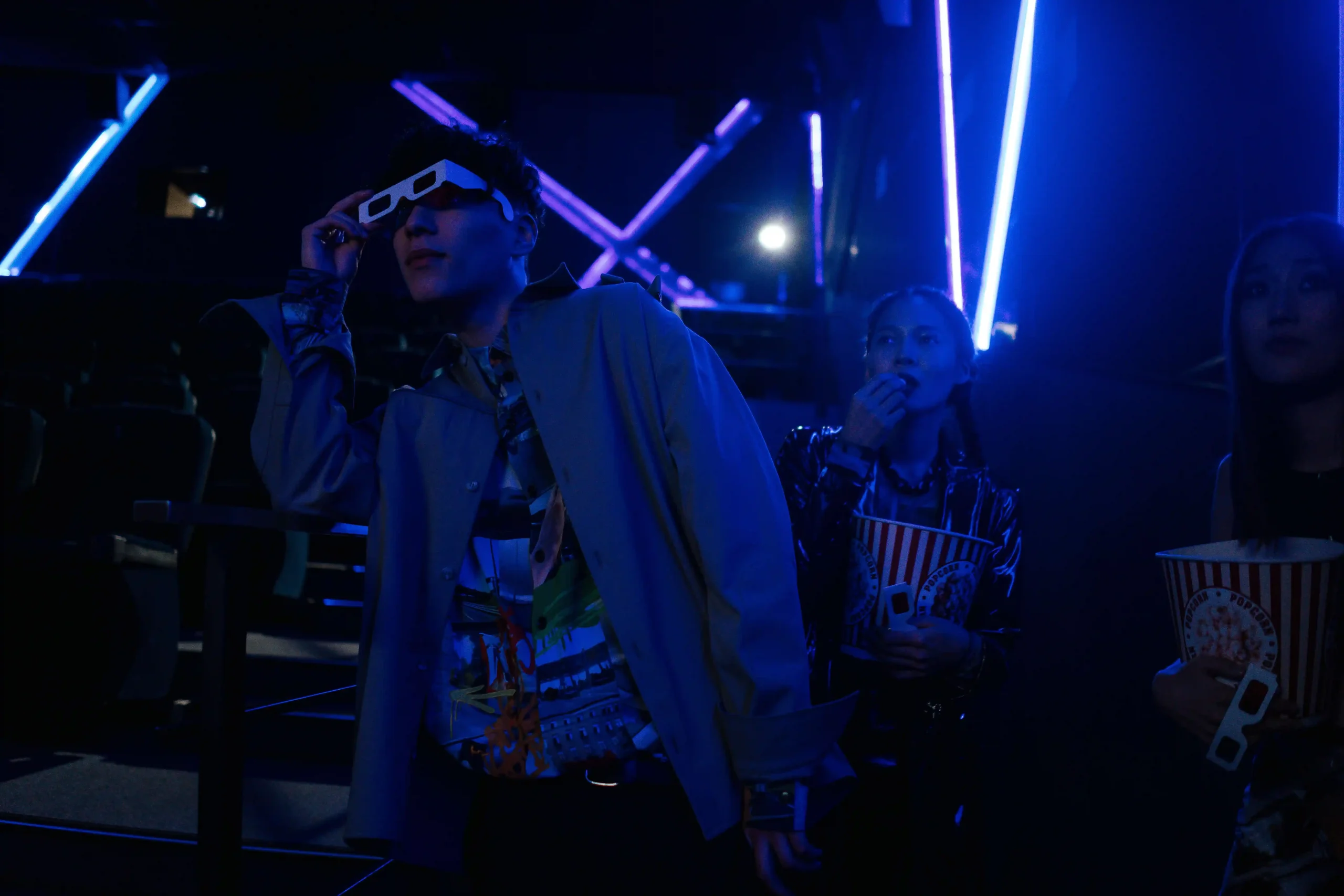
I have something to say.
Please sit down.
Take a breath.
Put the tissues away.
The movie was fine, dear.
You don’t need to cry about it.
I know everyone online is calling it a masterpiece. I know someone has already written a 3,000-word essay explaining why the final seven minutes “changed their entire understanding of existence.” I know somebody filmed themselves sobbing in a movie theater and uploaded it with the caption, “I will never emotionally recover.”
But I watched the movie.
And you know what?
It was fine.
Not terrible.
Not brilliant.
Not the greatest cinematic achievement since humans first discovered how to point a camera at something.
Just… fine.
And apparently saying that on the internet is more dangerous than walking into a room full of angry geese.
Because the moment you say you didn’t love an overhyped movie, someone appears to explain why you simply “didn’t understand it.”
Oh, I understood it.
I just didn’t need to contact my therapist afterward.
Apparently, We Are Supposed to Be Emotionally Destroyed
Let’s start with the emotional reactions.
There is nothing wrong with being moved by a movie.
Films are supposed to make us feel something.
A great movie can make you laugh, cry, think, remember someone, reconsider something about yourself, or stare at the credits for several minutes afterward.
Wonderful.
Beautiful.
That’s what storytelling is for.
But somewhere along the way, we started treating emotional devastation as proof of quality.
If a movie makes you cry uncontrollably, it must be brilliant.
If you leave the theater emotionally stable, apparently you have no soul.
Excuse me?
I enjoyed the film.
I understood the message.
I appreciated the performances.
I simply did not collapse onto the theater floor.
That doesn’t mean the movie failed.
It means I brought tissues and emotional boundaries.
The Trailer Promised Me a Masterpiece
Overhyped films usually begin with an excellent trailer.
Of course they do.
The trailer is edited by people who understand exactly how to manipulate your expectations.
Beautiful cinematography.
Dramatic music.
A mysterious voice.
Someone running.
Someone crying.
A dramatic close-up.
A line that sounds profound when removed from context.
Then the title appears.
You think:
“Oh, this is going to be incredible.”
You buy the ticket.
You get your popcorn.
You settle into your seat.
And then the actual movie begins.
Suddenly you’re thinking:
“Oh.”
It’s not bad.
That’s the problem.
It’s just not what you were promised.
The trailer made it look like an emotional earthquake.
The actual movie feels more like someone gently dropping a book on the floor.
The Internet Has Already Decided It’s Perfect
One of the strangest things about watching a heavily hyped movie is realizing that the internet has already decided how you’re supposed to feel about it.
Before you even watch the film, you have seen the reviews.
Five stars.
Ten out of ten.
“Perfect.”
“Life-changing.”
“Cinema is saved.”
“Best movie of the decade.”
“I’m not the same person I was before watching this.”
Good grief.
Now I have expectations.
And expectations are dangerous.
Because once everyone tells you something is extraordinary, ordinary becomes disappointing.
The movie may actually be pretty good.
But you’ve been promised perfection.
So when the film is merely enjoyable, people feel cheated.
It’s like someone telling you dinner will be the best meal you’ve ever had in your life.
Then you eat it.
It’s delicious.
But not life-changing.
You don’t throw the plate across the room.
You simply say:
“That was nice.”
Apparently, this is unacceptable.
The Fan Reactions Are More Dramatic Than the Movie
Sometimes I think the audience reaction is more entertaining than the movie itself.
Someone walks out of the theater crying.
Another person says they can’t stop thinking about it.
Someone else posts:
“I NEED EVERYONE TO WATCH THIS IMMEDIATELY.”
Then comes the 17-part thread explaining the symbolism.
Then the fan theories.
Then the reaction videos.
Then the edits.
Then the memes.
Then someone posts a video titled:
“WHY THIS MOVIE DESTROYED ME.”
Destroyed you?
Dear, did you watch a movie or survive a natural disaster?
I am concerned.
Meanwhile, I’m sitting on my couch thinking:
“The soundtrack was good.”
That’s where our opinions apparently part ways.
You Don’t Have to Love the Movie
This should not be controversial, but apparently it is.
You are allowed not to love a movie.
You are allowed to think it’s overrated.
You are allowed to think the acting was excellent but the script was weak.
You are allowed to love the cinematography and hate the ending.
You are allowed to think the movie was boring.
You are allowed to think the movie was too long.
You are allowed to walk out of the theater thinking:
“Well, that was certainly a movie.”
This doesn’t mean you hate cinema.
It doesn’t mean you lack intelligence.
It doesn’t mean you don’t understand art.
Sometimes you simply don’t like the movie.
That’s it.
There doesn’t have to be a psychological explanation.
“You Just Didn’t Understand It”
Ah, my favorite response.
“You just didn’t understand the movie.”
Oh, I understood it.
The main character was sad.
The family had problems.
The mysterious object represented grief.
The ending was intentionally ambiguous.
The color blue represented emotional isolation.
I got it.
I promise.
I simply don’t think a movie automatically becomes brilliant because it has symbolism.
You can put symbolism in anything.
A character staring at a window can represent loneliness.
A character eating an apple can represent temptation.
A character walking slowly through a hallway can represent emotional transformation.
Or maybe they were just walking.
Not everything needs to become a dissertation.
Sometimes a chair is just a chair.
Please calm down.
When Every Scene Is “Iconic”
Another problem with overhyped movies is that suddenly every scene is “iconic.”
The character opens a door?
Iconic.
Someone looks out a window?
Iconic.
Two people drink coffee?
Absolutely iconic.
Someone drops a spoon?
The internet is calling it one of the most important moments in modern cinema.
Dear.
The spoon fell.
Pick it up.
We don’t need a museum exhibition.
A truly iconic movie moment usually becomes memorable because it earns that status.
The performance.
The writing.
The direction.
The cultural impact.
The emotion.
Not because somebody on social media typed “THIS SCENE.”
If everything is iconic, nothing is.
The Three-Hour Runtime Nobody Asked For
Then there is the runtime.
I don’t mind a long movie if it deserves to be long.
Some stories genuinely need time.
Epic adventures.
Historical dramas.
Complex narratives.
Fine.
But sometimes you can feel the runtime happening.
You check your phone.
Two hours have passed.
You assume you’re nearly finished.
No.
There is still an hour left.
Why?
What else do we need to discuss?
The villain has been defeated.
The relationship has been resolved.
The secret has been revealed.
The emotional lesson has been learned.
And yet we’re still here.
Someone starts another conversation.
Then another.
Then someone drives somewhere.
Then someone remembers something.
Then the credits don’t come.
At this point, I’m no longer watching a movie.
I’m serving a sentence.
Please Stop Calling Everything “Oscar-Worthy”
Let’s talk about the phrase “Oscar-worthy.”
It gets thrown around constantly.
A dramatic scene happens.
“Oscar-worthy.”
An actor cries.
“Oscar-worthy.”
Someone gives a speech.
“Oscar-worthy.”
The dog looks sad.
“Oscar-worthy.”
Please.
Awards are not handed out because someone cried attractively.
Great acting is about more than emotional intensity.
It’s about control, character development, timing, subtlety, chemistry, physicality, voice, and the ability to make an audience believe that the character exists.
Sometimes the quietest performance is more powerful than the one where everyone is screaming.
But apparently screaming equals awards now.
Good to know.
I shall begin rehearsing immediately.
The Problem With Fan Wars
Now we arrive at the part I genuinely wish would disappear.
Fan wars.
You say:
“I didn’t really enjoy the movie.”
Someone responds:
“You’re just jealous.”
Why would I be jealous?
I am sitting at home in comfortable clothes.
I have snacks.
I’m not competing with the movie.
Another person says:
“You don’t understand art.”
Another:
“Your taste is terrible.”
Another:
“You probably only watch dumb movies.”
Suddenly we have moved from a movie review to international diplomacy.
Dear.
It’s a film.
Nobody has declared war.
You don’t need to defend it like national territory.
People can love different movies.
That is actually the wonderful thing about cinema.
There is room for all kinds of stories.
When the Sequel Is Somehow More Overhyped
And then there’s the sequel.
The first movie was popular.
Everyone loved it.
The studio announces another one.
The internet explodes.
People start speculating.
Trailers appear.
The hype grows.
Then the movie arrives.
And it is basically the first movie again.
Different location.
Slightly different villain.
Same emotional speech.
Same dramatic ending.
Same character making the same mistakes.
And somehow everyone says:
“It’s even better than the original.”
Is it?
Or are we simply excited to see characters we already know?
Nostalgia is powerful.
So is marketing.
Let’s not confuse the two.
Sometimes the Movie Is Actually Good
Now, before you accuse me of being impossible to please, let me clarify something.
I love a good movie.
When a film genuinely earns the hype, I will happily admit it.
If the writing is sharp, the acting is convincing, the direction is strong, the pacing works, and the story actually gives me something to care about, I will applaud.
I don’t need a movie to be miserable to respect it.
I don’t need to hate everything.
In fact, the most satisfying movie experience is when you go in expecting very little and walk out thinking:
“Well, that was excellent.”
No pressure.
No massive expectations.
No internet telling you how you are supposed to feel.
Just a good story.
Sometimes that’s all you need.
The Movie Review Has Become Part of the Entertainment
One thing I genuinely enjoy about modern movie culture is how much discussion happens around films.
People analyze endings.
They debate performances.
They discuss themes.
They compare adaptations.
They examine cinematography.
They argue about whether a sequel was necessary.
That kind of conversation can be fascinating.
The problem comes when discussion turns into a competition.
Who loves the movie most?
Who cried hardest?
Who understood the deepest symbolism?
Who saw it three times?
Who bought the collector’s edition?
Who owns the poster?
Congratulations.
You win.
What exactly did you win?
Nobody knows.
But you have apparently earned bragging rights.
Stop Telling Me I Need to Watch It Again
This one is especially irritating.
You say:
“I didn’t love it.”
Someone says:
“You need to watch it again.”
No.
Maybe I don’t.
Maybe I watched it correctly the first time.
I understand that some films become better with repeat viewings.
That’s true.
You notice details you missed.
You understand characters differently.
You catch clues.
You appreciate the filmmaking more.
Wonderful.
But if I don’t want to watch a three-hour movie again, please respect my decision.
I have laundry.
Not Every Emotional Movie Is a Great Movie
A movie can make you cry and still have a weak plot.
A movie can make you laugh and still have terrible writing.
A movie can be visually stunning and still be boring.
A movie can be technically brilliant and still not connect with you.
This is what makes film criticism interesting.
Quality isn’t one single thing.
There are many elements.
Story.
Acting.
Direction.
Editing.
Sound.
Cinematography.
Writing.
Pacing.
Production design.
And then there’s personal taste.
You can analyze all of these things and still arrive at different conclusions.
That’s okay.
Art doesn’t come with a universal reaction button.
My Official Review: Calm Down
So here is my official review of the overhyped movie that everyone is currently losing their minds over.
Was it terrible?
No.
Was it brilliant?
Not exactly.
Was it worth watching?
Probably.
Did I enjoy parts of it?
Yes.
Did I cry?
No.
Did I immediately start a group chat to discuss the symbolism?
Absolutely not.
Did I stare at the credits wondering what everyone else was talking about?
Possibly.
Would I watch it again?
Ask me in approximately five years.
Was it the greatest movie ever made?
Let’s calm down.
It was a movie.
And sometimes “pretty good” is a perfectly respectable review.
Final Thoughts: Please Put the Tissues Away
I love passionate movie fans.
I really do.
Passion makes cinema fun.
People should get excited about films.
They should celebrate great performances.
They should debate endings.
They should recommend movies to their friends.
They should cheer when their favorite actor wins an award.
All of that is wonderful.
But maybe we need to take a deep breath occasionally.
Not every movie is a masterpiece.
Not every dramatic scene is going to change your life.
Not every ending requires a 40-minute YouTube analysis.
Not every actor who cries deserves an Oscar.
And not everyone who says, “I didn’t love it,” needs to be sent to movie court.
Sometimes a movie is simply fine.
And that is okay.
So if you absolutely adored the latest overhyped film, wonderful.
I’m happy for you.
If you cried through the entire third act, I hope you had enough tissues.
If you wrote a passionate essay about how the movie changed your understanding of human existence, good for you.
If you watched it and thought it was boring, that’s okay too.
We can all coexist.
You can have your five-star masterpiece.
I’ll have my three-star “Well, That Was Fine.”
And if someone comes running toward me yelling, “HOW COULD YOU NOT LOVE THIS MOVIE?”
I’m going to take a sip of my coffee and calmly say:
“Dear, sit down.”
“Take a breath.”
“The movie was fine.”
“You don’t need to cry about it.”
Now, if you’ll excuse me, I have another movie to watch.
And if it disappoints me, I already know who I’m calling.
The manager.
Leave a Reply