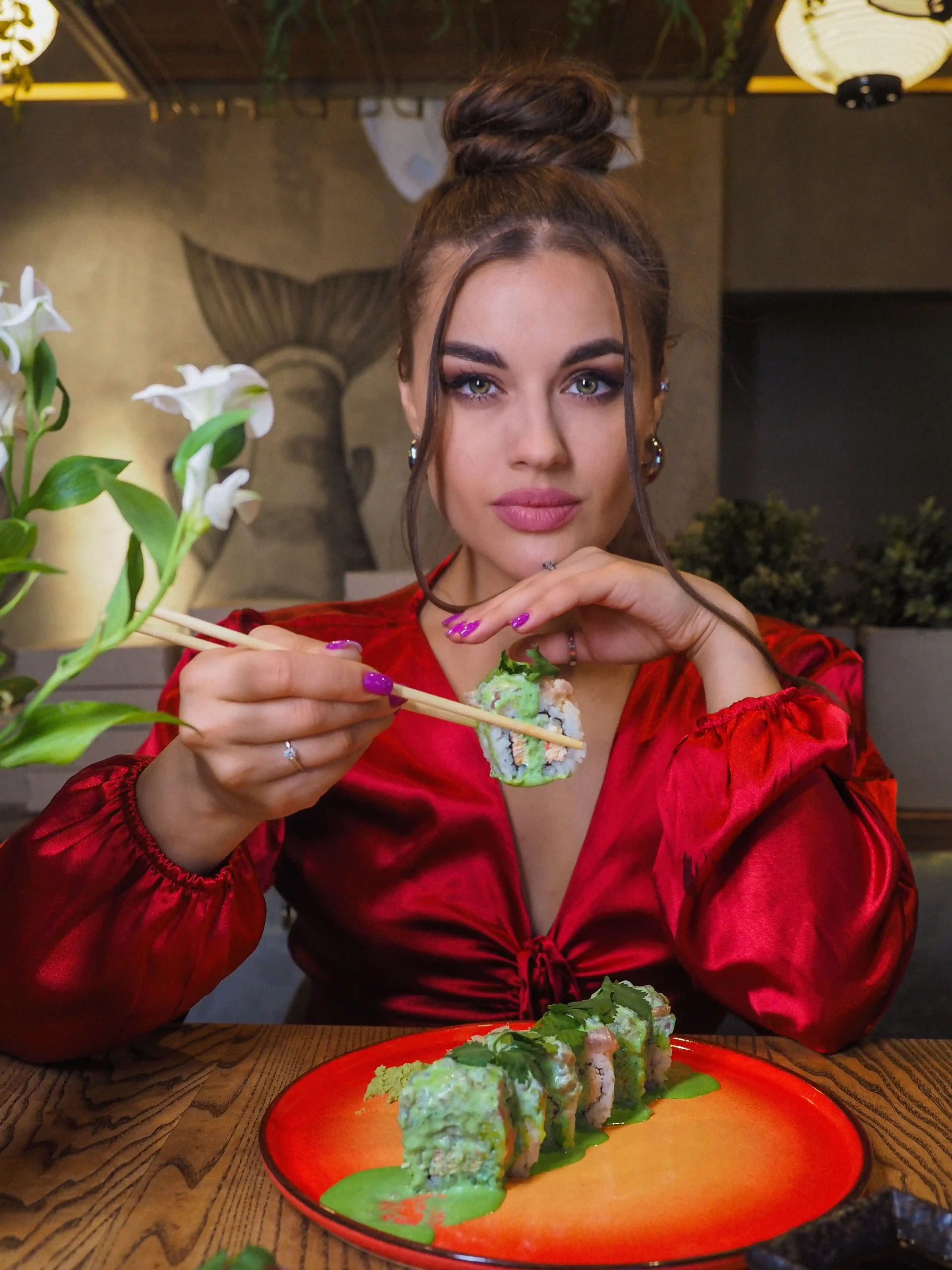
I have a question, and I would appreciate a serious answer. When did going out for dinner become an exercise in looking at food rather than actually eating it?
I went to a restaurant because I was hungry. A perfectly reasonable decision, I thought. I wanted a meal, something delicious, perhaps a little indulgent, and ideally enough food to prevent me from wandering into the kitchen an hour later looking for crackers.
Apparently, my expectations were hopelessly outdated.
These days, certain fine-dining restaurants seem determined to convince us that a tiny spoonful of something placed in the middle of an enormous plate is the height of culinary sophistication. A chef squeezes three drops of sauce into an artistic pattern, places a single leaf beside a mysterious beige object, and sends the waiter out as though a priceless museum artifact has just been unveiled.
The waiter approaches the table with the seriousness of a surgeon carrying out a delicate procedure.
“And here we have our seasonal interpretation of the ocean, featuring a delicate foam, locally sourced herbs, and a reduction inspired by the chef’s childhood memories.”
I stare at the plate.
Then I stare at the waiter.
Then I stare at the plate again.
“Lovely, dear. And where is the rest of it?”
Silence.
Apparently, that is the meal.
Ladies and gentlemen, welcome to modern fine dining, where the plates are enormous, the portions are microscopic, and the bill is large enough to require emotional preparation.
When Did Dinner Become a Work of Art?
Let me begin by saying that I appreciate beautiful food. I enjoy a thoughtfully prepared meal, an elegant presentation, and ingredients that have been selected with care. Cooking is a skill, and talented chefs deserve recognition for their creativity, technique, and dedication.
I have no problem with a restaurant making food look attractive.
The problem begins when the presentation becomes more impressive than the amount of food actually being presented.
You sit down at a beautifully arranged table. The lighting is perfect. The cutlery looks expensive enough to require insurance. The waiter places a plate in front of you, and for a brief moment, you are impressed.
There is a delicate arrangement of vegetables. A small piece of protein sits at an angle that appears to have been approved by an architect. Sauce is spread across the plate in a graceful curve. A flower rests beside the main ingredient, possibly because someone in the kitchen decided dinner needed a decorative accessory.
It looks stunning.
You take a photograph.
You send it to a friend.
You post it on social media with a caption about an unforgettable culinary experience.
Then you eat it.
Two bites later, the plate is empty.
I beg your pardon?
I spent more time photographing the meal than eating it. I spent more money on dinner than I would normally spend on groceries for several days, and now I am sitting here trying to remember whether I actually tasted anything.
Perhaps the chef is hoping the artistic presentation will distract me from the fact that my stomach is still waiting for the main event.
I would like to speak to the manager of decorative arrangements, please.
The Plate Is Bigger Than My Future
One of the great mysteries of fine dining is the relationship between plate size and food quantity.
The plates are enormous. Truly enormous. You could probably use some of them as serving trays for an entire family dinner.
And yet, the food occupies a space roughly equivalent to a large coin.
A tiny piece of fish rests in the center of a white ceramic landscape. A few vegetables are arranged beside it, and a line of sauce stretches elegantly across the plate. The overall effect is minimalist, sophisticated, and completely insufficient for someone who skipped lunch.
I look at the plate and wonder whether the kitchen accidentally served me a sample.
Perhaps the waiter will return with the actual meal after I finish this one.
Perhaps the chef is conducting a social experiment to determine how long an adult can survive on three pieces of roasted carrot and a philosophical interpretation of mashed potatoes.
Perhaps I have wandered into a restaurant where the food is sold by the millimeter.
I am trying to be respectful, but my stomach has started filing complaints.
There is something deeply confusing about paying for a meal that looks as though it belongs in a dollhouse. Imagine inviting a hungry person to dinner and presenting them with a plate so carefully arranged that they feel guilty disturbing it.
I am not here to admire the geometry, dear. I am here to eat.
If I wanted to stare at a beautiful arrangement of objects, I would visit an art gallery. At least there, nobody would charge me several hundred dollars for the privilege of looking.
The Sauce Streak That Changed My Life
Now we must discuss the sauce.
Because if there is one thing certain fine-dining restaurants seem to love, it is a dramatic sauce streak.
The chef takes a spoon, carefully dips it into a sauce, and draws a graceful line across the plate. Perhaps there are two lines. Perhaps the sauce forms a delicate circle. Perhaps it resembles an abstract painting that would look perfectly at home in a contemporary art museum.
I am sure the technique requires skill. Getting the texture and consistency right takes effort, and sauces can be an essential part of a dish.
But sometimes I look at the plate and wonder whether the sauce was accidentally spilled and the kitchen decided to call it presentation.
There is a difference between a sauce that complements a meal and a sauce that appears to be escaping from it.
I want enough sauce to taste with my food. I do not need a decorative brushstroke that stretches across the plate like a tiny red carpet.
And please do not tell me that the sauce represents the chef’s interpretation of a sunset over the Mediterranean.
It is a brown streak.
A very expensive brown streak.
I am sure it has a fascinating story, but I would also like to know whether there is enough of it to season the food.
The situation becomes even more amusing when the waiter explains the dish in elaborate detail.
“This is a delicate herb emulsion, balanced with a citrus reduction and finished with a subtle touch of smoked oil.”
I nod thoughtfully.
“Wonderful. Could I have a little more?”
The waiter smiles politely, as though I have asked for the restaurant’s entire wine cellar.
Apparently, requesting extra sauce is not always part of the artistic vision.
Well, my artistic vision involves having enough sauce to enjoy my dinner.
The Tiny Portion With the Enormous Price Tag
Let us discuss the bill.
Because nothing makes a tiny meal more memorable than discovering that it costs as much as a substantial grocery shop.
Fine dining can be expensive for legitimate reasons. High-quality ingredients, skilled labor, specialized equipment, rent, service, and careful preparation all contribute to restaurant costs. Some dishes require hours of work, and an excellent dining experience can be worth paying for.
I understand that.
What I do not understand is why a meal that looks like a tasting sample sometimes comes with a price that suggests I have purchased an entire farm.
You open the menu.
The descriptions are beautiful. The ingredients sound luxurious. There are words such as “heritage,” “artisanal,” “seasonal,” and “handcrafted” scattered throughout the page.
You find the dish you want.
You look at the price.
You pause.
You look at the price again, hoping a zero has accidentally wandered into the wrong column.
No such luck.
You order anyway because you have already made a reservation, dressed nicely, and convinced yourself that this is going to be a special evening.
Then the meal arrives.
A small piece of meat, a little sauce, three vegetables, and a decorative leaf.
The plate looks like it has just returned from a long holiday and brought home a souvenir.
You eat slowly, partly because you want to appreciate the cooking and partly because you are trying to make the food last long enough to justify the cost.
When you finish, you sit back and wait for that wonderful feeling of satisfaction that comes after a good meal.
Instead, you begin thinking about bread.
Not artisanal sourdough served with smoked butter and a paragraph about the grain’s regional heritage.
Ordinary bread.
The kind you can put in a toaster.
The kind that does not require a waiter to explain its childhood.
And that, dear, is when I begin to question the entire experience.
Is It Still Fine Dining If I Need a Snack Afterward?
Here is my simple test for a restaurant meal: after eating, do I feel satisfied?
Not necessarily stuffed. Not uncomfortable. Just comfortably fed.
I want to enjoy my dinner without immediately planning a second dinner.
Unfortunately, some tiny-portion dining experiences leave me thinking about food before I have even paid the bill.
I finish the final bite. The waiter removes the plate. I smile and say thank you, because I was raised to be polite.
Then I look at the menu again.
Perhaps I should order another dish.
Perhaps the first one was only an introduction.
Perhaps the chef believes the meal should unfold like a novel, with each chapter arriving in a separate, carefully measured portion.
And to be fair, tasting menus often work this way. They offer a sequence of small dishes designed to showcase different techniques, flavors, and ingredients. When done well, the progression can be memorable and satisfying.
But a multi-course tasting menu is different from ordering one main course and discovering that it contains approximately three mouthfuls.
If I have paid for a full dinner, I would prefer not to leave feeling as though I have attended a very expensive food demonstration.
The experience should leave me satisfied, even if the portions are smaller than those at a casual restaurant.
And if I do leave hungry, I should not have to pretend that hunger is a sophisticated lifestyle choice.
I can appreciate culinary creativity without abandoning my digestive system.
The Waiter Describes Every Ingredient Like a Crime Scene Investigator
There is another fine-dining tradition I find fascinating: the detailed explanation of each dish.
The waiter arrives carrying a plate and begins describing the ingredients with the precision of someone reading a confidential report.
“Underneath the roasted vegetable, you will find a whipped preparation of seasonal roots, accompanied by a fermented dressing and a lightly smoked garnish.”
I look at the plate.
I see a carrot.
A very nice carrot, perhaps. A carrot that has clearly attended culinary school. A carrot with excellent professional connections.
But still a carrot.
I appreciate knowing what I am eating, especially when allergies, dietary preferences, and unfamiliar ingredients are involved. A good explanation can make a dish more interesting and help guests understand the chef’s intentions.
However, sometimes the description is so elaborate that I feel as though I should take notes.
The waiter names the farm, the season, the cooking technique, the sauce, the garnish, and the philosophical idea behind the dish.
By the time the explanation ends, I have forgotten which part I was supposed to eat first.
“Thank you, dear. And just to confirm, everything on this plate is edible?”
The waiter laughs politely.
I am not joking.
If the plate contains flowers, leaves, decorative herbs, unusual foams, or unfamiliar garnishes, I would rather ask than accidentally eat something that was meant only for presentation.
The meal should be enjoyable, not a guessing game.
And if the food needs a five-minute speech before I can take a bite, perhaps the chef should consider including a short printed guide.
Preferably one with pictures.
The Foam Has Arrived, and Nobody Knows Why
At some point, modern fine dining developed a deep affection for foam.
There is vegetable foam, seafood foam, herb foam, citrus foam, and mysterious foam whose exact purpose becomes clear only after the waiter has explained the entire history of the dish.
Foam can be a legitimate culinary technique. It can introduce flavor, alter texture, and create a different sensory experience. Skilled chefs use it for good reasons, and it would be unfair to dismiss the technique simply because it looks unusual.
But there are moments when I see a plate covered in a delicate cloud of something and wonder whether my dinner has developed a weather system.
The foam floats beside a tiny piece of protein. A few drops of sauce decorate the plate. A vegetable rests at a dramatic angle.
Everything looks like it belongs in a futuristic laboratory.
I am waiting for the chef to emerge from the kitchen wearing safety goggles.
Then I taste it.
Perhaps it is delicious. Perhaps it is surprising. Perhaps the foam adds a lovely texture to the dish.
Excellent.
I am happy to admit when a creative technique works.
But I would also like to know whether the foam is doing anything besides making my dinner look as though it has been involved in a small scientific experiment.
If it adds flavor, wonderful.
If it adds texture, even better.
If it is there because the plate looked too empty, I have a suggestion: add more food.
I know. Radical thinking.
The Social Media Plate Versus the Actual Meal
We cannot discuss modern fine dining without mentioning social media.
Beautiful food photographs are everywhere. People share restaurant experiences, post close-ups of artistic dishes, and create elaborate videos documenting everything from the arrival of the bread to the final dessert.
Restaurants have responded by making presentation a bigger part of the overall experience. A visually striking plate can encourage guests to take photographs, share them online, and introduce the restaurant to new audiences.
There is nothing inherently wrong with that. Beautiful presentation can be part of the pleasure of dining, and sharing a special meal with friends is a perfectly reasonable thing to enjoy.
The problem appears when a dish is designed primarily to look impressive in a photograph rather than to deliver a satisfying meal.
A plate can be visually spectacular and still taste ordinary. A dramatic arrangement can attract thousands of likes without necessarily offering exceptional value. A dessert can look like a tiny sculpture and disappear before anyone has had time to decide whether they actually enjoyed it.
I have seen photographs of dishes so elaborate that I wondered whether eating them would ruin the composition.
Imagine being afraid to touch your own dinner because you might disturb the chef’s carefully arranged edible artwork.
That is not a meal. That is a temporary exhibition with a fork.
And if I need to take seventeen photographs, adjust the lighting, and move my glass of water out of the frame before I can eat, I may have lost track of the original purpose of going to a restaurant.
I wanted dinner.
Not a photography assignment.
Are Small Portions Always a Bad Thing?
Now, before the fine-dining enthusiasts arrive at my imaginary front door carrying pitchforks and expensive tasting menus, let me acknowledge something important.
Small portions are not automatically bad.
A tasting menu may contain many courses, each designed to highlight a particular ingredient or technique. Smaller servings can allow diners to experience more flavors without becoming uncomfortably full. They can also reduce waste when carefully planned and help chefs showcase ingredients that would be overwhelming in larger quantities.
Some dishes are rich enough that a modest serving is entirely appropriate.
And sometimes the experience is about more than the quantity of food. Service, atmosphere, creativity, wine pairings, and the opportunity to experience unusual cooking techniques can all contribute to a memorable evening.
I am not demanding that every restaurant serve a mountain of food.
I am asking restaurants to make the value clear.
If I am paying for a carefully designed multi-course experience, I expect a progression of dishes that leaves me satisfied. If I am ordering a main course, I expect a portion that makes sense for the price and the restaurant’s concept.
There is a difference between a thoughtfully portioned meal and a meal that leaves a customer wondering whether the kitchen forgot something.
The best restaurants understand that balance.
They know when to serve a small, intense bite and when to provide something more substantial. They make every ingredient count without making the guest feel that every bite has been rationed.
Good fine dining should not force customers to choose between appreciating the chef’s creativity and feeling adequately fed.
Both can exist on the same plate.
Imagine that.
What I Actually Want From a Restaurant
My expectations are not complicated.
I want good food, thoughtful service, a pleasant atmosphere, and a price that feels reasonable for what I receive.
I want the dish to taste as good as it looks. I want the ingredients to complement one another. I want the staff to explain unfamiliar elements without making me feel as though I have accidentally enrolled in a culinary lecture.
Most importantly, I want to leave satisfied.
That does not mean every restaurant needs enormous portions or inexpensive menus. Different establishments serve different purposes, and guests should choose restaurants that suit their preferences and budgets.
A fine-dining restaurant may offer a very different experience from a neighborhood café or a family-style restaurant. Neither has to imitate the other to be worthwhile.
But restaurants should be honest about what they offer.
If a tasting menu consists of many small courses, explain that clearly. If a main course is intentionally modest, help guests understand the concept. If the price reflects exceptional ingredients, skilled preparation, or a carefully curated experience, demonstrate that value through the food and service.
Do not rely on a decorative sauce streak to do all the work.
And please, for the love of all things edible, do not make me feel uncultured for asking whether there is enough food to satisfy my hunger.
I am a customer, not a museum visitor.
Final Thoughts: Please Bring Me Something I Can Eat
I appreciate beautiful food. I appreciate talented chefs. I appreciate the creativity and skill that go into preparing a memorable dining experience.
But I also appreciate dinner.
I would like a meal that tastes wonderful, looks appealing, and leaves me satisfied. I would like the sauce to serve a purpose beyond decorating the plate. I would like the vegetables to contribute something more substantial than a pop of color. And I would like to finish a main course without wondering whether the kitchen is preparing the actual meal somewhere in the back.
Fine dining does not have to abandon elegance to offer satisfying portions. Artistic presentation does not have to come at the expense of substance. A small dish can be extraordinary, and a large dish can be disappointing. What matters is the quality, the intention, and whether the overall experience delivers what the restaurant promises.
So the next time a waiter places a tiny arrangement of food in front of me and describes it as a remarkable culinary journey, I will try to keep an open mind.
I will admire the presentation. I will appreciate the ingredients. I will taste every carefully prepared bite.
And then I will probably ask for the dessert menu.
Not because I lack sophistication, dear.
Because I am hungry.
If the dessert arrives on a plate the size of a steering wheel with one chocolate dot, three edible flowers, and a teaspoon of mousse, I may need to have another conversation with the manager.
And this time, I am bringing a sandwich.
Because a decorative arrangement is lovely, but dinner should still be dinner.
Leave a Reply