I have a question about modern concerts, and I would appreciate an answer before my hearing files a formal complaint.
Why is everyone screaming?
I understand excitement. I understand enthusiasm. I understand that when your favorite singer walks onto a stage, you might feel a little emotional. Perhaps you have waited months for the concert. Perhaps you saved money, bought the tickets, planned your outfit, and spent an unreasonable amount of time deciding which photographs to post afterward.
I respect the commitment.
But at what point did attending a concert become an endurance test in which thousands of people compete to produce the loudest human noise possible?
I paid to hear a singer, dear. Not an audience of approximately forty thousand people attempting to summon a thunderstorm.
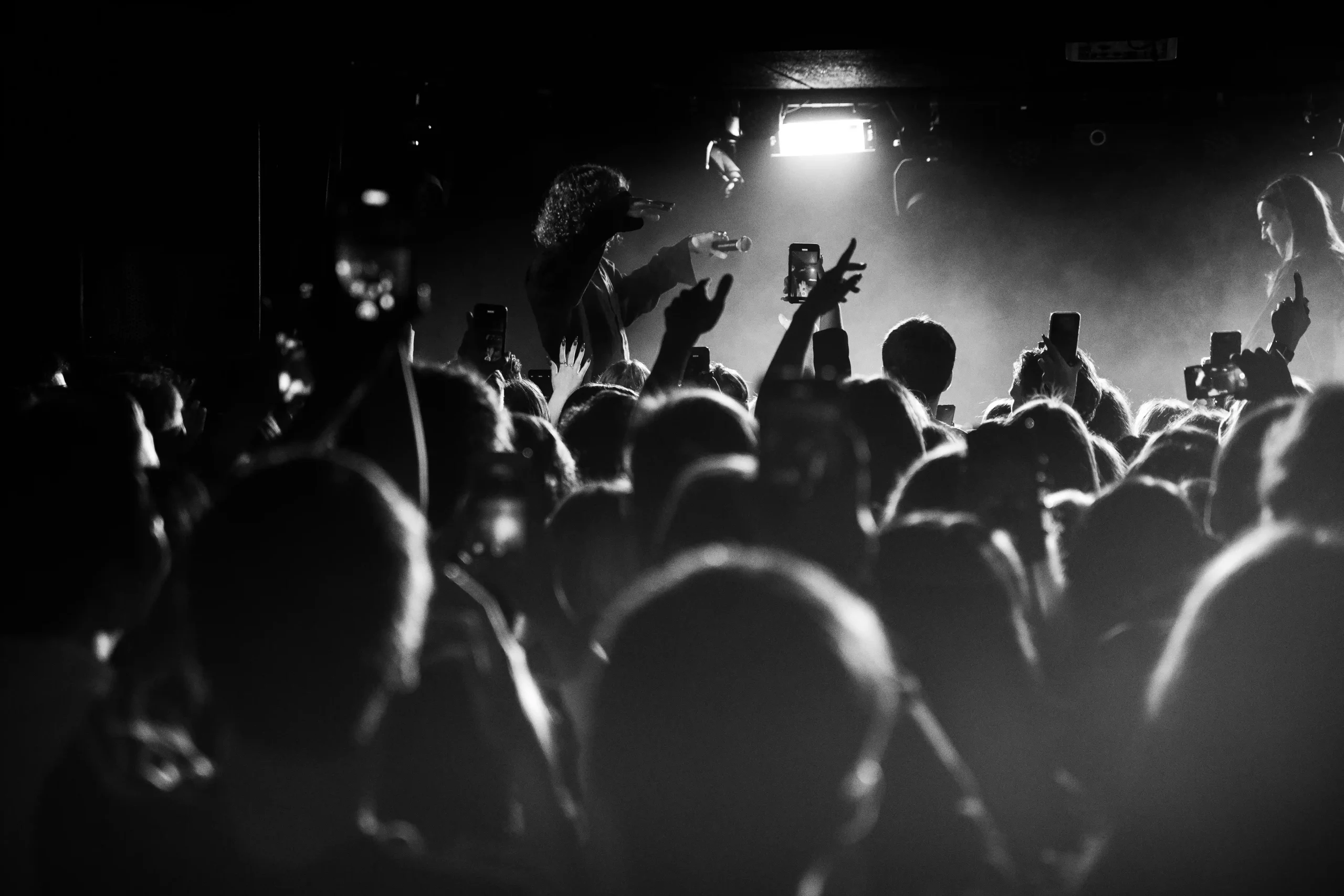
The lights go down. The crowd erupts. The singer appears. Someone screams as though they have just witnessed the return of a long-lost royal heir. Another person begins shouting the lyrics before the music has even started. A third person holds up a phone so large that I briefly mistake it for a small television.
And somewhere beneath all this excitement, a professional musician is attempting to perform a song.
At least, I assume so.
I cannot hear much of it.
Welcome to the modern concert experience, where the tickets are expensive, the stage effects are spectacular, the audience is emotionally committed, and the person who came to hear the actual music may need to reconsider several life choices.
I Came for the Music, Not a Public Screaming Competition
Let me make one thing clear. I am not against people having fun at concerts. Live music is supposed to be exciting. Singing along, dancing, cheering, and celebrating with thousands of other fans can make a performance unforgettable.
There is something wonderful about hearing a crowd sing together. When an entire venue joins in on a beloved chorus, the atmosphere can be electric. It creates a shared experience that a recording played through headphones simply cannot reproduce.
I understand the magic.
What I do not understand is the need to scream continuously throughout the entire performance.
The singer walks onstage.
Screaming.
The first song begins.
More screaming.
The singer pauses to speak to the audience.
The crowd screams over the speech.
The singer attempts to introduce the next song.
The audience screams again, possibly because somebody three rows away has raised their hands.
At this point, I would like to know whether we are attending a concert or participating in an emergency evacuation drill.
I paid for the ticket because I wanted to hear the artist perform. I wanted the vocals, the instruments, the harmonies, and the little details that make a live performance different from the studio recording.
Instead, I am hearing a chorus of enthusiastic strangers who appear to believe that silence is a personal insult to their favorite celebrity.
Dear, the singer can see that you are excited.
You do not need to prove it by producing a noise loud enough to be detected from another continent.
Cheer when the moment calls for it. Sing along when you know the words. Celebrate the performance. Have the time of your life.
But perhaps allow the music to exist between the screams.
It is a concert, after all.
The Singer Is Singing. Why Are You Singing Louder?
Another fascinating concert phenomenon is the audience member who believes they are the main performer.
The singer begins a beautiful song. The band settles into the opening melody. The lighting becomes softer, and the crowd quiets just enough for everyone to appreciate the moment.
Then someone beside you begins singing at full volume.
Not singing along quietly.
Not harmonizing.
Not contributing to a wonderful communal moment.
Singing as though they have personally been hired to replace the artist.
They know every word. They know every vocal run. They know exactly when to stretch a note, when to add an unnecessary dramatic flourish, and when to perform a high note that sounds suspiciously like a smoke alarm.
Meanwhile, the actual singer is standing onstage, professionally trained, accompanied by an experienced band, and doing their very best to deliver the song.
Unfortunately, the audience member beside me has decided this is their audition for a record deal.
I am trying to listen to the performance, but all I can hear is someone enthusiastically shouting lyrics directly into my left ear.
I admire the confidence. Truly.
I would like to borrow approximately five percent of it for my own personal development.
But I would also like to hear the person whose name appears on the ticket.
There is a difference between singing along and overpowering the performance. When thousands of people sing together during a familiar chorus, the result can be magnificent. When one person screams every lyric at full volume throughout every song, the experience becomes less like a concert and more like sitting beside an enthusiastic karaoke machine that cannot be switched off.
Please, dear. You are allowed to enjoy the music without becoming the music.
Why Does Everyone Need to Record the Entire Concert?
Now we arrive at one of my favorite modern mysteries: the phone forest.
You enter a concert venue and look toward the stage. Instead of seeing the performer, you see dozens, hundreds, or possibly thousands of glowing screens.
Everywhere you look, someone is recording.
The singer begins a song, and the audience immediately raises its phones. The lighting changes, and the phones rise higher. The artist walks toward the front of the stage, and the phones follow like a collection of tiny security cameras.
Someone in front of you stretches both arms upward to get a better angle.
Someone beside them holds their phone sideways.
Another person holds theirs vertically.
A fourth person appears to be recording the concert from a position that would make an experienced film director reconsider their career.
And somewhere in the middle of all this, a person is attempting to watch the show with their actual eyes.
What a revolutionary concept.
I understand why people record concerts. They want memories. They want to share exciting moments with friends. They may want to remember a favorite song or capture a performance they have waited years to see.
A short video can be a lovely souvenir.
But recording every single song from beginning to end seems exhausting.
Imagine paying a considerable amount of money to attend a live event and then spending the entire evening looking at it through a screen. You carefully frame the shot, adjust the angle, check whether the camera is focused, and make sure the singer is visible.
You are physically present at the concert, but mentally, you are working as an unpaid camera operator.
And for what?
So you can watch the footage later, complete with distorted audio, a stranger’s head blocking half the stage, and the sound of approximately seven thousand people screaming into your microphone.
You could have saved yourself the ticket money and watched a professionally recorded performance at home.
At least your sofa would not block the view.
My suggestion is simple: record a few moments, take some photographs, and then put the phone away for a while. Enjoy the performance as it happens.
Your memory is allowed to participate in the evening, too.
The Phone Screen in Front of My Face Deserves Its Own Ticket
Recording a concert is one thing. Holding your phone directly in front of someone else’s face is another.
I have sympathy for people who are trying to enjoy a show while surrounded by a forest of raised arms and glowing screens. It is difficult enough to see the stage when everyone is standing. Add a few hundred phones, and suddenly the concert becomes a complicated exercise in finding a gap between electronic rectangles.
You move slightly to the left.
A phone appears.
You move to the right.
Another phone rises.
You stretch your neck.
Someone raises both arms and begins recording a video that appears to include the ceiling, several lights, and approximately three seconds of the singer.
At this point, I would like to ask whether the audience has collectively decided that the stage is optional.
I did not purchase a ticket to watch a stranger’s phone screen.
If I wanted to observe someone else’s recording equipment, I could visit an electronics store.
Concert etiquette does not require everyone to keep their phones hidden all night. Different venues and artists have different rules, and some performances encourage recording. But basic consideration should still apply.
Hold the phone in a way that does not unnecessarily block other people’s views. Be mindful of the person behind you. If you have a particularly tall device, perhaps do not wave it around like a ceremonial flag.
And if you are standing in front of someone who is visibly struggling to see the stage, consider lowering your arms occasionally.
You may be capturing a memory, dear, but the people behind you are trying to make one.
The Stage Effects Have Become More Exciting Than the Songs
Modern concerts can be extraordinary visual experiences.
Artists and production teams use elaborate lighting, huge video screens, moving platforms, pyrotechnics, lasers, confetti, costume changes, and carefully choreographed performances to create a show that feels larger than life.
When everything works together, the result can be spectacular.
A lighting sequence can transform the emotional tone of a song. A well-timed visual effect can make a chorus feel even more powerful. Creative staging can give a live performance its own identity rather than simply recreating a studio recording.
I appreciate all of that.
But sometimes I wonder whether the production team has become so enthusiastic about the spectacle that the music is in danger of becoming background decoration.
The stage explodes with light.
Smoke rolls across the floor.
A giant screen displays animated graphics.
A platform rises from beneath the stage.
The singer appears in a new outfit.
Fire erupts from several locations.
Confetti begins falling from the ceiling.
And I sit there thinking, “That is impressive. But what song are we listening to?”
Some productions are so visually elaborate that the performance feels like an action movie with a musical soundtrack.
I am waiting for the singer to announce that the next song will be performed while riding a helicopter over the venue.
Perhaps that is the next stage of concert entertainment.
I would not be surprised.
Still, a spectacular production should enhance the music, not distract from it. If the stage effects are the only thing I remember afterward, perhaps the show has given me a great deal to look at without giving me enough to listen to.
I am not asking every artist to stand beneath one spotlight with a microphone and absolutely no decorations. That can be beautiful, but it is not the only valid way to perform.
I simply want the music and the spectacle to work together.
The singer should not have to compete with their own fireworks.
Why Is the Bass Trying to Rearrange My Internal Organs?
Let us discuss the volume.
Because apparently, some concert sound systems operate under the assumption that the audience has never heard music before and must be introduced to it through a controlled seismic event.
The bass begins.
My chair vibrates.
My chest vibrates.
Somewhere deep inside me, an organ files a formal complaint.
The drums hit, and I suddenly understand why certain buildings require structural inspections.
I appreciate powerful sound. Live music should feel immersive, and a strong sound system can bring a performance to life. The energy of a bass line in a large venue can be thrilling.
But louder is not automatically better.
A well-mixed performance allows the vocals, instruments, and rhythm to work together. You should be able to distinguish the different parts of the music rather than hearing everything merge into one enormous wall of sound.
When the volume becomes excessive, subtle musical details disappear. Vocals can become harder to understand, and the entire experience may feel more physically overwhelming than musically satisfying.
There is also a practical concern: loud sound can damage hearing, particularly when exposure is intense or prolonged. Concertgoers should consider properly fitted hearing protection, especially at venues known for high sound levels.
And no, wearing earplugs does not mean you have become boring.
It means you would like to continue hearing your favorite music next year.
I am particularly fond of the idea of reaching retirement age without having to ask everyone to repeat themselves because I spent my youth attending concerts that sounded like an industrial machine falling down a staircase.
Protect your ears, dear.
You only get one set, and replacing them is considerably more complicated than replacing a pair of concert tickets.
The Artist Says, “Let Me Hear You!” and Everything Falls Apart
There is a familiar moment at many concerts when the singer stops performing, steps toward the audience, and says those five dangerous words:
“Let me hear you!”
And suddenly, all musical progress comes to a halt.
The crowd erupts.
The singer smiles.
The audience screams louder.
The artist gestures for even more noise.
The crowd responds with a sound that suggests everyone has collectively forgotten how indoor voices work.
I understand the purpose of the moment. It builds energy, encourages audience participation, and makes the crowd feel connected to the performance. Some of the most memorable concert moments happen when an artist and audience interact.
But I have occasionally wondered whether the volume competition has become an event in itself.
The singer asks the audience to sing a line.
The audience screams it.
The singer asks for more.
The audience screams again.
At some point, I begin to suspect that we are no longer measuring enthusiasm. We are measuring the crowd’s ability to produce sound under increasingly difficult conditions.
Perhaps the venue should distribute certificates at the end.
“Congratulations. You achieved a remarkable level of screaming during the second chorus.”
I would frame mine and hang it beside the kitchen calendar.
Of course, audience participation can be wonderful when it is part of the music. A quiet crowd singing a beautiful melody together can create a genuinely moving experience. A loud chorus can make an arena feel alive.
The trick is knowing when to participate and when to let the artist perform.
Not every musical moment needs to become a competition.
Sometimes the best thing an audience can do is listen.
I know. Revolutionary.
Concert Etiquette Is Not a Complicated Scientific Theory
At this point, I feel compelled to offer a few practical suggestions for attending concerts without making everyone around you reconsider their ticket purchase.
First, be mindful of your volume. Cheer, sing along, and enjoy yourself, but remember that the people beside you may want to hear the performer, too. If the entire audience is singing a chorus together, wonderful. If you are screaming over a quiet acoustic verse, perhaps take a breath.
Second, use your phone thoughtfully. A few photographs and short recordings can be lovely keepsakes, but recording every second can prevent you from experiencing the event directly. Follow the venue’s rules and avoid unnecessarily blocking other people’s views.
Third, respect personal space. Concerts can be crowded, and standing-room venues naturally involve close contact. Still, there is a difference between moving with the crowd and repeatedly pushing someone as though you are trying to reach the front of a supermarket queue during a sale.
Fourth, follow the venue’s safety guidance. Do not interfere with staff, ignore restricted areas, or attempt to get closer to the stage in ways that put yourself or others at risk.
Finally, remember that other people have paid to attend the same performance. They may have different preferences, but they are entitled to enjoy the show without being subjected to unnecessary obstruction, constant shouting directly into their ears, or a running commentary about every moment.
You do not have to become a silent statue.
You simply have to remember that you are part of a crowd, not the entire event.
It is called concert etiquette, dear.
Not concert dictatorship.
The Best Concerts Know When to Turn Everything Down
Interestingly, some of the most memorable live performances are not necessarily the loudest or most elaborate.
Sometimes a singer walks onto the stage, picks up a microphone, and begins performing with minimal accompaniment. The lighting is simple. There are no explosions, no dramatic costume changes, and no giant animated creatures moving across the screen.
Just a voice, a melody, and a room full of people listening.
There is something powerful about that kind of performance.
Without an enormous production competing for attention, listeners can notice the singer’s phrasing, the musicians’ timing, and the little variations that make a live version different from the recorded track.
A singer might change a melody slightly. A guitarist might add a beautiful detail. The audience might join in softly during the chorus, creating a moment that feels spontaneous rather than rehearsed.
Those moments remind us why live music matters.
A concert is not simply a louder version of a recording. It is an experience shared between performers and audience members. The atmosphere, the imperfections, the interaction, and the sense of being present all contribute to the magic.
And sometimes, the most powerful moment is the one in which everyone becomes quiet.
Not because the crowd has lost interest, but because the performance has captured its attention.
Imagine that.
Thousands of people standing together, listening to a singer, without anyone feeling the need to shout over the music.
I might cry.
Not because I am overwhelmed by the spectacle, but because I have finally heard the second verse.
I Paid for a Concert, Not a Three-Hour Fitness Class
Another thing nobody adequately explains about concerts is the physical endurance involved.
You stand for hours. You navigate crowds. You try to find the correct entrance. You wait in line for refreshments. You avoid stepping on other people’s feet. You attempt to see the stage through a forest of phones.
Then the music starts, and everyone begins jumping.
The person in front of you is dancing enthusiastically. The person behind you is singing. Someone nearby is waving a light stick. Another person is waving both arms, and you are beginning to wonder whether you accidentally enrolled in an exercise program.
I am all for dancing at concerts. Moving to music is part of the fun, and nobody should be expected to remain completely motionless throughout an energetic performance.
But not every concert needs to feel like a high-intensity workout conducted in a crowded room.
Some of us would like to sway gently.
Some of us would like to stand comfortably.
Some of us would like to enjoy a ballad without being bumped by a stranger who has decided that the chorus is an invitation to perform an elaborate interpretive dance.
And some of us have knees that would appreciate a little consideration.
I am not asking the entire audience to sit down and knit.
I am simply requesting a reasonable amount of personal space and an opportunity to hear the music without participating in an accidental contact sport.
If I wanted a full-body workout, I would have booked a gym session.
At least the gym has water fountains and fewer people holding phones directly in front of my face.
Stop Watching the Concert Through Your Phone and Enjoy It
Perhaps the biggest irony of modern concert culture is that people sometimes spend enormous amounts of money to attend an event and then experience it primarily through a screen.
They travel to the venue. They wait in line. They find their seats. They watch the opening act.
Then, when the main performer appears, the phone goes up.
The camera starts recording.
The person checks the screen.
They adjust the angle.
They zoom in.
They check the screen again.
They watch the performance through the display while the actual singer stands several meters away.
And when the concert ends, they leave with hundreds of videos they may never watch again.
I am not judging anyone for wanting to capture a special memory. I have taken photographs at events, too. It is natural to want a reminder of something exciting.
But I wonder whether we sometimes become so focused on proving that we were somewhere that we forget to enjoy being there.
The photograph becomes more important than the moment.
The video becomes more important than the song.
The social media post becomes the final objective, and the actual experience becomes something we document along the way.
What if we occasionally put the phone away?
What if we watched an entire song without worrying about whether the camera was focused?
What if we allowed ourselves to experience the performance without immediately thinking about how it would look online?
We might remember more than the screen could ever capture.
We might notice a beautiful vocal run, a funny moment between songs, or the way the entire audience reacted to a surprise performance.
We might even discover that the concert was enjoyable without needing to produce evidence.
I know this sounds radical in the age of social media, but perhaps we can try it.
Just for one song.
Final Thoughts: Please Let Me Hear the Singer
I love the idea of live music. I love the energy of a crowd, the excitement of seeing a favorite artist, and the possibility that a familiar song might sound completely different when performed in person.
Concerts should be fun. They should be exciting, memorable, and full of moments that make people glad they bought the tickets.
But I would also like to hear the music.
I would like to enjoy the vocals without competing with a stranger who believes they are auditioning for the lead role. I would like to see the stage without staring at somebody’s phone. I would like the lighting and special effects to enhance the performance rather than turn every song into a theatrical emergency.
And I would like to leave a concert with my ears, my patience, and my remaining personal space reasonably intact.
Is that too much to ask?
Perhaps I am becoming the person who complains about everything. Perhaps the younger crowd will read this article and conclude that I should simply stay home with a cup of tea and a pair of comfortable slippers.
And honestly, that sounds lovely.
But I would still like to attend a concert occasionally.
I would still like to cheer, sing along, and enjoy the atmosphere.
I simply want everyone to remember that the singer is the reason we are there in the first place.
So, the next time you attend a concert, please enjoy yourself. Dance if you want to. Cheer when the moment is right. Sing along to your favorite songs. Take a few photographs.
Then lower the phone, give your vocal cords a short holiday, and listen.
Because the artist has rehearsed for months, the musicians have practiced their parts, and the sound engineers have spent hours trying to make everything sound right.
It would be a shame if the audience drowned it all out.
Now, if you’ll excuse me, I need to find a concert where I can actually hear the second verse.
And if I cannot find one, I know exactly who I am calling.
The manager.
Leave a Reply