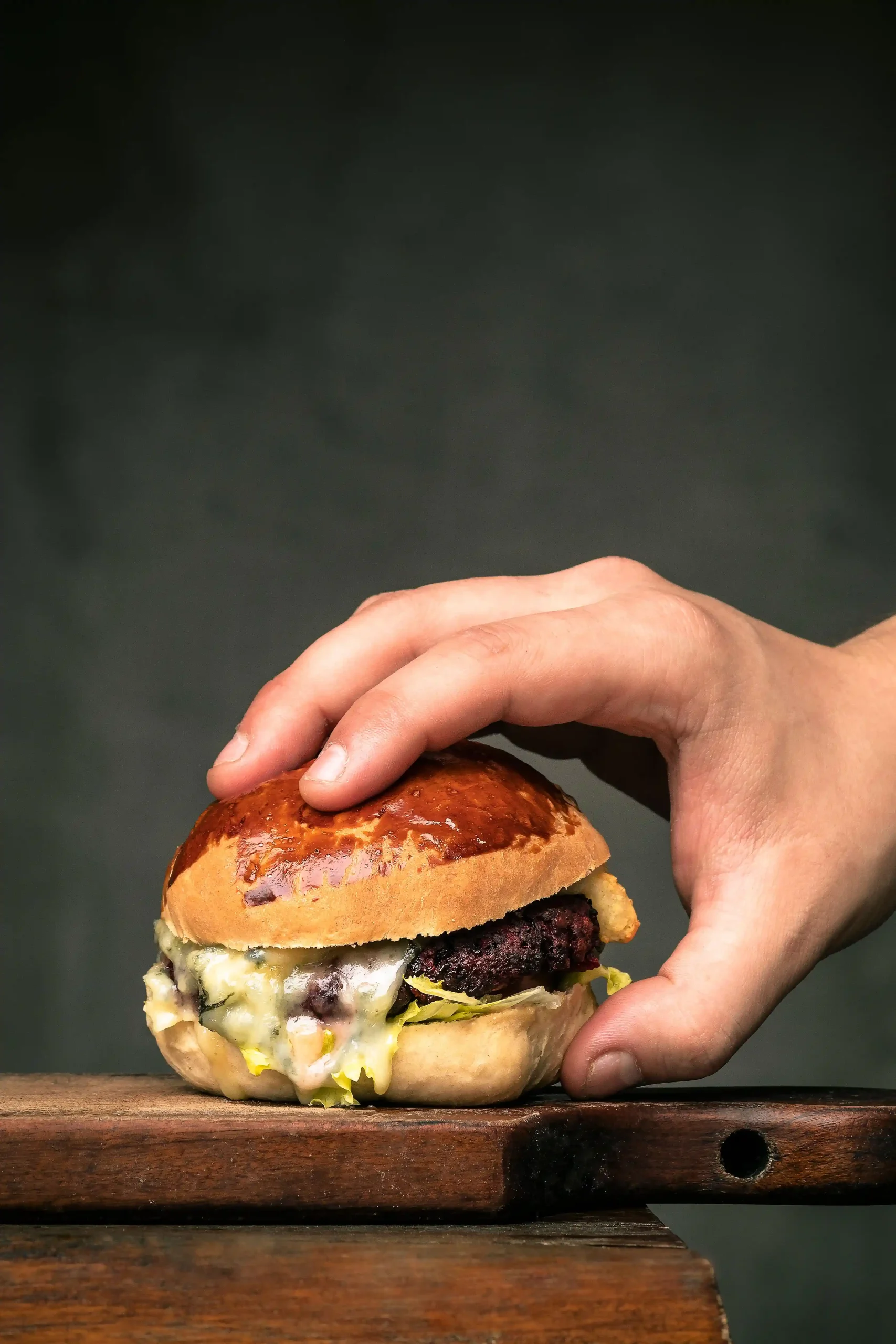
I have a very important question for the restaurant industry.
When did ordering a burger become a construction project?
Because I recently looked at some restaurant menus and discovered that an ordinary hamburger apparently no longer satisfies anyone. These days, burgers are stacked so high that they look like miniature skyscrapers. There are layers of beef patties, enormous slices of cheese, mountains of bacon, fried onions, oversized lettuce leaves, sauces dripping from every direction, and buns that seem to be supporting an entire architectural development.
And people are expected to eat them.
With their hands.
Excuse me?
I ordered a burger, not a building that requires an engineering inspection before lunch.
Some of these gourmet burgers are so tall that I am convinced the restaurant needs to provide a ladder, a safety helmet, and perhaps a small construction crew to help customers reach the top.
You look at the photograph on the menu and think, “That looks delicious.”
Then the waiter brings it to the table.
Suddenly, you are staring at something that appears to have been assembled by someone who has never heard of the word moderation.
Welcome to the world of oversized burgers, extravagant toppings, and restaurant creations that have apparently decided to compete with skyscrapers.
When Did Burgers Become So Tall?
A traditional burger is a beautiful thing.
A soft bun, a juicy beef patty, some lettuce, tomato, cheese, and perhaps a little sauce. Everything fits together. You can hold it comfortably, take a bite, and enjoy the combination of flavors.
Simple.
Delicious.
Practical.
Apparently, that was not exciting enough for modern restaurants.
Now, many burger creations feature multiple patties stacked on top of each other, several layers of cheese, thick slices of bacon, onion rings, fried eggs, sauces, and additional toppings that seem to have been included simply because there was still room.
And the height keeps increasing.
One patty becomes two. Two become three. Three become five. At some point, I expect someone to introduce a burger with ten patties and a complimentary insurance policy.
How does anyone eat that?
Do customers open their mouths like cartoon characters? Do they remove the top half and eat it separately? Is there a special technique taught during the restaurant’s orientation program?
Because I have a reasonably normal-sized mouth, and I would prefer to keep it that way.
The problem is not that large burgers exist. Some people enjoy hearty meals, and there is nothing wrong with offering generous portions.
The problem is when the burger becomes so tall that the ingredients no longer function as one sandwich.
At that point, it is not a burger.
It is a collection of edible building materials.
The Structural Engineering Problem of Gourmet Burgers
There is something almost impressive about the construction of an enormous gourmet burger.
The bottom bun must support the patty. The patty must support the cheese. The cheese must somehow hold the bacon in place. The bacon must cooperate with the onion rings, while the sauce attempts to escape from every available opening.
Meanwhile, the top bun sits there looking completely innocent.
One wrong movement, and the entire structure collapses.
I imagine restaurant kitchens have their own engineering department.
Someone probably stands beside the chef holding a clipboard.
“How is the structural integrity of Table Four’s burger?”
“Not looking good, chef. The third patty is leaning to the left.”
“Add another toothpick.”
“Already added three.”
“Then bring in the specialist.”
Honestly, some of these burgers deserve to be photographed from every angle before anyone touches them.
They look magnificent when they arrive. The layers are perfectly arranged, the cheese is melting beautifully, and the toppings are positioned like carefully designed architectural features.
But the moment a customer attempts to pick one up, the entire masterpiece begins falling apart.
The lettuce slides out. The sauce runs down the plate. The onion rings escape. A tomato slice lands on the table.
And there you are, holding two pieces of bread while the rest of your lunch becomes a crime scene.
I would like to know whether the restaurant offers cleanup services.
The Great Burger Height Competition
Some restaurants appear to have entered an unofficial competition to see who can create the tallest burger.
It is no longer enough to make a delicious sandwich. The burger must be enormous, dramatic, visually impressive, and preferably difficult to transport from the kitchen to the table.
There are burgers with multiple beef patties, towering onion rings, fried chicken, thick cheese layers, and enough bacon to supply an entire neighborhood.
Some creations even include unusual combinations such as macaroni and cheese, pulled pork, jalapeños, fried pickles, and specialty sauces.
I understand the appeal.
Restaurants want to stand out. They want customers to photograph their meals, share them online, and encourage others to visit. A gigantic burger is certainly memorable.
But I have a suggestion.
What if we competed on flavor instead of height?
Imagine a restaurant proudly advertising a burger that is perfectly seasoned, beautifully cooked, balanced, and easy to eat.
What a revolutionary concept.
No construction equipment required.
No emergency toothpick supply.
No need to ask the waiter whether the burger comes with a user manual.
Just a delicious burger that allows customers to enjoy their food without worrying about structural failure.
When the Toppings Become More Famous Than the Beef
Let us talk about toppings.
I love a good burger topping. Cheese, lettuce, tomatoes, onions, pickles, bacon, and sauces can add wonderful flavor and texture.
But sometimes restaurants seem determined to add absolutely everything.
There are burgers topped with fried eggs, onion rings, macaroni and cheese, avocado, jalapeños, crispy chicken, pulled pork, and several types of sauce.
At what point does the original burger become a supporting character?
I ordered a beef burger, not a buffet disguised as a sandwich.
And why must every ingredient be stacked vertically?
Could we perhaps distribute some of these toppings more sensibly?
The problem with excessive toppings is that flavors can become overwhelming. Instead of enjoying the beef, cheese, and other ingredients, you end up tasting a complicated mixture of sauces and toppings that compete for attention.
A great burger should have balance.
The patty should taste like beef. The cheese should complement it. The vegetables should provide freshness, while the sauce should bring everything together.
Every ingredient should have a purpose.
Adding six more toppings does not automatically make a burger better.
It may simply make it heavier.
And if the customer needs a fork, knife, napkins, and a small excavation team to reach the actual beef, perhaps the restaurant should reconsider the design.
The Cheese Situation Has Gone Too Far
Cheese deserves its own discussion because the modern burger industry appears to have developed a very serious relationship with melted cheese.
There is cheddar, Swiss cheese, American cheese, blue cheese, mozzarella, pepper jack, and specialty cheese blends.
All delicious.
All welcome.
But sometimes the amount of cheese becomes excessive.
A burger arrives with cheese flowing down the sides like a small dairy waterfall. It covers the patty, drips onto the plate, and somehow manages to reach the customer’s fingers before the first bite.
Some restaurants even serve burgers with additional melted cheese poured over the entire creation.
Why?
Was the cheese not already included in the burger?
Do we need to invite an additional cheese delivery truck?
I appreciate a good cheese pull as much as anyone. There is something satisfying about seeing melted cheese stretch between a burger and the plate.
But there is a difference between delicious melted cheese and a situation that requires a mop.
And please do not misunderstand me. I am not suggesting that restaurants should remove cheese from burgers.
I am simply requesting that the beef be allowed to participate in the meal.
The Impossible Bite: How Exactly Am I Supposed to Eat This?
This is the question that concerns me most.
Restaurants spend time creating enormous burgers, arranging the ingredients, photographing the final result, and presenting them beautifully.
But does anyone test whether a customer can actually eat them?
Because I would love to meet the person who successfully takes a normal bite out of a burger that is taller than a drinking glass.
Perhaps they have extraordinary jaw flexibility.
Perhaps they trained for this moment.
Perhaps they have a secret technique that the rest of us have not discovered.
For ordinary customers, eating an oversized burger becomes an exercise in problem-solving.
You try to squeeze the bun gently, but the toppings begin sliding out. You attempt to take a bite from the side, but the sauce drips onto your clothes. You use both hands, but the burger remains too tall.
Then comes the embarrassing moment when you realize you have been staring at your food for five minutes without actually eating it.
The people at the next table are already halfway through their meals.
You are still negotiating with the onion rings.
I would like restaurants to consider the practical experience of eating their creations.
A burger should be enjoyable from the first bite to the last. It should not require advanced coordination or a medical assessment of your jaw.
Gourmet Burgers: Delicious Creativity or Expensive Food Theater?
Gourmet burgers have become popular because they offer more than a basic fast-food sandwich.
Restaurants experiment with premium ingredients, specialty buns, high-quality beef, creative sauces, and unusual combinations.
Some burgers feature truffle mayonnaise, caramelized onions, aged cheeses, specialty bacon, brioche buns, or carefully selected cuts of meat.
There is nothing wrong with elevating a familiar dish.
A well-made gourmet burger can be absolutely delicious.
The problem begins when the presentation becomes more important than the actual eating experience.
Some restaurant creations seem designed primarily for photographs.
They arrive with dramatic stacking, decorative skewers, overflowing toppings, and sauces arranged in a way that looks wonderful on social media.
But once the camera is finished, the customer must figure out how to eat the thing.
And then there is the price.
A gourmet burger can cost considerably more than an ordinary burger, especially when premium ingredients and elaborate preparation are involved.
That may be justified when the quality is genuinely excellent.
But if I am paying a premium price, I expect a premium eating experience.
I do not want to spend my money on a burger that looks spectacular for thirty seconds and collapses before I can take a proper bite.
A beautiful photograph is lovely.
A delicious meal is better.
Social Media Made the Giant Burger a Celebrity
Social media has helped turn oversized restaurant food into a form of entertainment.
People love sharing photographs and videos of enormous meals, unusual food combinations, dramatic cheese pulls, and restaurant creations that look almost too ridiculous to be real.
A towering burger can attract attention because it is visually striking. It encourages people to comment, share, and tag friends.
Someone sees the burger online and says, “We have to try that.”
Another person shares the photograph.
Then the restaurant receives more attention.
It is an effective marketing strategy.
But it has also encouraged restaurants to think about how their food will look on camera.
Sometimes, the most photographable food is not necessarily the most practical food.
A burger can look impressive in a promotional image but be difficult to eat in real life.
And I would like to remind restaurant owners that customers eventually have to consume the product.
We cannot survive on photographs alone.
Although, judging by some food videos, I suspect the internet has already forgotten this important detail.
There are people filming their meals from every possible angle while the food gets cold.
The burger is standing there waiting for its big moment.
The customer is adjusting the lighting.
The cheese is slowly losing its enthusiasm.
Please, take your photograph and eat your lunch.
The burger has suffered enough.
Bigger Does Not Always Mean Better
Perhaps the biggest misconception in the oversized burger trend is the idea that more ingredients automatically create a better meal.
More beef, more cheese, more bacon, more sauce, and more toppings may sound exciting.
But quality is not simply a matter of quantity.
A well-prepared burger needs good ingredients, thoughtful seasoning, appropriate cooking, and a balance of textures and flavors.
The bun should support the filling without overwhelming it. The patty should remain the main attraction. The toppings should complement the meat rather than bury it.
A smaller burger made with excellent ingredients can be far more satisfying than an enormous sandwich that is difficult to eat.
There is also something to be said for portion size.
People have different appetites, and restaurants can offer larger options for customers who want them. But there should also be choices for people who simply want a good burger without committing to a meal that could feed an entire family.
I do not need to order a burger that requires a second plate.
I do not need five patties to feel satisfied.
And I certainly do not need a burger so large that I must reconsider my lunch plans for the following day.
Sometimes, simple really is better.
My Official Proposal for the Burger Industry
I would like to make a few reasonable suggestions.
First, please make burgers that people can actually hold. This should not be a controversial request.
Second, consider the balance of ingredients. The beef should not disappear beneath a mountain of toppings.
Third, please stop assuming that every customer wants a burger that looks like a competitive eating challenge.
Fourth, if the burger requires several wooden skewers to remain upright, perhaps it is time to reduce the height.
And finally, please provide a clear description of what customers are ordering.
If a burger contains three patties, four cheeses, onion rings, bacon, fried chicken, and enough sauce to fill a swimming pool, I would appreciate knowing that before it arrives.
I would also like restaurants to consider offering different sizes.
A regular burger for people who enjoy normal meals.
A generous burger for people with bigger appetites.
And perhaps an enormous burger for those who genuinely want to test the limits of human engineering.
Everyone wins.
Final Thoughts: I Came for a Burger, Not a Construction Project
I love burgers. I appreciate creative restaurant menus, delicious ingredients, and chefs who enjoy experimenting with new flavors.
There is absolutely nothing wrong with a generous burger or an extravagant gourmet creation.
But I think we have reached a point where some restaurants are confusing height with quality.
A burger does not need to be taller than the customer to be impressive. It does not need ten toppings to be delicious. And it certainly should not require a structural engineer to confirm that the top bun will remain attached.
So, to the restaurants creating these towering edible monuments, please continue being creative.
Keep experimenting with flavors. Keep introducing interesting ingredients. Keep making delicious food.
But perhaps consider lowering the building height.
Because I am just trying to enjoy lunch, not complete a construction inspection before taking my first bite.
And if the next burger arrives with a blueprint, a safety helmet, and a warning that says “Do not eat during strong winds,” I am asking to speak to the manager.
Immediately.
Leave a Reply