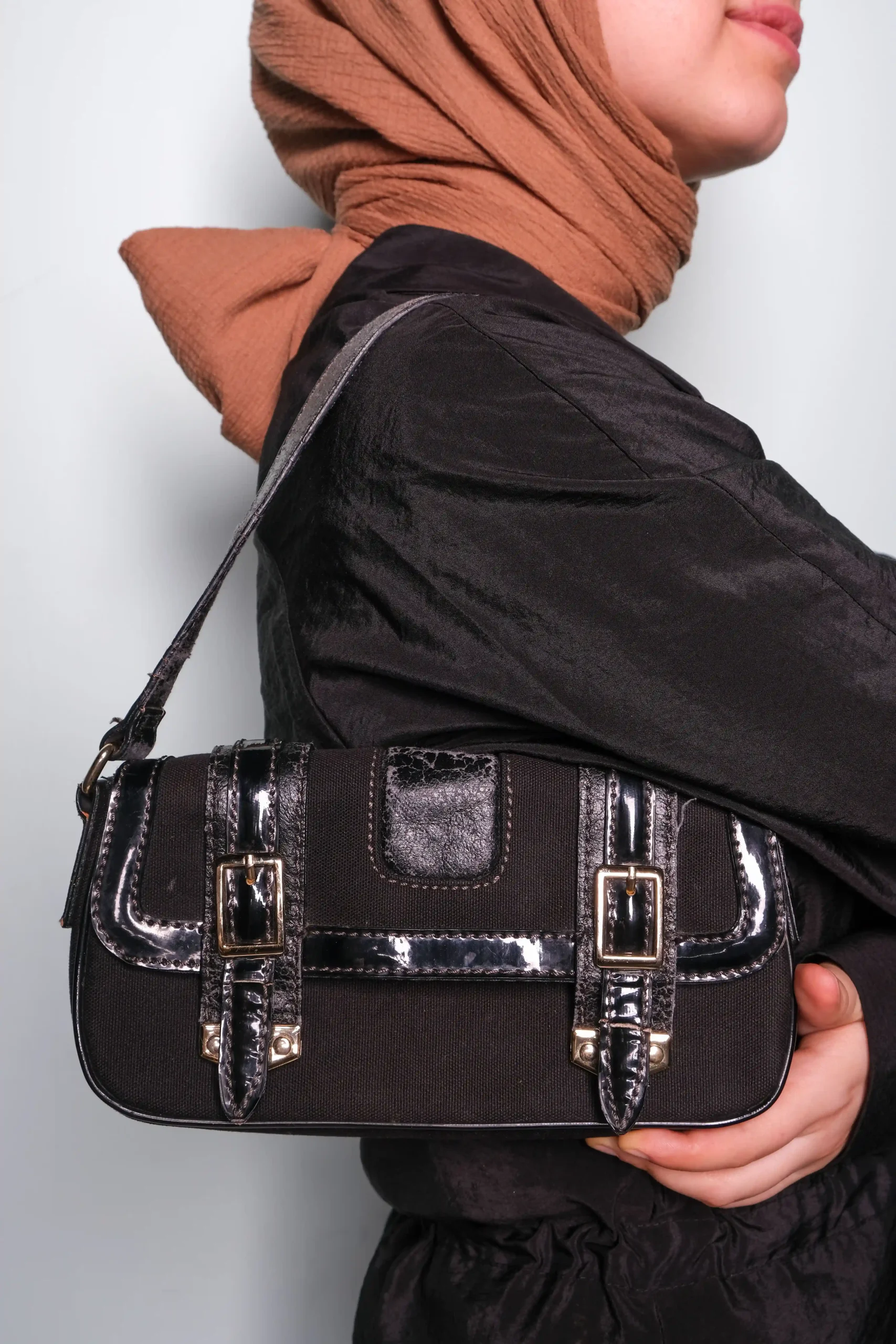
I have a question about luxury handbags, and I would appreciate a reasonable explanation before I accidentally faint in the middle of a department store.
Why does a handbag cost as much as a small car?
I am looking at designer bags, checking the prices, and wondering whether I have misunderstood the currency. Surely there must be a mistake. Perhaps an extra zero was accidentally added. Maybe the website is displaying the price of an entire collection instead of one handbag.
But no.
That is the actual price.
For one bag.
A bag designed to carry a wallet, a phone, some keys, a few personal items, and perhaps a small collection of receipts that nobody remembers collecting.
And apparently, I am expected to admire it.
Now, I appreciate beautiful fashion. I understand craftsmanship, quality materials, thoughtful design, and the appeal of owning something special. Luxury handbags can be beautiful works of design, and some are made with impressive attention to detail.
But when I see a handbag priced at several thousand dollars, I have questions.
Does it come with a house? Is there a car hidden inside? Does the handbag include a personal assistant who carries it for me?
Because at that price, I expect more than a place to keep my lipstick.
Welcome to the wonderful world of luxury handbags, where designer labels have become status symbols, price tags have developed their own personalities, and the mathematics of fashion apparently operates in a completely different universe.
When Did Handbags Become Luxury Real Estate?
A handbag used to have a relatively simple purpose.
You needed somewhere to put your belongings, so you bought a bag.
It needed to be practical, attractive, and large enough to carry the things you actually used.
Perhaps you wanted a beautiful leather handbag, a stylish shoulder bag, or a reliable everyday tote.
Reasonable expectations.
Then luxury fashion entered the conversation.
Suddenly, certain handbags became much more than accessories. They became symbols of status, wealth, exclusivity, and personal style.
Brands such as <Entity value=”Hermès” category=”brand” disambig=”French luxury fashion house”/> and <Entity value=”Chanel” category=”brand” disambig=”French luxury fashion house”/> have created handbags that attract enormous attention, with some models becoming highly recognizable within luxury fashion.
There are also famous designs from <Entity value=”Louis Vuitton” category=”brand” disambig=”French luxury fashion house”/>, <Entity value=”Dior” category=”brand” disambig=”French luxury fashion house”/>, and <Entity value=”Gucci” category=”brand” disambig=”Italian luxury fashion house”/>.
These brands have built strong identities through their designs, heritage, craftsmanship, marketing, and associations with luxury lifestyles.
I understand that.
But sometimes I look at the price of a designer handbag and wonder whether the company has accidentally included the cost of the building where the handbag was manufactured.
Because surely there must be something extraordinary happening inside that leather.
Does it organize my finances? Does it prepare dinner? Can it pay my electricity bill?
No?
Then why is it priced like an investment property?
The Famous Designer Handbag Price Tag
One of the most fascinating things about luxury fashion is how quickly a handbag can move from being an accessory to becoming a financial commitment.
You might see a beautiful designer bag online, admire the shape, appreciate the leather, and imagine how lovely it would look with your favorite outfit.
Then you check the price.
And suddenly, you are reconsidering every financial decision you have ever made.
A handbag costing thousands of dollars is not exactly an impulse purchase for most people.
It may represent months of savings, a significant portion of someone’s salary, or an amount that could be used for a holiday, home improvement, education, or other practical expenses.
Yet luxury fashion continues to attract customers willing to pay premium prices.
Why?
Because the price is not always about the materials alone.
Luxury handbags carry brand recognition, design identity, exclusivity, and emotional appeal. Some customers are paying for the experience of owning a particular product, while others value the craftsmanship or the history behind a design.
And then there is the status factor.
Let’s be honest.
Some handbags are recognizable from across a room.
The logo, pattern, hardware, or silhouette tells everyone exactly which brand is being carried.
It is practically a walking announcement.
“Good afternoon, everyone. I would like you to know that I have arrived with an expensive handbag.”
Well, congratulations.
I hope it has somewhere comfortable to sit.
The Logo: Is It a Handbag or a Billboard?
One thing I have noticed about designer handbags is that some of them display their branding quite prominently.
There are recognizable patterns, repeated logos, signature initials, and decorative details that make certain bags instantly identifiable.
For luxury fashion enthusiasts, these designs can be part of the attraction.
A recognizable handbag may represent a brand they admire or a particular style they have wanted for years.
But sometimes I wonder whether the handbag is carrying the owner or the logo is carrying the handbag.
Because some designs appear to have enough branding to qualify as outdoor advertising.
Imagine walking into a room and seeing a handbag that practically introduces itself before its owner does.
“Hello. I am from a very expensive fashion house.”
Thank you, dear.
We noticed.
Of course, luxury brands offer different styles. Some feature subtle branding, while others are more recognizable. There is no single definition of what makes a handbag beautiful.
But I have always found it interesting that an accessory can become so closely associated with a brand name that the label itself becomes part of its value.
Sometimes the logo is almost as important as the bag.
And that is where luxury fashion becomes particularly fascinating.
Why Are Some Luxury Handbags So Expensive?
To be fair, there are genuine reasons why certain luxury handbags command high prices.
High-end handbags may involve carefully selected leather, specialized materials, detailed construction, experienced artisans, and extensive quality control.
The design process can also involve research, prototyping, and years of brand development.
Some luxury houses have long histories and established reputations. Their products may be associated with particular techniques, signature designs, and carefully maintained standards.
Manufacturing costs, distribution, retail operations, marketing, and brand positioning also contribute to the final price.
However, there is another important factor: the perceived value of luxury.
A handbag does not necessarily cost thousands of dollars because its materials and construction alone justify every dollar of the retail price.
Brand prestige, exclusivity, demand, and the emotional value customers attach to a product can also influence what people are willing to pay.
In other words, the handbag is not just selling leather and stitching.
It is selling a story.
And apparently, that story is very expensive.
I would love to read the full story, especially the chapter explaining why I cannot simply purchase the bag without reconsidering my retirement plans.
The Hermès Birkin: A Handbag or a Financial Achievement?
Few luxury handbags attract as much attention as the <Entity value=”Hermès Birkin” category=”product” disambig=”Luxury designer handbag”/>.
The Birkin has become one of the most recognizable symbols of luxury fashion. Its reputation is connected to craftsmanship, exclusivity, celebrity visibility, and strong demand among luxury handbag collectors.
For some fashion enthusiasts, owning one is a long-term dream.
For others, the price alone is enough to make them reconsider whether they need a handbag at all.
The Birkin is particularly interesting because the discussion often goes beyond the handbag itself.
People talk about availability, different sizes, leather types, colors, hardware, resale prices, and the process of acquiring one.
Some buyers view certain models as collectible luxury goods.
Now, I understand collecting beautiful things. People collect watches, artwork, jewelry, vintage cars, and other objects that bring them pleasure.
But imagine telling someone you have been saving for a handbag.
They ask how much it costs.
You tell them.
They pause.
Then they ask whether it comes with a vehicle.
I would not blame them.
The Birkin is undoubtedly an important part of luxury fashion history, but I still believe that a handbag should not require a financial strategy normally reserved for purchasing property.
And if I ever buy one, I would like to know whether the handbag comes with a small instruction booklet explaining how to carry something that expensive without constantly worrying about it.
Designer Handbags as Status Symbols
Luxury handbags have become powerful status symbols because they communicate more than personal taste.
They can signal wealth, social position, fashion knowledge, and membership in a particular luxury market.
For some buyers, carrying a recognizable designer handbag is a way of expressing achievement or celebrating a personal milestone.
Others simply enjoy the design and craftsmanship.
There is nothing inherently wrong with that.
People spend money on things they value. Someone might invest in an expensive watch, a luxury vehicle, fine jewelry, designer clothing, or a handbag they have admired for years.
The problem is when purchasing luxury items becomes more about proving something to other people than enjoying the item itself.
Social pressure can make expensive fashion feel like a requirement rather than a choice.
You see celebrities carrying designer bags. Influencers show their latest purchases. Fashion accounts discuss new collections, exclusive releases, and luxury shopping experiences.
Suddenly, owning a particular handbag starts to feel like a symbol of having reached a certain level of success.
But since when did success require a specific accessory?
Can we not be successful with a perfectly lovely handbag that costs a reasonable amount?
Do we need a designer logo to prove that we have our lives together?
Because I have news.
Some of us are still trying to remember where we put our car keys.
A handbag cannot solve everything.
Although, at that price, I would appreciate it if it tried.
The Influencer Effect: Look What I Bought!
Social media has played a major role in making luxury handbags even more visible.
Influencers, celebrities, fashion bloggers, and luxury lifestyle creators frequently share photographs and videos featuring designer accessories.
There are luxury shopping hauls, handbag collections, unboxing videos, closet tours, and comparisons between different designer models.
Some creators provide useful information about materials, design, sizing, durability, and styling.
Others simply show the latest purchase and invite everyone to admire it.
And the audience watches.
A handbag that might once have been seen only in a luxury boutique can now appear on thousands of social media feeds.
Viewers can see the packaging, the shopping experience, the details of the bag, and the owner’s reaction to receiving it.
The purchase becomes entertainment.
And sometimes it becomes an advertisement.
Luxury brands have recognized the influence of social media personalities and celebrity visibility. Their products appear in fashion campaigns, collaborations, events, and carefully curated lifestyle content.
This helps keep certain handbags desirable.
But I sometimes wonder whether we are watching people enjoy their purchases or watching a very expensive competition to see who can acquire the most recognizable accessory.
One influencer shows a new bag.
Another shows an even more exclusive bag.
Someone else posts a collection with enough handbags to fill a boutique.
And I am sitting here thinking that my everyday bag has been doing an excellent job for several years without asking for a wardrobe change.
Perhaps it deserves a little appreciation.
Are Luxury Handbags Really Investments?
Now, this is where the conversation becomes interesting.
Some people describe luxury handbags as investments because certain models may retain value or sell for more than their original retail prices in the resale market.
There are examples of highly sought-after handbags attracting significant resale interest, particularly when they are rare, in excellent condition, or associated with strong collector demand.
However, not every designer handbag increases in value.
A luxury handbag should not automatically be treated as a guaranteed financial investment.
Resale prices depend on many factors, including the brand, model, condition, material, color, availability, market demand, and overall fashion trends.
There are also costs associated with buying, maintaining, authenticating, and reselling luxury goods.
Some bags may lose value after purchase. Others may take time to sell. And the amount a seller receives can be affected by resale platform fees and market conditions.
So, before purchasing an expensive handbag because someone online claims it is an investment, it is worth doing proper research.
A handbag can be a collectible luxury item, but that does not make it equivalent to stocks, property, or other traditional investments.
And please, do not spend your emergency savings because a fashion influencer says a particular bag is going to become more valuable.
I would rather have a healthy savings account than a beautiful handbag that I cannot afford to carry outside.
The Secondhand Luxury Market: Because Even Luxury Has a Resale Section
One interesting development in luxury fashion is the growing visibility of the secondhand designer market.
Pre-owned luxury handbags give buyers access to designer products at prices that may be lower than buying the same item new.
They also appeal to people who enjoy vintage designs, discontinued collections, and more sustainable shopping practices.
Some shoppers appreciate the opportunity to own a luxury handbag without paying the full boutique price.
Others enjoy searching for rare models or discovering designs that are no longer available through traditional retailers.
But buying secondhand luxury goods requires caution.
Authenticity matters. Condition matters. Seller reputation matters.
A beautiful photograph does not guarantee that a handbag is genuine.
Buyers should carefully review descriptions, inspect available details, and consider reputable sellers or professional authentication services when appropriate.
Because the last thing anyone needs is to spend a considerable amount of money on a handbag that turns out to be an expensive imitation.
Imagine explaining that situation.
“Yes, I bought a designer bag.”
“Oh, which one?”
“The one that looked like the real thing.”
I would prefer not to have that conversation.
The secondhand market can offer interesting opportunities, but buyers should never confuse a bargain with a guaranteed deal.
Do We Actually Need a Luxury Handbag?
This is the question I keep returning to.
Do we need a handbag that costs thousands of dollars?
Of course not.
Do some people genuinely enjoy owning one?
Absolutely.
There is a difference between wanting something and needing it.
A person may purchase a designer handbag because they appreciate the design, admire the craftsmanship, or have saved for years to buy a particular model.
That is their choice.
There are also plenty of beautiful handbags available at more accessible prices. Many brands offer stylish designs, useful compartments, quality materials, and practical features without the extraordinary luxury price tag.
A handbag should fit the buyer’s lifestyle.
Someone who carries a laptop, documents, and everyday essentials may need a spacious tote. Someone who prefers lightweight accessories may choose a small crossbody bag. Another person may simply want a stylish handbag for special occasions.
The best choice is not necessarily the most expensive one.
It is the one that suits your needs, preferences, and budget.
And if you love a particular designer bag, there is nothing wrong with saving for it.
Just make sure the purchase brings you genuine happiness rather than financial anxiety.
Because I cannot imagine anything less luxurious than worrying about the price of your handbag every time you leave the house.
My Official Proposal for the Luxury Fashion Industry
I would like to offer a few suggestions.
First, please include a complimentary financial adviser with every handbag priced like a small apartment.
Second, if the bag costs several thousand dollars, perhaps it should include something genuinely useful. A lifetime repair service, a personal stylist, or at least a complimentary coffee would be appreciated.
Third, please stop making ordinary people feel as though they need a luxury handbag to look fashionable.
A beautiful outfit does not require an expensive logo.
Fourth, if a handbag is described as an investment, please provide more than a glamorous social media post as evidence.
And finally, I would like the fashion industry to remember that people can appreciate luxury without purchasing every expensive item they see.
Some of us enjoy window shopping.
Some of us admire designer collections from a comfortable distance.
And some of us would rather spend that money on a holiday, a home renovation, or something that comes with considerably more practical benefits.
I am not difficult to please.
I simply have questions about the pricing department.
Final Thoughts: Does It Come With a House or Not?
I genuinely appreciate the artistry, craftsmanship, and creativity behind luxury handbags.
Designer fashion has a long history, and some handbags have become iconic because of their design, quality, and cultural influence.
There is nothing wrong with enjoying beautiful accessories or celebrating a personal achievement with a special purchase.
But I still find it amusing that something designed primarily to carry everyday belongings can cost more than a substantial financial purchase.
At some point, I would like the luxury industry to explain the mathematics.
How much is the leather? How much is the craftsmanship? How much is the brand name? And how much extra am I paying because a celebrity once carried the same design?
Because I am trying to understand the numbers.
I would also like to know whether the handbag comes with a complimentary house key, a vehicle registration document, or perhaps a small piece of land.
If I am spending that much money, I would like the option of carrying my belongings and moving into my new property.
Until then, I will continue admiring luxury handbags, appreciating beautiful designs, and choosing accessories that do not require a family financial meeting.
Now, if you’ll excuse me, I need to check the price of that beautiful designer bag again.
Perhaps I misunderstood the listing.
No, apparently I did not.
Well, I would like to speak to the manager.
And please ask them to bring the property department along.
Leave a Reply