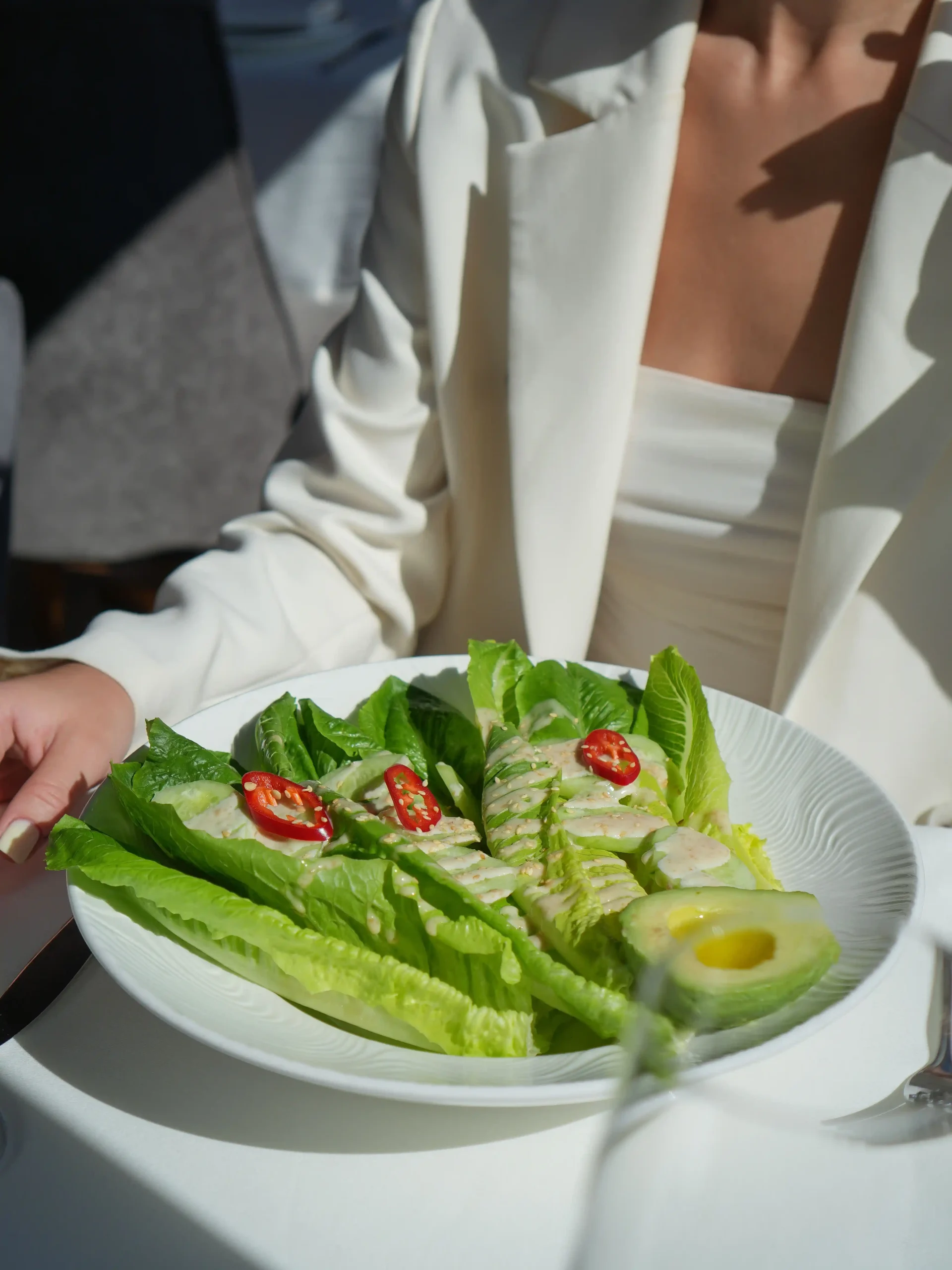
I have a question.
Actually, I have several.
Why did I just pay $24 for a salad?
And more importantly, why am I still hungry?
Because I would like to understand how a bowl containing approximately four leaves of lettuce, three cucumber slices, half an avocado, and something that was described as “a delicate herb vinaigrette” managed to cost more than an entire grocery bag of vegetables.
I was expecting lunch.
I received landscaping.
I would like to speak to the manager.
Please bring the chef too.
We need to discuss portion control.
Now, I understand that healthy food can cost more. Organic ingredients, specialty produce, quality oils, fresh herbs, responsibly sourced proteins, and carefully prepared meals can absolutely justify a higher price.
But there is a difference between paying for quality and paying $24 for a bowl of leaves that looks like it was assembled by someone who was afraid of carbohydrates.
At some point, wellness food stopped being about eating well and started becoming a financial endurance test.
When Did Salad Become a Luxury Item?
Let’s start with the obvious question.
When did salad become expensive?
Salad used to be the safe option.
You went to a restaurant and ordered a salad when you wanted something light.
Maybe you were trying to eat healthier.
Maybe you weren’t particularly hungry.
Maybe you simply wanted something green on your plate so you could feel responsible.
Now?
Salad has become a luxury purchase.
You can walk into a trendy restaurant and order a salad that contains ingredients with names that sound like they were selected by a committee.
Organic baby kale.
Heirloom tomatoes.
Ancient grains.
Fermented vegetables.
Microgreens.
Hand-harvested sea salt.
Cold-pressed dressing.
Roasted something-or-other.
And then the bill arrives.
$24.
For lettuce.
At that price, I expect the salad to have a financial advisor.
The Portion Is Looking at Me
The first warning sign is always the plate.
You know exactly what I’m talking about.
The waiter places the salad in front of you.
You look at it.
Then you look at the waiter.
Then back at the salad.
You think they forgot something.
Perhaps the actual meal is coming later.
Maybe this is an appetizer.
You wait.
Nothing.
This is it.
The salad is sitting there looking proud of itself.
And it is tiny.
Not “light lunch” tiny.
“Did somebody accidentally serve me the garnish?” tiny.
I have seen restaurant salads where the plate is larger than the food.
There is enough empty space around the lettuce to host a small conference.
The waiter says, “Enjoy.”
Enjoy what?
The decorative arrangement?
The plate?
My growing resentment?
Wellness Food Has Learned How to Sound Expensive
One thing I have noticed about modern wellness food is that the vocabulary is doing a lot of work.
A normal ingredient suddenly becomes fancy when you describe it properly.
It’s not spinach.
It’s “organic baby spinach.”
It’s not beans.
It’s “heritage legumes.”
It’s not water.
It’s “mineral-infused still water.”
It’s not a smoothie.
It’s a “functional wellness blend.”
And apparently I’m supposed to nod thoughtfully.
“Yes, of course. I can taste the functionality.”
I am not saying these ingredients are bad.
Some of them are wonderful.
But sometimes I suspect the menu is trying to distract me from the portion size.
If you put three leaves of lettuce on a plate and describe them as “locally sourced seasonal greens,” I am still looking at three leaves.
I know what lettuce looks like.
The $18 Smoothie Situation
Let’s talk about smoothies.
A smoothie should be simple.
Fruit.
Vegetables.
Maybe yogurt.
Maybe milk or a plant-based alternative.
Blend.
Drink.
How did we get here?
Now you can order a smoothie containing collagen, chia seeds, protein powder, adaptogens, superfoods, nut butter, spirulina, maca, flax, turmeric, and approximately $17 worth of ingredients.
You take one sip.
It’s thick.
Very thick.
You need to chew it.
You look at the cup.
You look at the price.
You start questioning every financial decision you’ve made since childhood.
At $18, that smoothie should at least send me a motivational text every morning.
“Good morning! Have you taken your vitamins?”
It should also probably know my credit score.
Where Is the Protein?
Now we arrive at my biggest complaint about overpriced wellness meals.
Where is the protein?
If I’m paying $24 for a salad, I expect more than lettuce.
Give me grilled chicken.
Give me salmon.
Give me eggs.
Give me tofu.
Give me something substantial.
Because I did not come to a restaurant to pay premium prices for a bowl of vegetables and then go home and eat a sandwich 30 minutes later.
That defeats the entire purpose.
There is a difference between eating light and eating an appetizer disguised as lunch.
If the salad is marketed as a complete meal, it should actually function as one.
Otherwise, call it a side salad.
I will have less emotional disappointment.
The Avocado Is Not Helping
I love avocado.
I really do.
But avocado has somehow become the luxury handbag of wellness food.
Add avocado?
$4 extra.
Add more avocado?
Another $3.
Would you like a small avocado sculpture on the side?
Probably $7.
I understand that avocados have become expensive in some markets, and food costs fluctuate.
But sometimes I look at the amount of avocado on a salad and think:
“Was this sliced by a professional jeweler?”
One tiny fan of avocado is sitting on top of the lettuce.
It looks beautiful.
It is also approximately two bites.
And somehow that two bites cost extra.
Dear, if you’re going to charge me for avocado, please introduce me to the entire avocado.
We should get acquainted.
The Dressing Is in a Tiny Cup
Then comes the dressing.
A tiny cup.
Always.
Why is it so tiny?
Is the dressing radioactive?
Did someone issue a government warning?
The waiter places a little container next to my salad containing approximately one teaspoon of vinaigrette.
I pour it over the salad.
Three leaves become damp.
Wonderful.
I ask for more.
“There’s an additional charge.”
Of course there is.
At this point, I feel like I’m negotiating a mortgage.
How much for dressing?
How much for avocado?
How much for chicken?
How much for a second napkin?
Would you like to charge me for breathing the restaurant air?
The Wellness Bowl That Requires a Forklift
Then there are the wellness bowls.
These are supposed to be the healthier, more substantial cousin of the salad.
And sometimes they are excellent.
Other times, they are a carefully arranged collection of ingredients that look beautiful on Instagram but somehow fail to resemble lunch.
You’ve got quinoa in one corner.
Kale in another.
A few roasted vegetables.
Three chickpeas.
Some seeds.
A mysterious sauce.
One boiled egg cut dramatically in half.
And perhaps a single piece of chicken positioned in the center like the crown jewel of a vegetable kingdom.
The bowl looks gorgeous.
You take a bite.
It’s fine.
You take another.
Still fine.
Then you reach the bottom.
You’re still hungry.
That’s when you realize you’ve been tricked by presentation.
The bowl was designed for photography.
Not hunger.
Instagram Has Ruined Portions
This is one of the strangest things about modern food culture.
Restaurants know people photograph their meals.
That means presentation matters more than ever.
Beautiful food gets shared.
Colorful bowls look fantastic online.
Tiny desserts look adorable.
Perfectly arranged plates get attention.
But sometimes the food starts becoming more about visual appeal than actual satisfaction.
The meal has to look impressive from above.
Everything must be arranged carefully.
The sauce needs a drizzle.
The herbs need strategic placement.
The vegetables need to be positioned at a flattering angle.
And somewhere in the kitchen, someone is holding tweezers.
Tweezers.
For lunch.
I’m sorry, but if someone is using tweezers to place three microgreens on my $24 salad, I would like those microgreens to at least come with a certificate.
“Locally Sourced” Doesn’t Automatically Mean Delicious
Now let’s talk about the phrase “locally sourced.”
I’m all for supporting local farmers and producers.
Fresh ingredients are wonderful.
But local doesn’t automatically mean delicious.
And it certainly doesn’t automatically justify a ridiculous price.
You can have beautiful local ingredients and still make a disappointing meal.
I’ve eaten homemade salads with supermarket vegetables that were more satisfying than expensive restaurant bowls.
Because good food isn’t just about where the ingredients came from.
It’s about how they’re prepared.
Seasoning matters.
Texture matters.
Balance matters.
Portion size matters.
And most importantly, the food should taste good.
I don’t want to spend $24 eating a bowl that tastes like someone whispered “healthy” over it.
When “Healthy” Becomes a Personality
There’s something else happening with wellness food.
Healthy eating has become an entire lifestyle identity.
There are wellness restaurants.
Wellness influencers.
Wellness menus.
Wellness drinks.
Wellness snacks.
Wellness subscriptions.
Wellness retreats.
Wellness everything.
And some of it is genuinely helpful.
But occasionally, I think we’ve forgotten that eating healthy doesn’t need to be complicated.
You can eat vegetables without calling them “plant-based nourishment.”
You can eat fruit without describing it as “a naturally occurring antioxidant experience.”
You can drink water.
You can cook chicken.
You can make a salad at home.
You can put beans in a bowl.
You do not need a $200 blender and a countertop full of mysterious powders to eat reasonably well.
The $30 Salad Better Be Life-Changing
If I am going to spend $30 on a salad, I have expectations.
First, it should be large enough to qualify as a meal.
Second, it should taste fantastic.
Third, there should be something interesting happening.
Texture.
Flavor.
Seasoning.
A quality protein.
A dressing that doesn’t require a magnifying glass.
Something.
Because at that price, I don’t want “fine.”
I want “Oh, wow.”
I want to put my fork down halfway through and say:
“Okay. I understand.”
I want to think about it the next day.
I want to tell someone about it.
I want the salad to justify its own existence.
What I do not want is to finish eating and immediately start looking for a sandwich.
That is not a successful lunch.
That is a financial appetizer.
Restaurant Portions Need to Calm Down
The restaurant industry has clearly discovered that people are willing to pay more for premium ingredients.
But there is a point where portion size becomes ridiculous.
Nobody expects a restaurant to serve a mountain of food.
Especially when it comes to wellness meals.
But there should be a reasonable middle ground.
A healthy meal can be filling.
A salad can be nutritious and satisfying.
A wellness bowl can be delicious without looking like someone accidentally spilled ingredients into a bowl.
And a $24 lunch should probably prevent me from being hungry again before I get home.
That’s not unreasonable.
That’s lunch.
Sometimes the Grocery Store Wins
Here is the part that makes restaurants nervous.
I can make a better salad at home.
For considerably less money.
I can buy lettuce.
Chicken.
Avocado.
Tomatoes.
Cucumber.
Eggs.
Whatever vegetables I like.
I can make a dressing.
I can season everything properly.
And I can make enough food for several meals.
Will it look as beautiful as a professionally photographed restaurant salad?
Maybe not.
Will there be strategically placed microgreens?
Probably not.
Will I use tweezers?
Absolutely not.
But I will be full.
And my bank account will still be speaking to me.
That’s important.
The Difference Between Expensive and Worth It
Of course, not every expensive wellness restaurant is a scam.
Some restaurants genuinely deliver excellent food.
They use high-quality ingredients.
They prepare everything carefully.
They employ skilled chefs.
They provide generous portions.
They create meals that are memorable.
Those restaurants can absolutely be worth the money.
The problem isn’t paying more.
The problem is paying more and receiving less.
There’s a difference.
If I spend $24 on lunch and leave thinking, “That was fantastic,” I’m happy.
If I spend $24 and leave thinking, “I could have eaten the entire contents of my refrigerator for that,” we have a problem.
Final Thoughts: Please Bring Me the Rest of My Salad
Healthy food doesn’t have to be boring.
It doesn’t have to be expensive.
And it certainly doesn’t have to arrive on a plate so large that the actual food looks like it needs binoculars.
I love the idea of restaurants making nutritious food exciting.
Give me fresh vegetables.
Give me quality protein.
Give me interesting flavors.
Give me creative combinations.
Give me food that makes me feel good without making me feel financially irresponsible.
But if you hand me a $24 salad containing four leaves of lettuce, three cucumber slices, two chickpeas, a decorative avocado fan, and enough dressing to moisturize a postage stamp, we are going to have a conversation.
I don’t care how organic the lettuce is.
I don’t care whether the cucumber was raised in a loving environment.
I don’t care whether the tomatoes were personally greeted by the chef.
I paid for lunch.
I would like lunch.
Not a botanical exhibit.
Not a wellness mood board.
Not a bowl of expensive leaves arranged for Instagram.
Lunch.
And if I finish the entire plate and immediately start looking around for fries, you’ve failed.
Because I should not need a second restaurant after visiting the first one.
So yes, I paid $24 for a salad.
And all I got was lettuce.
Next time, dear, I’m bringing my own chicken.
And possibly a sandwich.
Just in case.
Leave a Reply